Lopes-Pacheco Miquéias, Boinot Clément, Sabirzhanova Inna, Rapino Daniele, Cebotaru Liudmila
Cell Physiol Biochem. 2017;41(6):2194-2210. doi: 10.1159/000475578. Epub 2017 Apr 25.
BACKGROUND/AIMS: Premature degradation of mutated cystic fibrosis transmembrane conductance regulator (CFTR) protein causes cystic fibrosis (CF), the commonest Mendelian disease in Caucasians. Despite recent advances in precision medicines for CF patients, many CFTR mutants have not been characterized and the effects of these new therapeutic approaches are still unclear for those mutants.
Cells transfected or stably expressing four CFTR transmembrane-domain mutants (G85E, E92K, L1077P, and M1101K) were used to: 1) characterize the mutants according to their protein expression, thermal sensitivity, and degradation pathways; 2) evaluate the effects of correctors in rescuing them; and 3) explore the effects of correctors on CFTR interactions with proteostasis components.
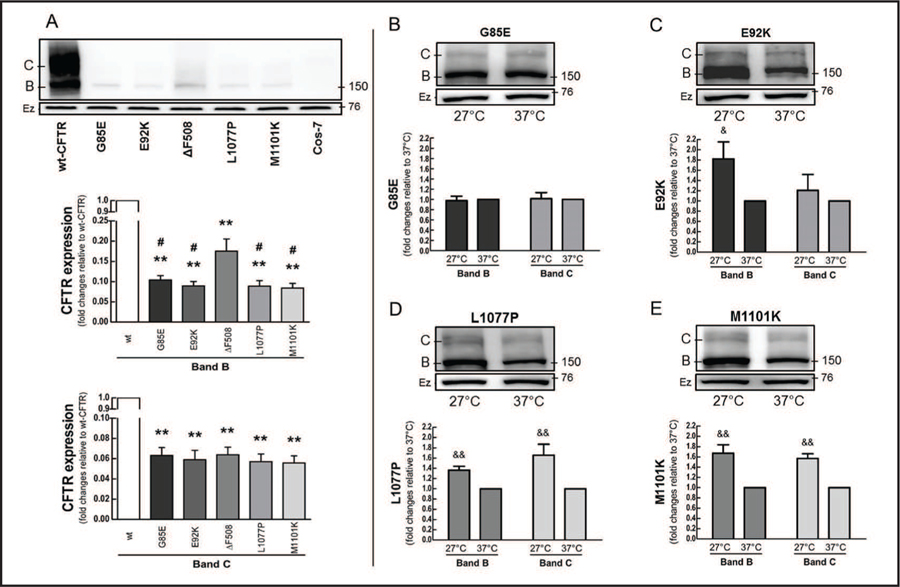
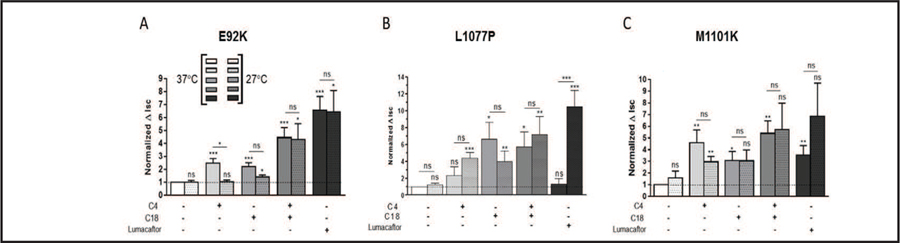
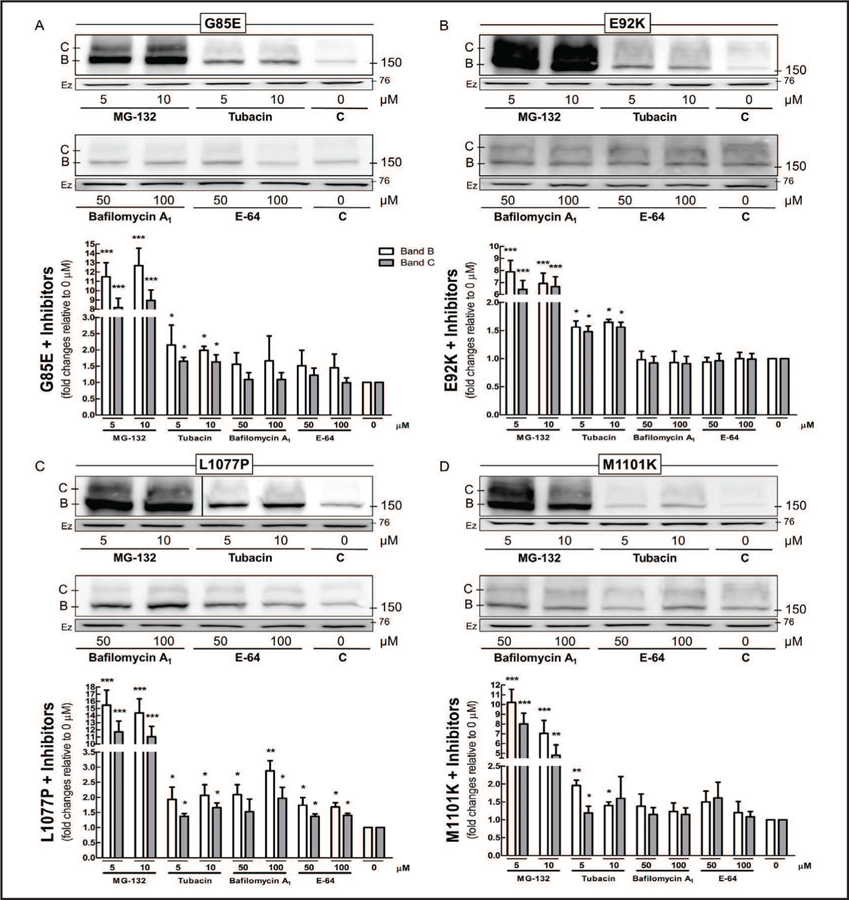
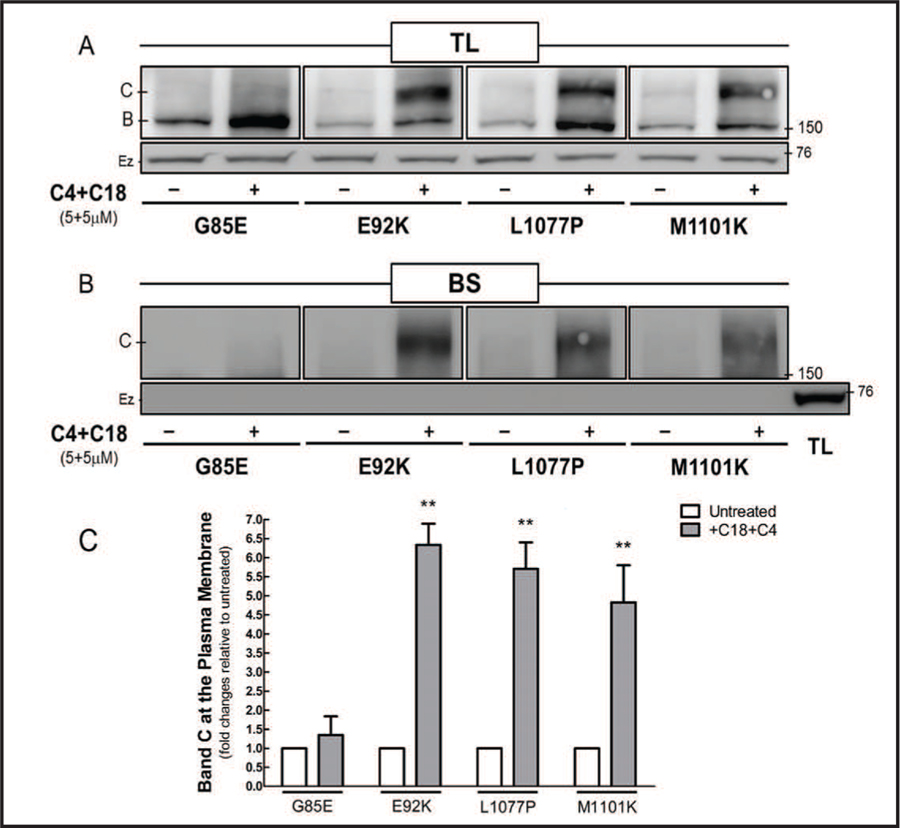
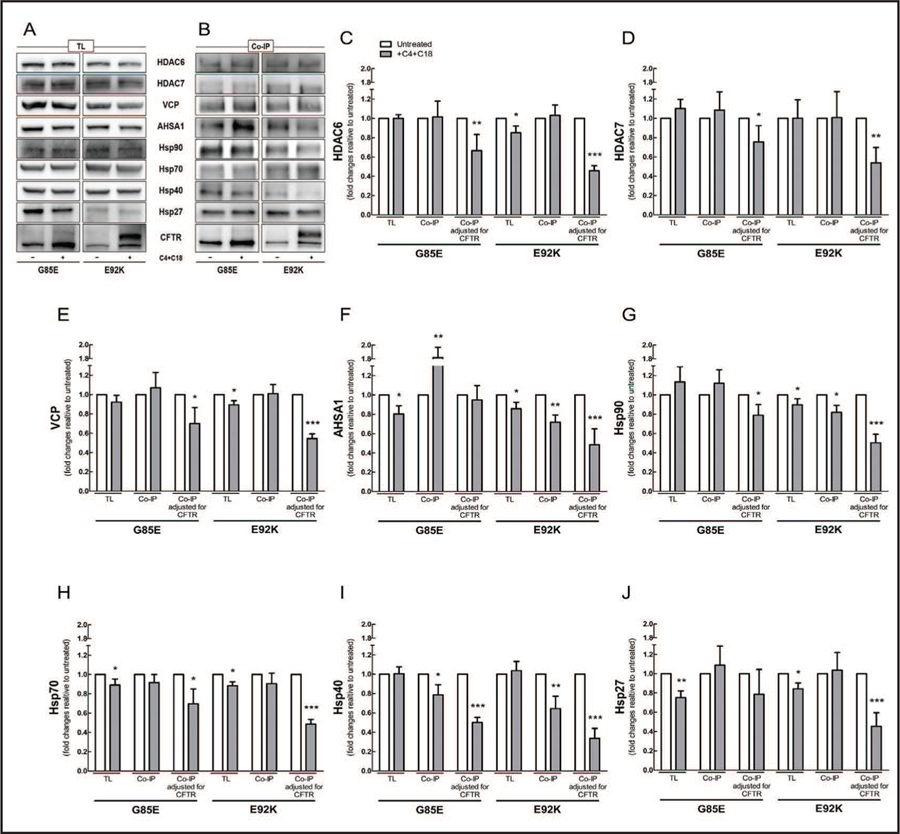
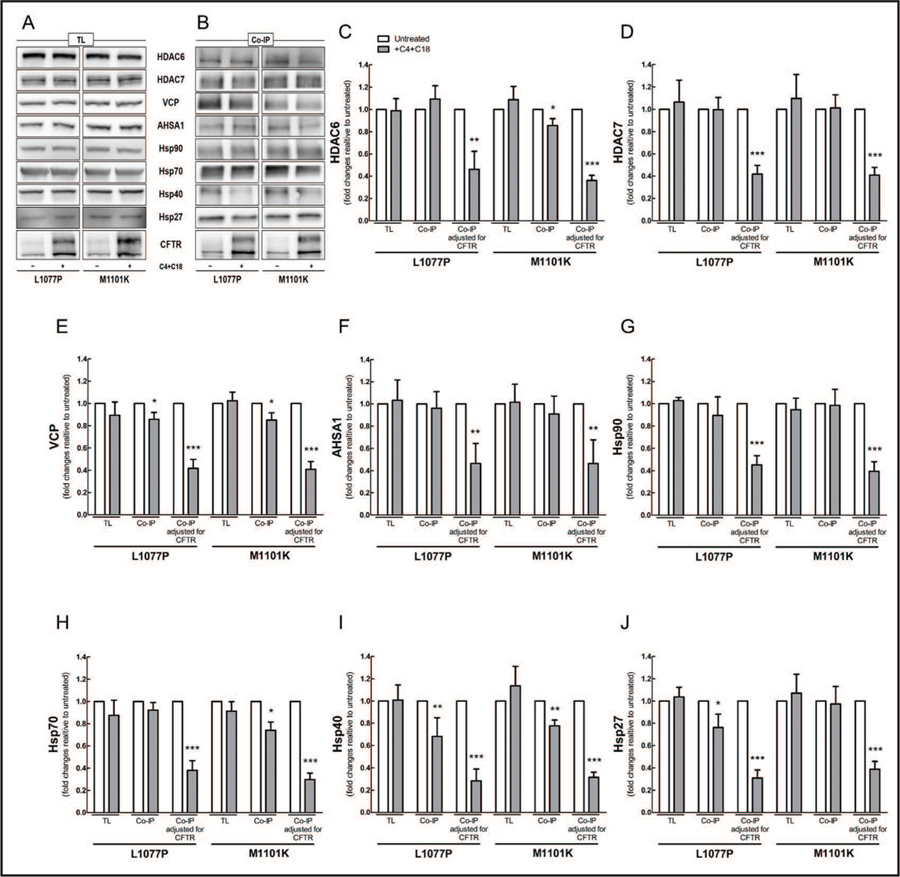
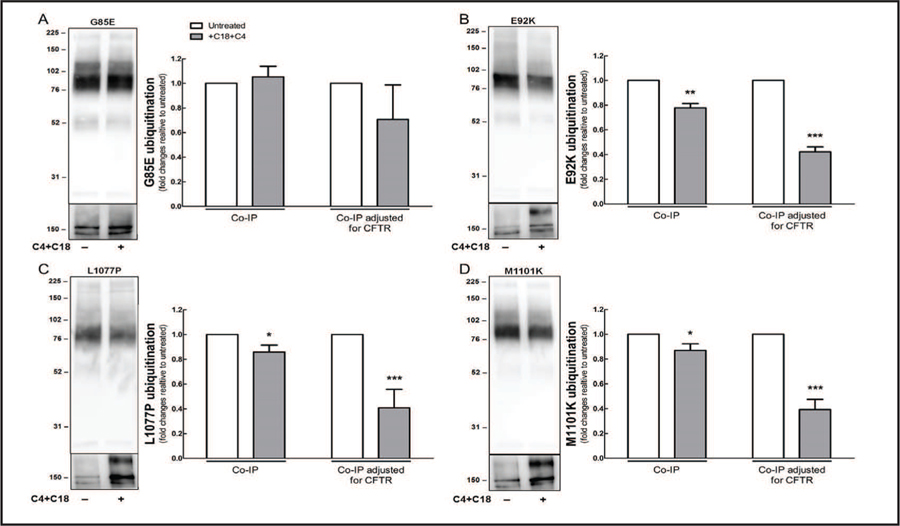
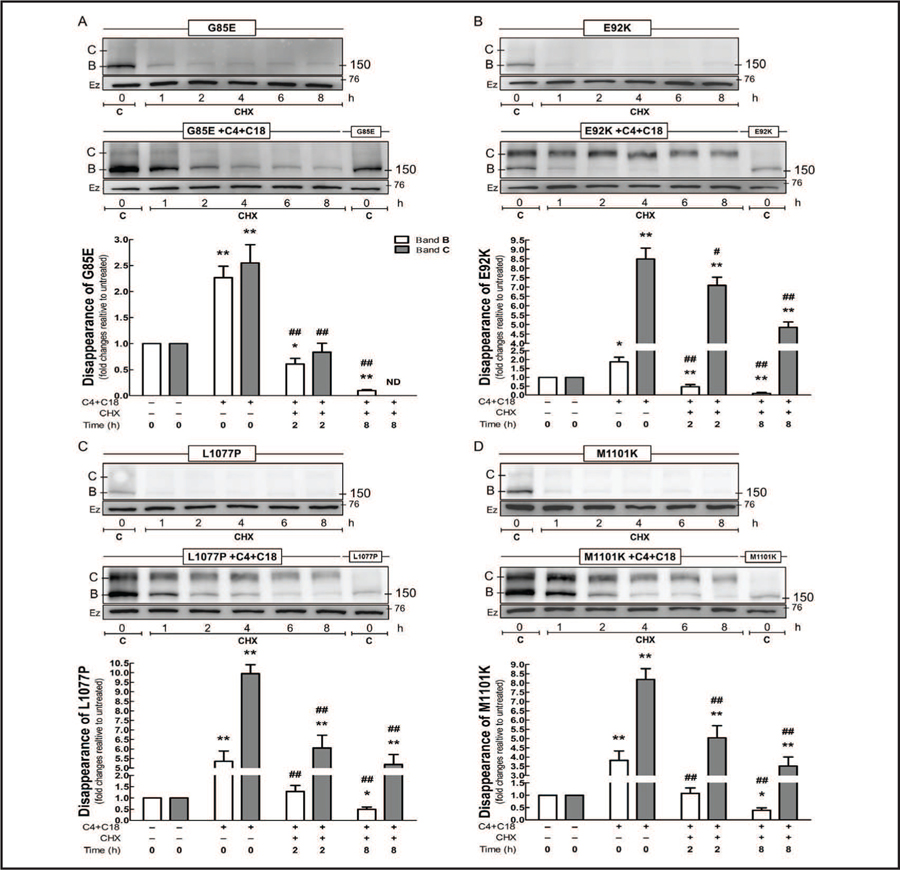
All four mutants exhibited lower protein expression than did wild type-CFTR, and they were degraded by proteasomes and aggresomes. At low temperature, only cells expressing the mutants L1077P and M1101K exhibited increased CFTR maturation. Co-administration of C4 and C18 showed the greatest effect, restoring functional expression and partial stability of CFTR bearing E92K, L1077P, or M1101K at the cell surface. However, this treatment was inefficient in rectifying the defect of CFTR bearing G85E. Correctors rescued CFTR mutants by reducing their interactions with proteostasis components associated with protein retention in the endoplasmic reticulum and ubiquitination.
Co-administration of C4 and C18 rescued CFTR transmembrane-domain mutants by remodeling the CFTR interactome.
背景/目的:突变的囊性纤维化跨膜传导调节因子(CFTR)蛋白过早降解导致囊性纤维化(CF),这是白种人中最常见的孟德尔疾病。尽管CF患者的精准药物最近取得了进展,但许多CFTR突变体尚未得到表征,这些新治疗方法对那些突变体的影响仍不清楚。
使用转染或稳定表达四种CFTR跨膜结构域突变体(G85E、E92K、L1077P和M1101K)的细胞来:1)根据其蛋白质表达、热敏感性和降解途径对突变体进行表征;2)评估校正剂对挽救它们的作用;3)探索校正剂对CFTR与蛋白质稳态成分相互作用的影响。
所有四种突变体的蛋白质表达均低于野生型CFTR,并且它们被蛋白酶体和聚集体降解。在低温下,只有表达突变体L1077P和M1101K的细胞表现出CFTR成熟增加。C4和C18联合给药显示出最大的效果,恢复了携带E92K、L1077P或M1101K的CFTR在细胞表面的功能表达和部分稳定性。然而,这种治疗在纠正携带G85E的CFTR缺陷方面效率低下。校正剂通过减少CFTR与内质网中与蛋白质滞留和泛素化相关的蛋白质稳态成分的相互作用来挽救CFTR突变体。
C4和C18联合给药通过重塑CFTR相互作用组挽救了CFTR跨膜结构域突变体。