Cai Huajie, Xie Xuemeng, Ji Ling, Ruan Xiaojiao, Zheng Zhihai
Department of General Surgery, The First Affiliated Hospital of Wenzhou Medical University, Wenzhou, Zhejiang 325000, P.R. China.
Oncol Lett. 2017 Apr;13(4):2316-2322. doi: 10.3892/ol.2017.5732. Epub 2017 Feb 13.
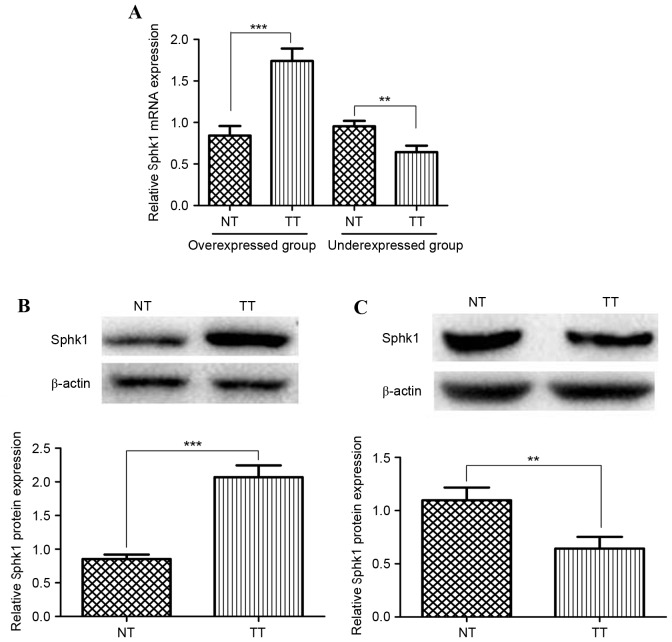
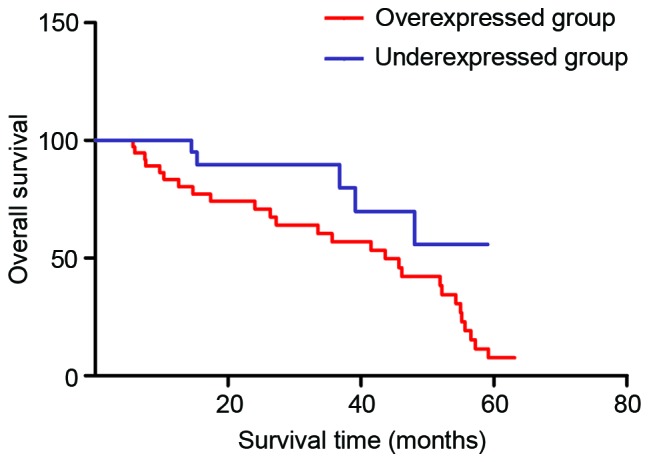
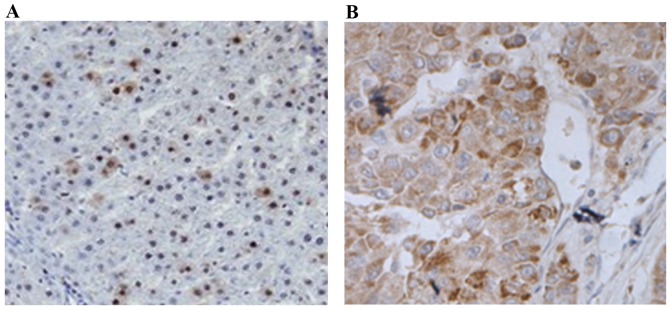
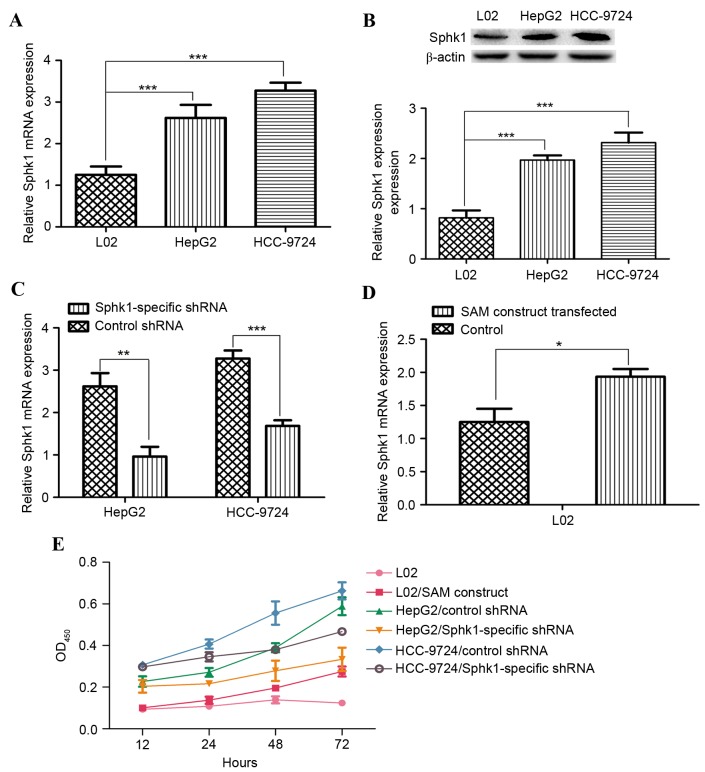
Sphingosine kinase 1 (Sphk1) is an oncogenic kinase that is responsible for the phosphorylation of sphingosine to sphingosine-1-phosphate (S1P). Mounting evidence suggests that Sphk1 serves a crucial role in the proliferation and development of a variety of human cancer cells. However, the role of Sphk1 in hepatocellular carcinoma (HCC) has not been fully elucidated. Therefore, the expression of Sphk1 was examined in 127 formalin-fixed, paraffin-embedded HCC tissues using immunohistochemistry, and its clinical implications and prognostic significance were analyzed. As a result, the expression of Sphk1 in HCC tissue was revealed to be significantly higher than in normal tissue (P<0.01). In addition, Sphk1 expression was significantly associated with tumor size, tumor stage and histological differentiation (all P<0.05). The patients with low Sphk1 expression had higher overall survival and recurrence-free survival rates compared with patients with high Sphk1 expression. Furthermore, Sphk1-specific shRNA was used to downregulate the expression of Sphk1 in HCC cell lines, including hepatoblastoma G2 and HCC-9724. The CRISPR/Cas9 based transcription activation system was used to upregulate Sphk1 expression in the normal live cell, L02. Cell proliferation, mRNA expression and protein expression were measured using Cell Counting Kit-8, reverse transcription polymerase chain reaction and western blot analysis in the transfected cells. To the best of our knowledge, the present study provides the first evidence that Sphk1 promotes HCC cell proliferation and is involved in tumor progression. Notably, the data presented suggest that Sphk1 may be a potential independent prognosis biomarker for the treatment of HCC.
鞘氨醇激酶1(Sphk1)是一种致癌激酶,负责将鞘氨醇磷酸化为1-磷酸鞘氨醇(S1P)。越来越多的证据表明,Sphk1在多种人类癌细胞的增殖和发展中起着关键作用。然而,Sphk1在肝细胞癌(HCC)中的作用尚未完全阐明。因此,本研究采用免疫组织化学方法检测了127例福尔马林固定、石蜡包埋的HCC组织中Sphk1的表达,并分析了其临床意义和预后意义。结果显示,HCC组织中Sphk1的表达明显高于正常组织(P<0.01)。此外,Sphk1表达与肿瘤大小、肿瘤分期和组织学分化显著相关(均P<0.05)。与高Sphk1表达的患者相比,低Sphk1表达的患者总生存率和无复发生存率更高。此外,使用Sphk1特异性短发夹RNA(shRNA)下调HCC细胞系(包括肝母细胞瘤G2和HCC-9724)中Sphk1的表达。基于CRISPR/Cas9的转录激活系统用于上调正常活细胞L02中Sphk1的表达。在转染细胞中,使用细胞计数试剂盒-8、逆转录聚合酶链反应和蛋白质免疫印迹分析来检测细胞增殖、mRNA表达和蛋白质表达。据我们所知,本研究首次证明Sphk1促进HCC细胞增殖并参与肿瘤进展。值得注意的是,所呈现的数据表明Sphk1可能是治疗HCC的潜在独立预后生物标志物。