MRC Centre for Drug Safety Science, Division of Molecular & Clinical Pharmacology, the Institute of Translational Medicine, the University of Liverpool, Liverpool, L69 3GE, United Kingdom.
Department of Molecular and Clinical Cancer Medicine, the Institute of Translational Medicine, the University of Liverpool, Liverpool, L69 3GE, United Kingdom.
Stem Cells Transl Med. 2017 May;6(5):1321-1331. doi: 10.1002/sctm.16-0029.
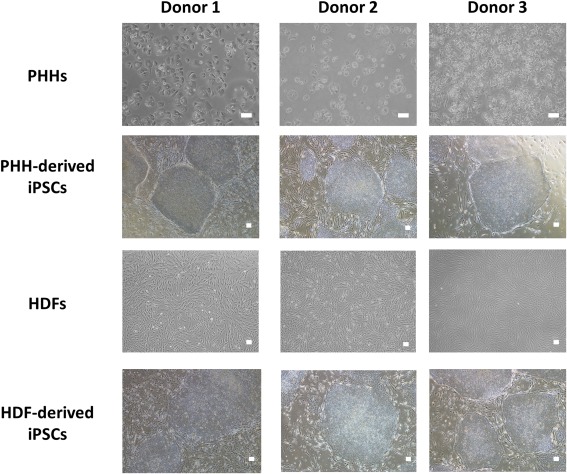
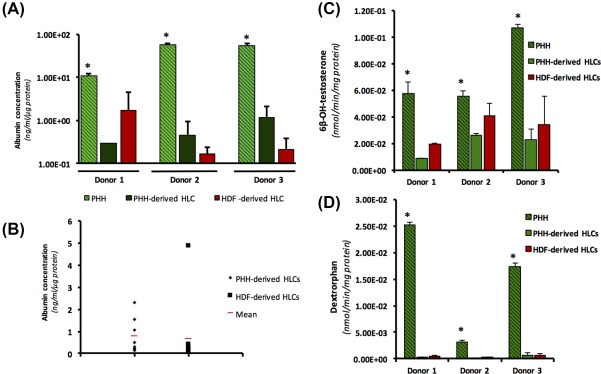
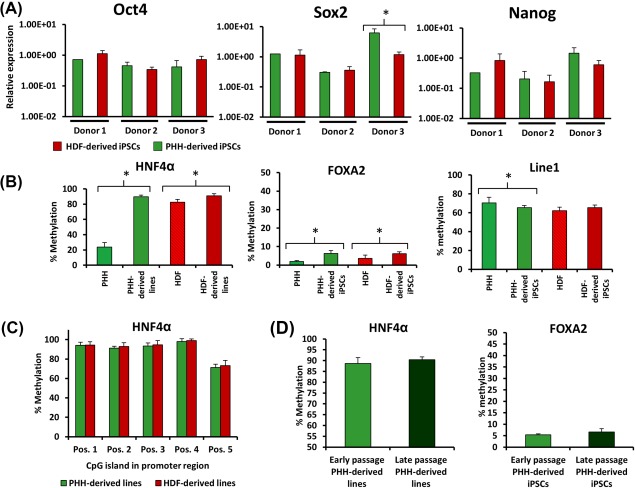
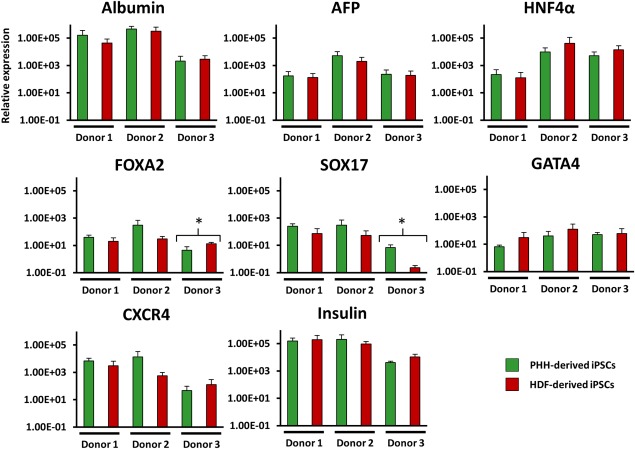
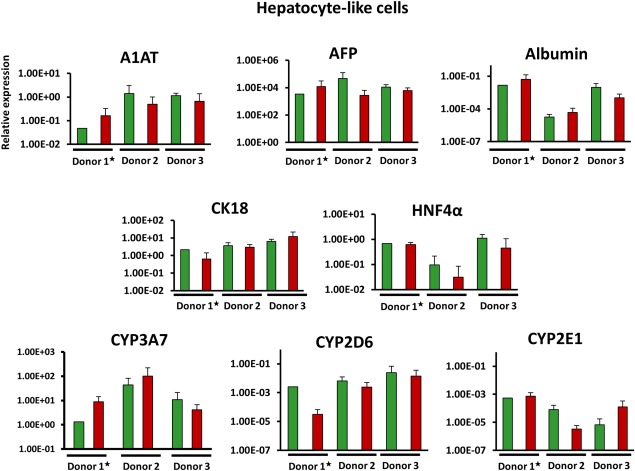
Drug-induced liver injury is the greatest cause of post-marketing drug withdrawal; therefore, substantial resources are directed toward triaging potentially dangerous new compounds at all stages of drug development. One of the major factors preventing effective screening of new compounds is the lack of a predictive in vitro model of hepatotoxicity. Primary human hepatocytes offer a metabolically relevant model for which the molecular initiating events of hepatotoxicity can be examined; however, these cells vary greatly between donors and dedifferentiate rapidly in culture. Induced pluripotent stem cell (iPSC)-derived hepatocyte-like cells (HLCs) offer a reproducible, physiologically relevant and genotypically normal model cell; however, current differentiation protocols produce HLCs with a relatively immature phenotype. During the reprogramming of somatic cells, the epigenome undergoes dramatic changes; however, this "resetting" is a gradual process, resulting in an altered differentiation propensity, skewed toward the lineage of origin, particularly in early passage cultures. We, therefore, performed a comparison of human hepatocyte- and dermal fibroblast-derived iPSCs, assessing the impact of epigenetic memory at all stages of HLC differentiation. These results provide the first isogenic assessment of the starting cell type in human iPSC-derived HLCs. Despite a trend toward improvement in hepatic phenotype in albumin secretion and gene expression, few significant differences in hepatic differentiation capacity were found between hepatocyte and fibroblast-derived iPSCs. We conclude that the donor and inter-clonal differences have a greater influence on the hepatocyte phenotypic maturity than the starting cell type. Therefore, it is not necessary to use human hepatocytes for generating iPSC-derived HLCs. Stem Cells Translational Medicine 2017;6:1321-1331.
药物性肝损伤是导致上市后药物撤市的最大原因;因此,在药物开发的各个阶段,都投入了大量资源来筛选潜在危险的新化合物。防止新化合物进行有效筛选的一个主要因素是缺乏预测性的体外肝毒性模型。原代人肝细胞为代谢相关模型,可在此模型中研究肝毒性的分子起始事件;然而,这些细胞在供体之间差异很大,并且在培养过程中迅速去分化。诱导多能干细胞(iPSC)衍生的肝细胞样细胞(HLC)提供了一种可重现、生理相关且基因型正常的模型细胞;然而,目前的分化方案产生的 HLC 具有相对不成熟的表型。在体细胞的重编程过程中,表观基因组会发生剧烈变化;然而,这种“重置”是一个逐渐的过程,导致分化倾向改变,偏向于起源谱系,尤其是在早期传代培养中。因此,我们比较了人肝细胞和真皮成纤维细胞来源的 iPSC,评估了表观遗传记忆在 HLC 分化的所有阶段的影响。这些结果首次对人 iPSC 衍生的 HLC 中的起始细胞类型进行了同基因评估。尽管白蛋白分泌和基因表达的肝表型有改善的趋势,但在肝细胞和成纤维细胞来源的 iPSC 之间,肝分化能力几乎没有显著差异。我们得出的结论是,供体和细胞间差异对肝细胞表型成熟的影响大于起始细胞类型。因此,使用人肝细胞生成 iPSC 衍生的 HLC 并非必需。Stem Cells Translational Medicine 2017;6:1321-1331.