de Sousa Lages Adriana, Paiva Isabel, Oliveira Patrícia, Portela Francisco, Carrilho Francisco
Departments of Endocrinology, Diabetes and Metabolism.
Departments of Gastroenterology, Coimbra Hospital and University Center, Coimbra, Portugal.
Endocrinol Diabetes Metab Case Rep. 2017 Apr 6;2017. doi: 10.1530/EDM-16-0145. eCollection 2017.
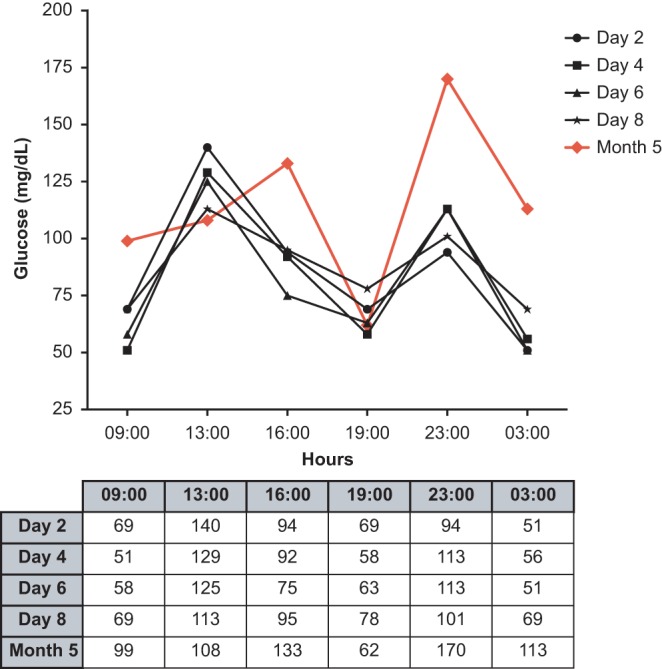
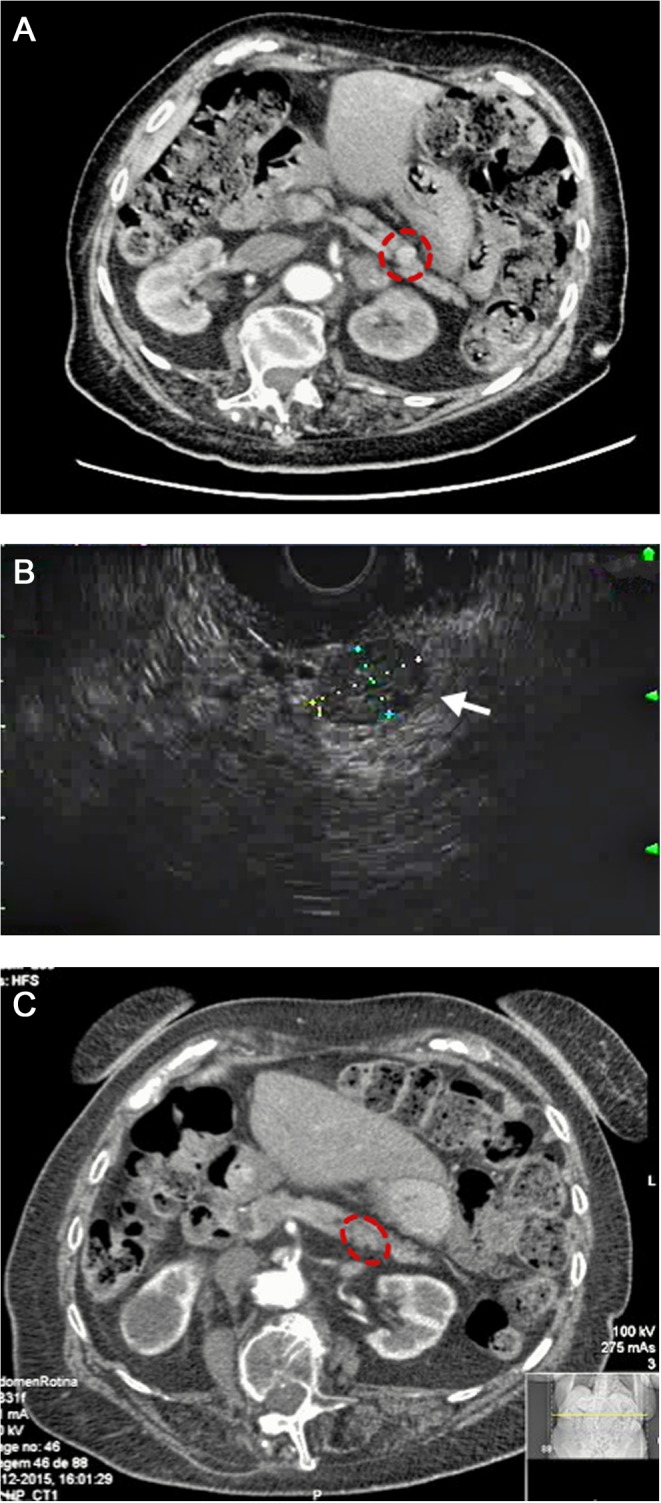
Insulinomas are the most frequent cause of hyperinsulinaemic hypoglycaemia. Although surgical enucleation is the standard treatment, a few other options are available to high-risk patients who are elderly or present with co-morbidities. We present a case report of an 89-year-old female patient who was admitted to the emergency department due to recurrent hypoglycaemia, especially during fasting. Laboratory work-up raised the suspicion of hyperinsulinaemic hypoglycaemia, and abdominal CT scan revealed a 12 mm nodular hypervascular lesion of the pancreatic body suggestive of neuroendocrine tumour. The patient was not considered a suitable candidate for surgery, and medical therapy with diazoxide was poorly tolerated. Endoscopic ultrasound-guided ethanol ablation therapy was performed and a total of 0.6 mL of 95% ethanol was injected into the lesion by a transgastric approach; no complications were reported after the procedure. At 5 months of follow-up, no episodes of hypoglycaemia were reported, no diazoxide therapy was necessary, and revaluation abdominal CT scan revealed a pancreatic nodular lesion with a size involution of about half of its original volume. The patient is regularly followed-up at the endocrinology clinic and shows a significant improvement in her wellbeing and quality of life.
Insulinomas are the most frequent cause of hyperinsulinaemic hypoglycaemia.Surgical enucleation is the standard treatment with a few other options available to high-risk patients.Endoscopic ultrasound-guided ethanol ablation therapy is one feasible option in high-risk patients with satisfactory clinical outcomes, significant positive impact on quality of life and low complication rates related to the procedure.
胰岛素瘤是高胰岛素血症性低血糖最常见的病因。尽管手术摘除是标准治疗方法,但对于老年或有合并症的高危患者,还有其他一些选择。我们报告一例89岁女性患者,因反复低血糖,尤其是空腹时低血糖而入住急诊科。实验室检查结果引发了对高胰岛素血症性低血糖的怀疑,腹部CT扫描显示胰体有一个12毫米的结节状高血管病变,提示神经内分泌肿瘤。该患者不被认为是手术的合适人选,且对二氮嗪药物治疗耐受性差。遂进行了内镜超声引导下乙醇消融治疗,通过经胃途径向病变部位注射了总共0.6毫升95%的乙醇;术后未报告并发症。随访5个月时,未报告低血糖发作,无需二氮嗪治疗,复查腹部CT扫描显示胰腺结节状病变大小缩小至原体积的约一半。该患者在内分泌科门诊定期随访,其健康状况和生活质量有显著改善。
胰岛素瘤是高胰岛素血症性低血糖最常见的病因。手术摘除是标准治疗方法,高危患者还有其他一些选择。内镜超声引导下乙醇消融治疗是高危患者的一种可行选择,临床效果良好,对生活质量有显著积极影响,且与该手术相关的并发症发生率低。