Hendrickson Peter G, Doráis Jessie A, Grow Edward J, Whiddon Jennifer L, Lim Jong-Won, Wike Candice L, Weaver Bradley D, Pflueger Christian, Emery Benjamin R, Wilcox Aaron L, Nix David A, Peterson C Matthew, Tapscott Stephen J, Carrell Douglas T, Cairns Bradley R
Department of Oncological Sciences, Huntsman Cancer Institute and Howard Hughes Medical Institute, Salt Lake City, Utah, USA.
Departments of Obstetrics and Gynecology, and Surgery, University of Utah School of Medicine, Salt Lake City, Utah, USA.
Nat Genet. 2017 Jun;49(6):925-934. doi: 10.1038/ng.3844. Epub 2017 May 1.
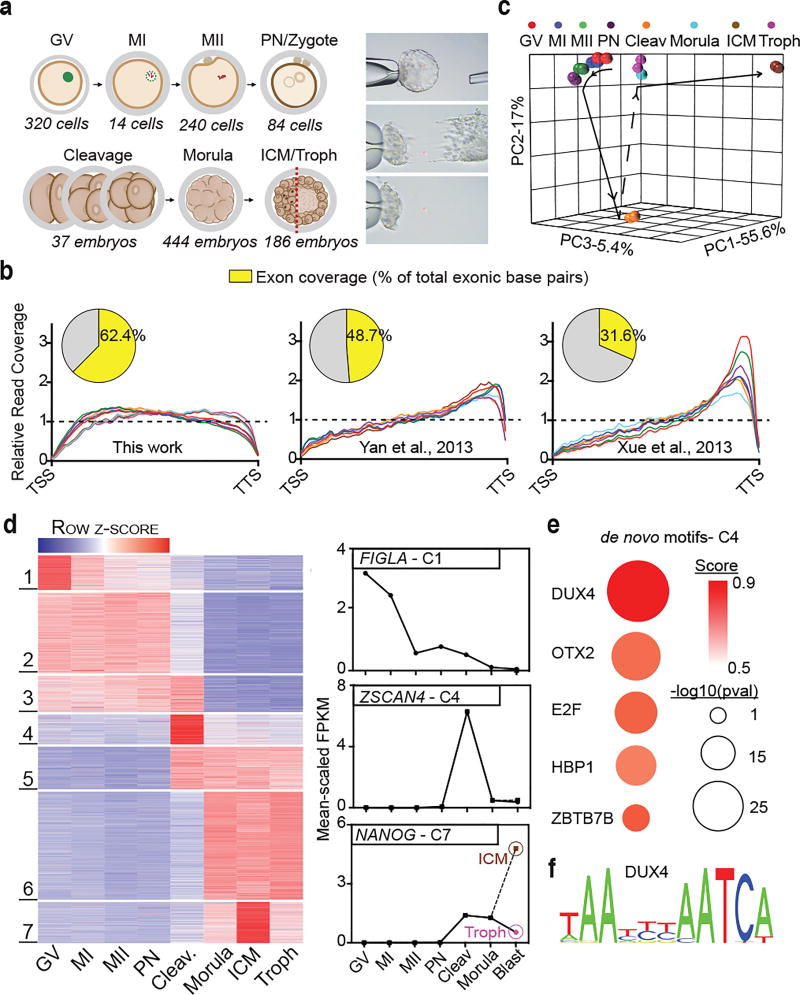
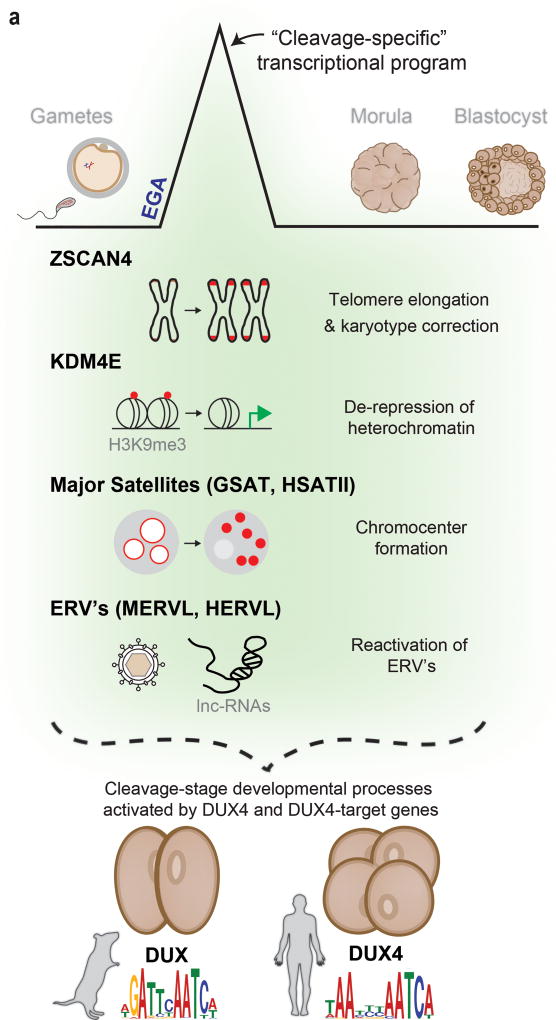
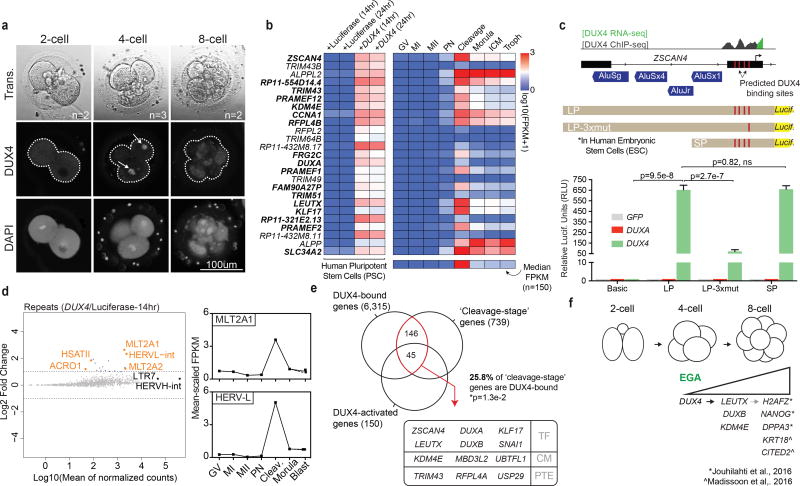
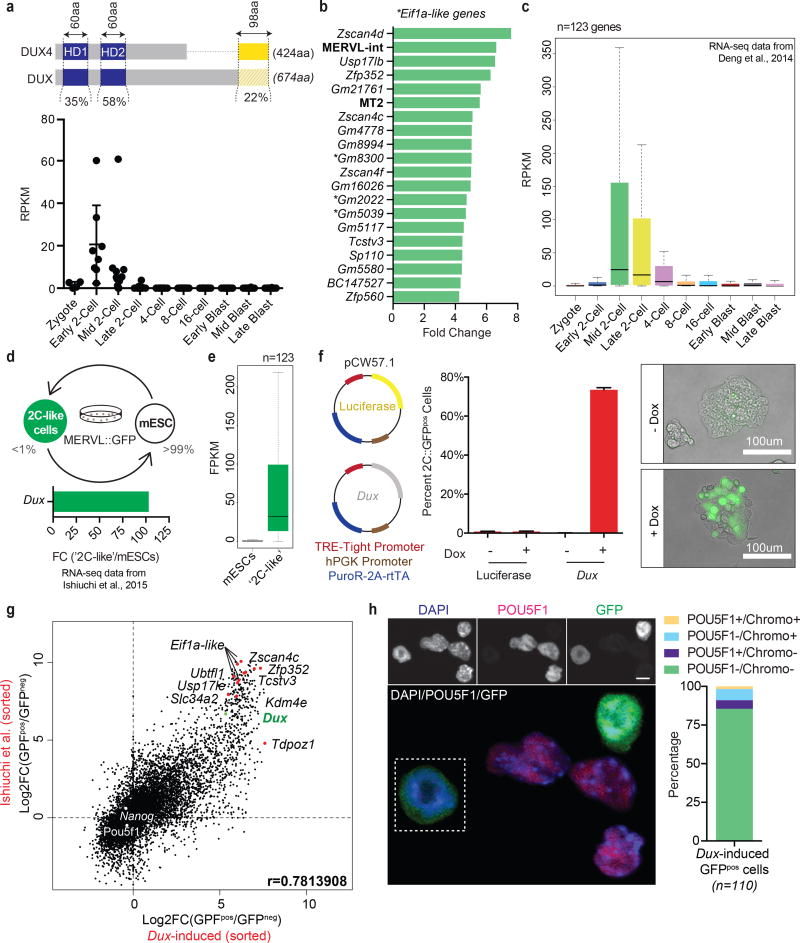
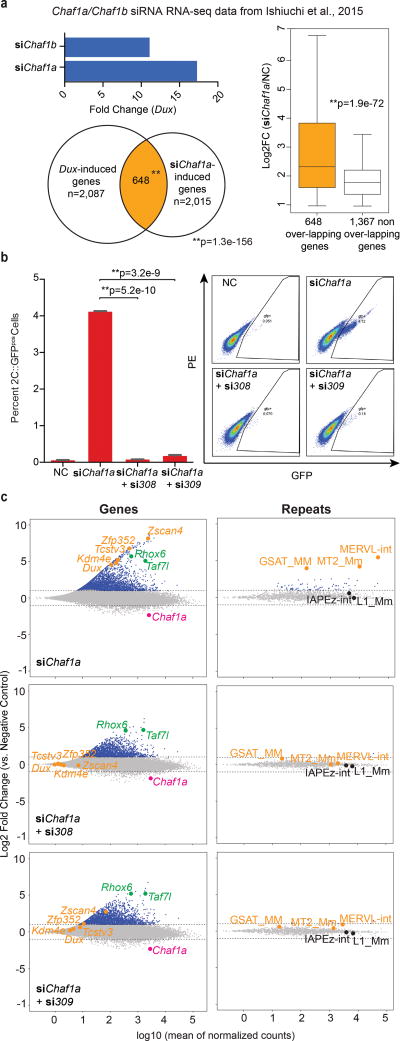
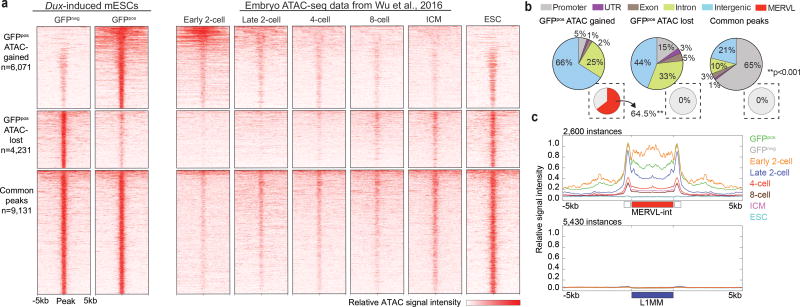
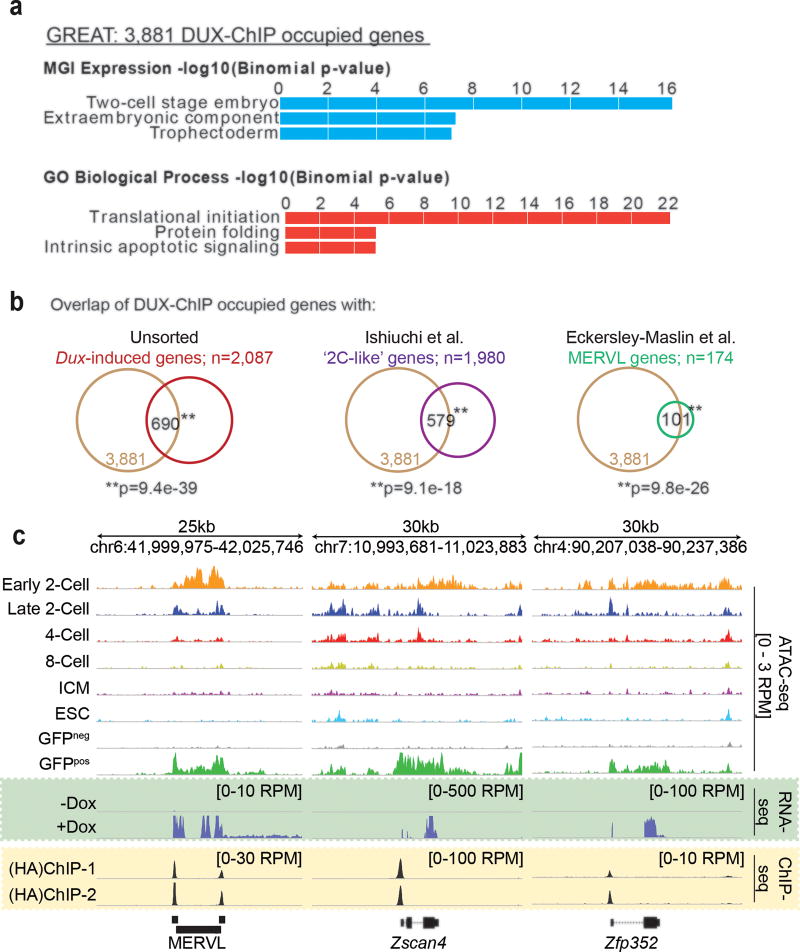
To better understand transcriptional regulation during human oogenesis and preimplantation development, we defined stage-specific transcription, which highlighted the cleavage stage as being highly distinctive. Here, we present multiple lines of evidence that a eutherian-specific multicopy retrogene, DUX4, encodes a transcription factor that activates hundreds of endogenous genes (for example, ZSCAN4, KDM4E and PRAMEF-family genes) and retroviral elements (MERVL/HERVL family) that define the cleavage-specific transcriptional programs in humans and mice. Remarkably, mouse Dux expression is both necessary and sufficient to convert mouse embryonic stem cells (mESCs) into 2-cell-embryo-like ('2C-like') cells, measured here by the reactivation of '2C' genes and repeat elements, the loss of POU5F1 (also known as OCT4) protein and chromocenters, and the conversion of the chromatin landscape (as assessed by transposase-accessible chromatin using sequencing (ATAC-seq)) to a state strongly resembling that of mouse 2C embryos. Thus, we propose mouse DUX and human DUX4 as major drivers of the cleavage or 2C state.
为了更好地理解人类卵子发生和植入前发育过程中的转录调控,我们定义了阶段特异性转录,这突出了卵裂期具有高度独特性。在此,我们提供了多条证据表明,一种真兽亚纲特异性多拷贝反转录基因DUX4编码一种转录因子,该转录因子可激活数百个内源性基因(例如ZSCAN4、KDM4E和PRAMEF家族基因)以及逆转录病毒元件(MERVL/HERVL家族),这些基因和元件定义了人类和小鼠的卵裂特异性转录程序。值得注意的是,小鼠Dux的表达对于将小鼠胚胎干细胞(mESCs)转化为2细胞胚胎样(“2C样”)细胞既是必要的也是充分的,在此通过“2C”基因和重复元件的重新激活、POU5F1(也称为OCT4)蛋白和染色中心的丢失以及染色质景观的转变(通过转座酶可及染色质测序(ATAC-seq)评估)来衡量,使其转变为与小鼠2C胚胎非常相似的状态。因此,我们提出小鼠DUX和人类DUX4是卵裂或2C状态的主要驱动因素。