Huang Wan, Zhou Weiping, Li Can, Yang Yuan, Shang Yu-Kui, Chen Changsheng, Zhang Jing, Yao Rui, Wang Pei, Wen Wen, Liu Han-Qiang, Wang Ling, Li Xia, Bian Huijie, Chen Zhi-Nan
National Translational Science Center for Molecular Medicine, Department of Cell Biology, Fourth Military Medical University, Xi'an, China.
The Third Department of Hepatic Surgery, Eastern Hepatobiliary Surgery Hospital, Second Military Medical University, Shanghai, China.
Oncotarget. 2017 Apr 18;8(16):26288-26297. doi: 10.18632/oncotarget.15458.
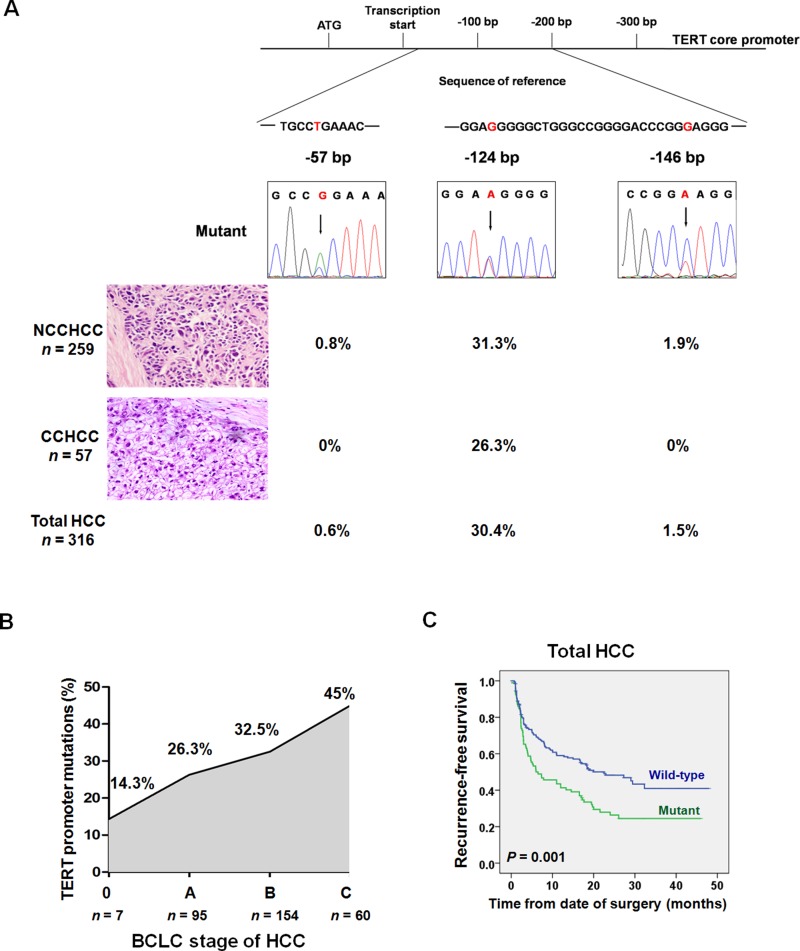
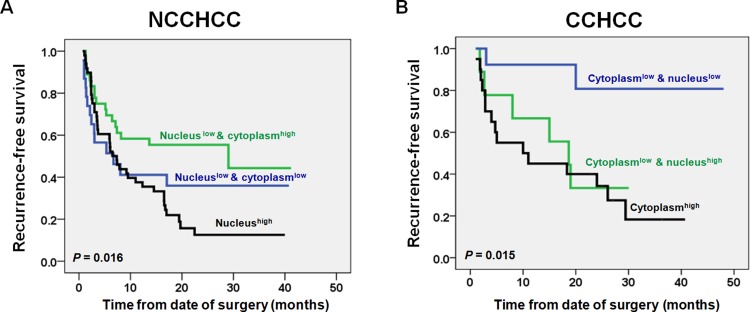
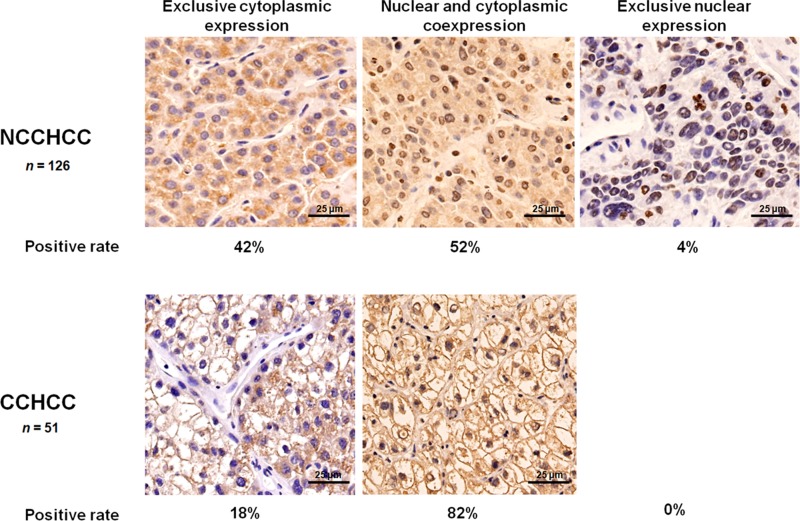
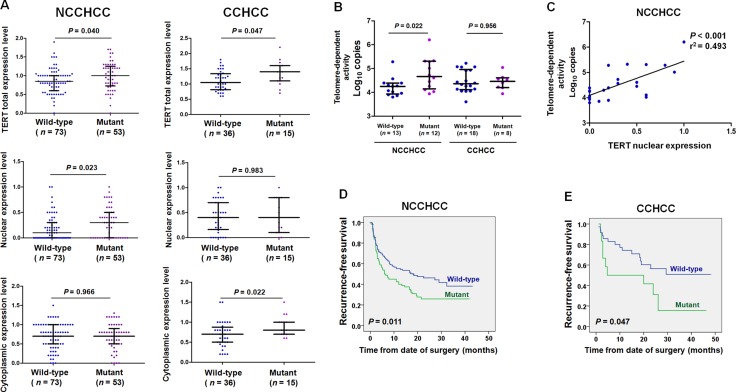
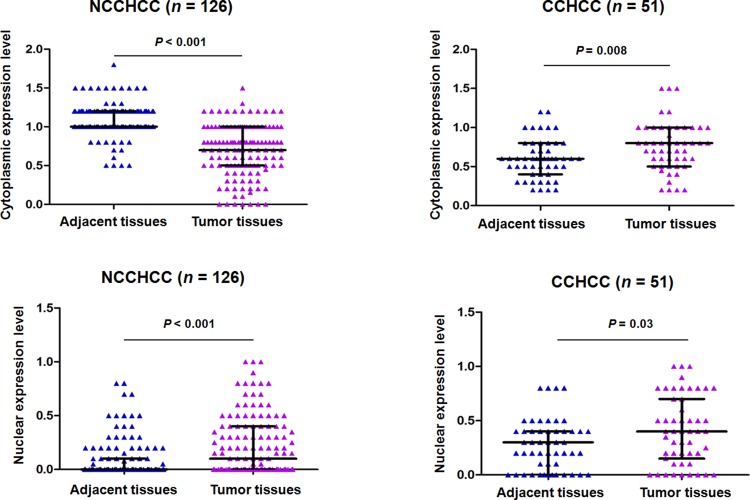
Reactivation of telomerase is a critical step in the development of hepatocellular carcinoma (HCC). Here we identified the frequency of mutations in telomerase reverse transcriptase (TERT) promoter was 34% in non-clear cell HCC (NCCHCC, n = 259) and 26.3% in clear cell HCC (CCHCC, n = 57). The mutations were independently associated with poor recurrence-free survival of HCCs. Interestingly immunohistochemical analysis demonstrated a higher positive rate of TERT cytoplasmic localization (95%) than nuclear localization (64%) in HCCs. In NCCHCCs, the mutations correlated with higher TERT nuclear expression and increased telomere-dependent telomerase activity. Higher cytoplasmic expression was found in adjacent tissues compared to tumor tissues, and was associated with tumor well-differentiation and lower level of α-fetoprotein. NCCHCCs with low nuclear as well as high cytoplasmic expression correlated with better prognosis. In CCHCCs, elevated TERT cytoplasmic expression was observed in CCHCCs harboring mutations. Higher TERT cytoplasmic expression was found in tumor tissues compared to adjacent tissues, and was associated with multiple numbers of tumors and poor prognosis of CCHCCs. In conclusion, mutations in TERT promoter disclose the significance of both nuclear and cytoplasmic TERT in HCC. Cytoplasmic TERT should also be considered when determining prognosis and treatment of HCCs.
端粒酶的重新激活是肝细胞癌(HCC)发生发展的关键步骤。在此,我们发现非透明细胞型肝癌(NCCHCC,n = 259)中端粒酶逆转录酶(TERT)启动子的突变频率为34%,透明细胞型肝癌(CCHCC,n = 57)中为26.3%。这些突变与HCC患者较差的无复发生存率独立相关。有趣的是,免疫组化分析显示,HCC中TERT胞质定位的阳性率(95%)高于核定位(64%)。在NCCHCC中,这些突变与较高的TERT核表达及端粒依赖性端粒酶活性增加相关。与肿瘤组织相比,癌旁组织中TERT胞质表达更高,且与肿瘤高分化及较低的甲胎蛋白水平相关。核表达低且胞质表达高的NCCHCC患者预后较好。在CCHCC中,TERT胞质表达升高在有突变的CCHCC中被观察到。与癌旁组织相比,肿瘤组织中TERT胞质表达更高,且与CCHCC的肿瘤多发及预后不良相关。总之,TERT启动子突变揭示了HCC中TERT核表达和胞质表达的重要性。在确定HCC的预后和治疗方案时,也应考虑TERT的胞质表达情况。