Balalaeva I V, Sokolova E A, Puzhikhina A D, Brilkina A A, Deyev S M
Lobachevsky State University of Nizhny Novgorod, Gagarin Ave., 23, Nizhny Novgorod, 603950, Russia.
Shemyakin-Ovchinnikov Institute of Bioorganic Chemistry, Russian Academy of Sciences, Miklukho-Maklaya Str., 16/10, Moscow, 117997, Russia.
Acta Naturae. 2017 Jan-Mar;9(1):38-43.
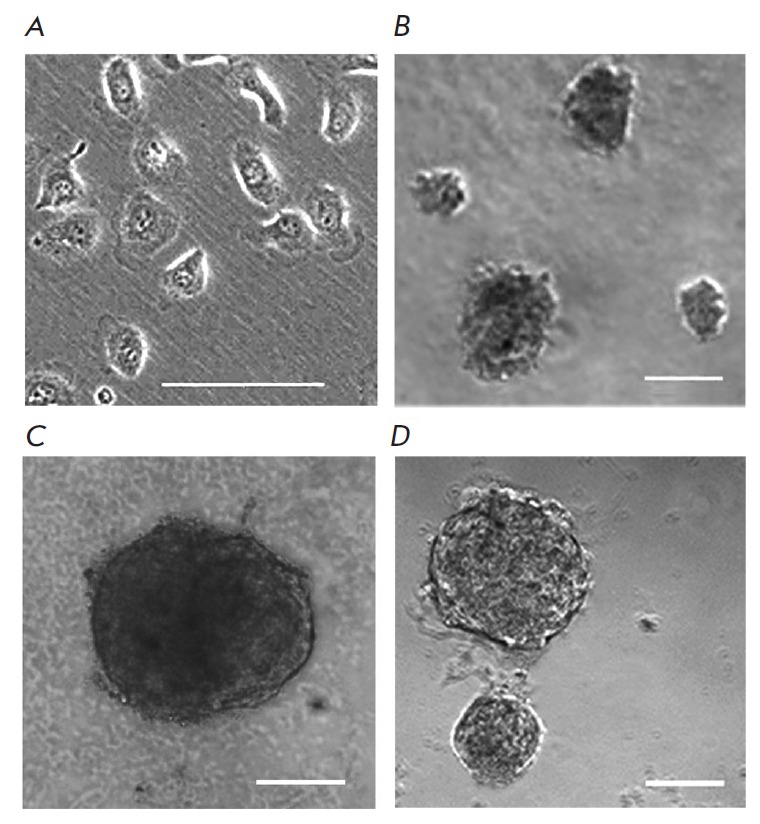
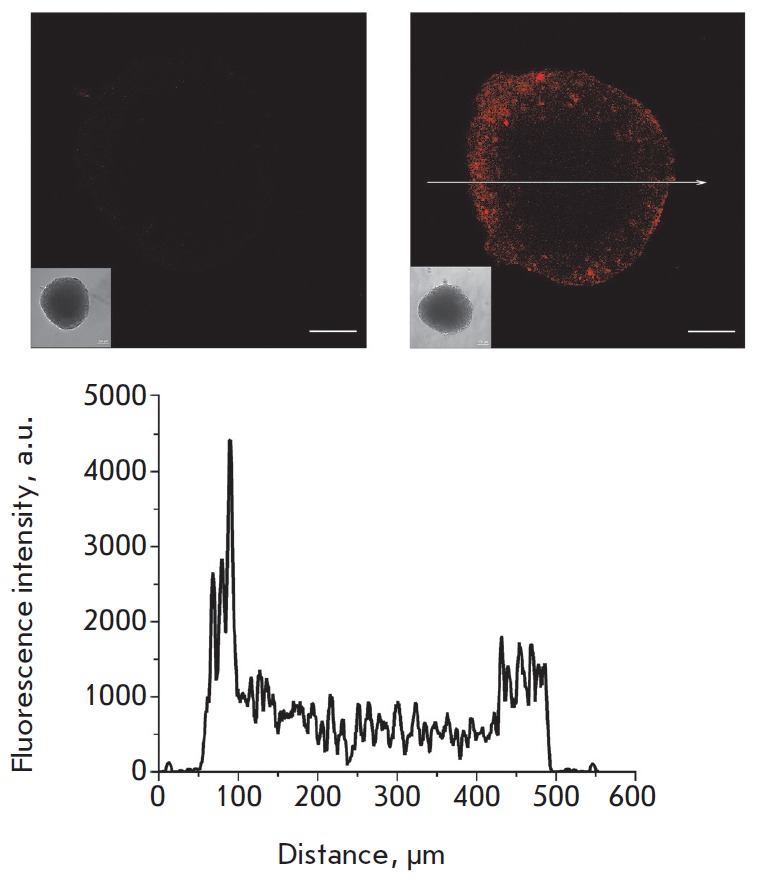
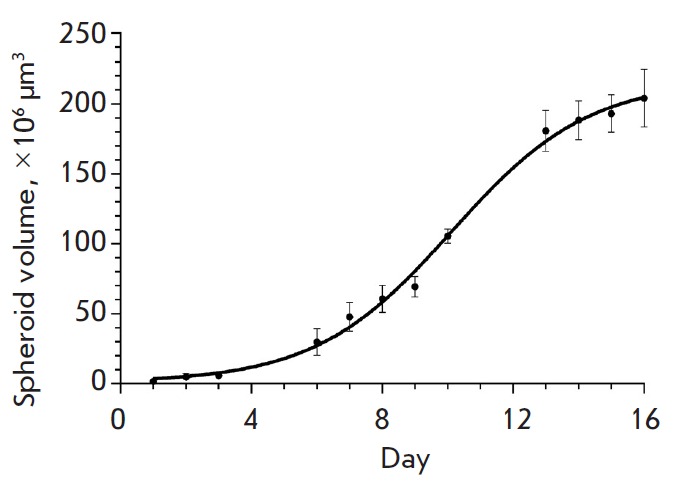
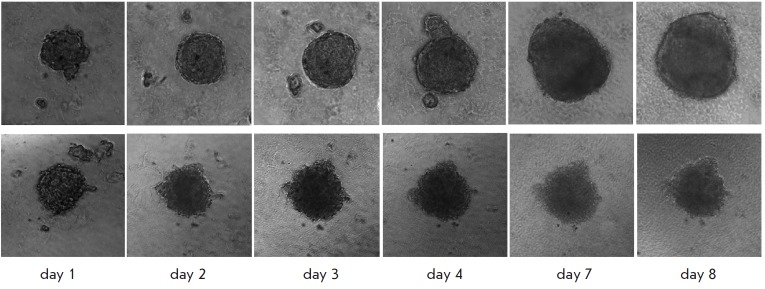
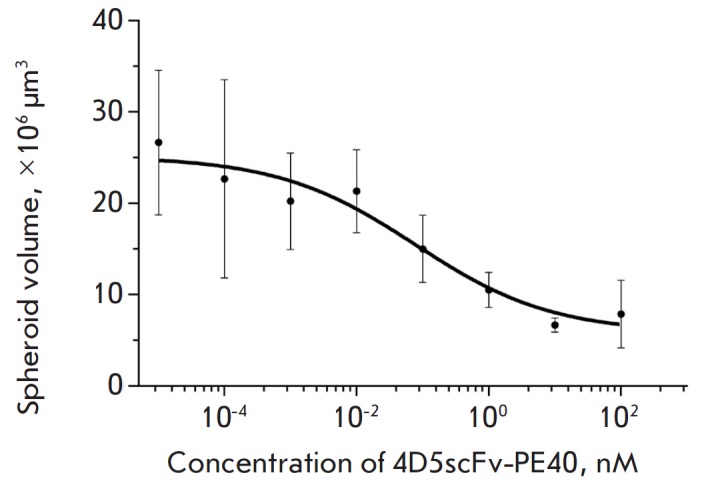
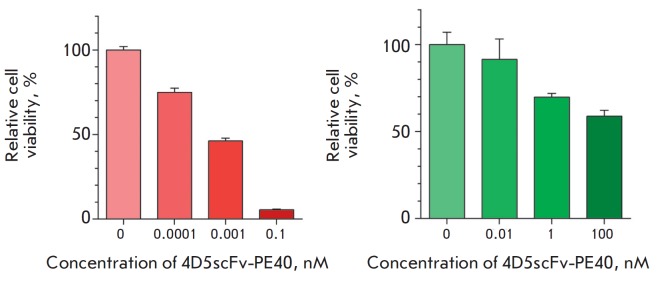
Tumor response to therapeutic treatment is largely determined by its heterogeneity and the presence of intercellular junctions, hindering the penetration of large molecules deep into the three-dimensional structure of the tumor. In that context, 3D tumor models such as cancer cell spheroids are becoming increasingly popular. We obtained spheroids of human breast adenocarcinoma SKBR-3 overexpressing the HER2 cancer marker. The toxicity of HER2-targeted immunotoxin 4D5scFv-PE40 against spheroids was shown to be several orders of magnitude lower compared to a monolayer cell culture. The significant difference in the severity of the immunotoxin effect can be explained by the fact that it ineffectively penetrates the spheroid and predominantly influences the cells of the outer layers. The resulting tumor spheroid model can be used in development of drugs for targeted therapy as well as to study ways to improve the efficiency of anticancer agents by targeting cell-cell contacts.
肿瘤对治疗的反应很大程度上取决于其异质性和细胞间连接的存在,这阻碍了大分子深入肿瘤三维结构。在这种情况下,诸如癌细胞球体之类的三维肿瘤模型正变得越来越流行。我们获得了过表达HER2癌症标志物的人乳腺腺癌SKBR-3球体。与单层细胞培养相比,HER2靶向免疫毒素4D5scFv-PE40对球体的毒性低几个数量级。免疫毒素作用严重程度的显著差异可以解释为它不能有效穿透球体,主要影响外层细胞。所得的肿瘤球体模型可用于开发靶向治疗药物,也可用于研究通过靶向细胞间接触提高抗癌药物效率的方法。