Department of Mechanical and Aerospace Engineering, Princeton University, Princeton, New Jersey 08544, USA.
Unilever R&D Port Sunlight, Bebington, Wirral CH63 3JW, UK.
Nat Commun. 2017 May 2;8:15181. doi: 10.1038/ncomms15181.
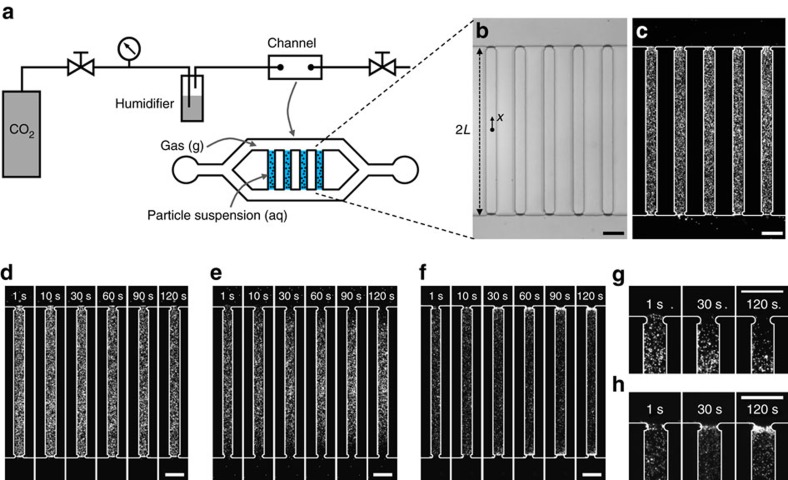
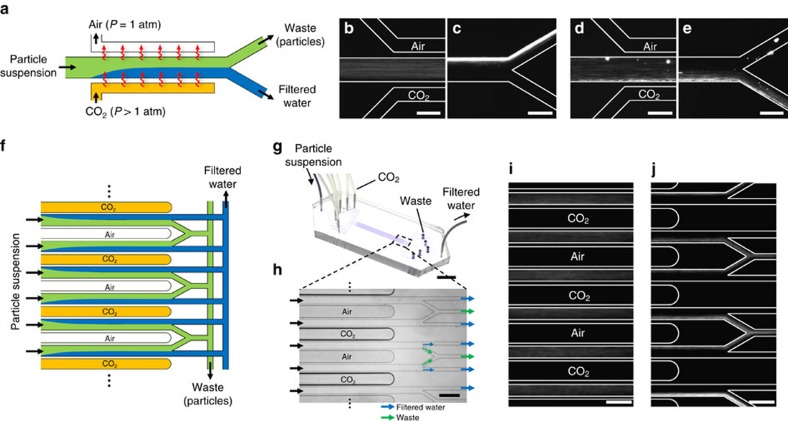
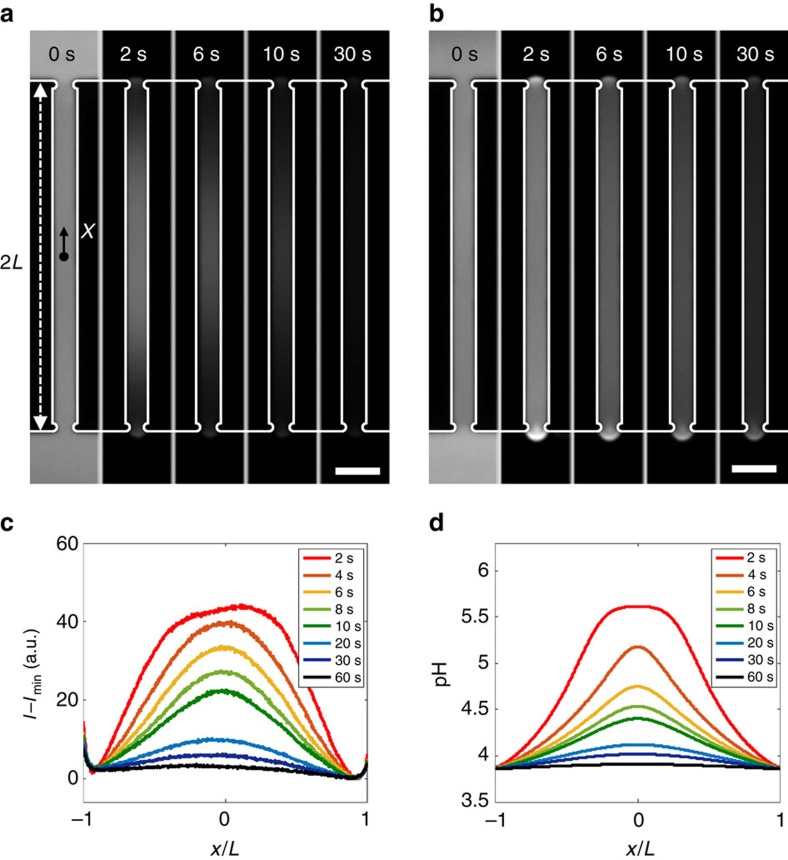
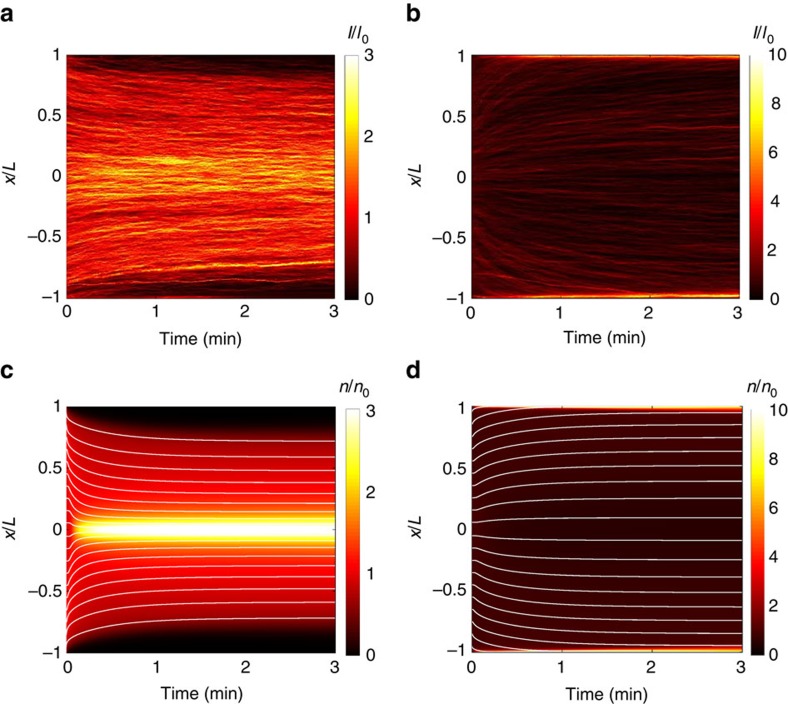
Water purification technologies such as microfiltration/ultrafiltration and reverse osmosis utilize porous membranes to remove suspended particles and solutes. These membranes, however, cause many drawbacks such as a high pumping cost and a need for periodic replacement due to fouling. Here we show an alternative membraneless method for separating suspended particles by exposing the colloidal suspension to CO. Dissolution of CO into the suspension creates solute gradients that drive phoretic motion of particles. Due to the large diffusion potential generated by the dissociation of carbonic acid, colloidal particles move either away from or towards the gas-liquid interface depending on their surface charge. Using the directed motion of particles induced by exposure to CO, we demonstrate a scalable, continuous flow, membraneless particle filtration process that exhibits low energy consumption, three orders of magnitude lower than conventional microfiltration/ultrafiltration processes, and is essentially free from fouling.
水净化技术,如微滤/超滤和反渗透,利用多孔膜去除悬浮颗粒和溶质。然而,这些膜会导致许多缺点,例如高泵送成本和由于结垢而需要定期更换。在这里,我们展示了一种替代的无膜方法,通过将胶体悬浮液暴露于 CO 来分离悬浮颗粒。CO 溶解在悬浮液中会产生溶质梯度,从而驱动粒子的电泳运动。由于碳酸的离解产生了很大的扩散势,胶体粒子根据其表面电荷向远离或靠近气液界面的方向移动。利用 CO 暴露诱导的粒子定向运动,我们展示了一种可扩展的、连续流动的无膜粒子过滤过程,该过程具有低能耗的特点,比传统的微滤/超滤过程低三个数量级,并且基本上不会结垢。