Burke Candace J, Kisko Theresa M, Swiftwolfe Hilarie, Pellis Sergio M, Euston David R
Dept of Neuroscience, Univ. of Lethbridge, Lethbridge, AB, Canada.
Behavioural Neuroscience, Experimental and Biological Psychology, Philipps-University of Marburg, Gutenbergstr. 18, Marburg, Germany.
PLoS One. 2017 May 3;12(5):e0175841. doi: 10.1371/journal.pone.0175841. eCollection 2017.
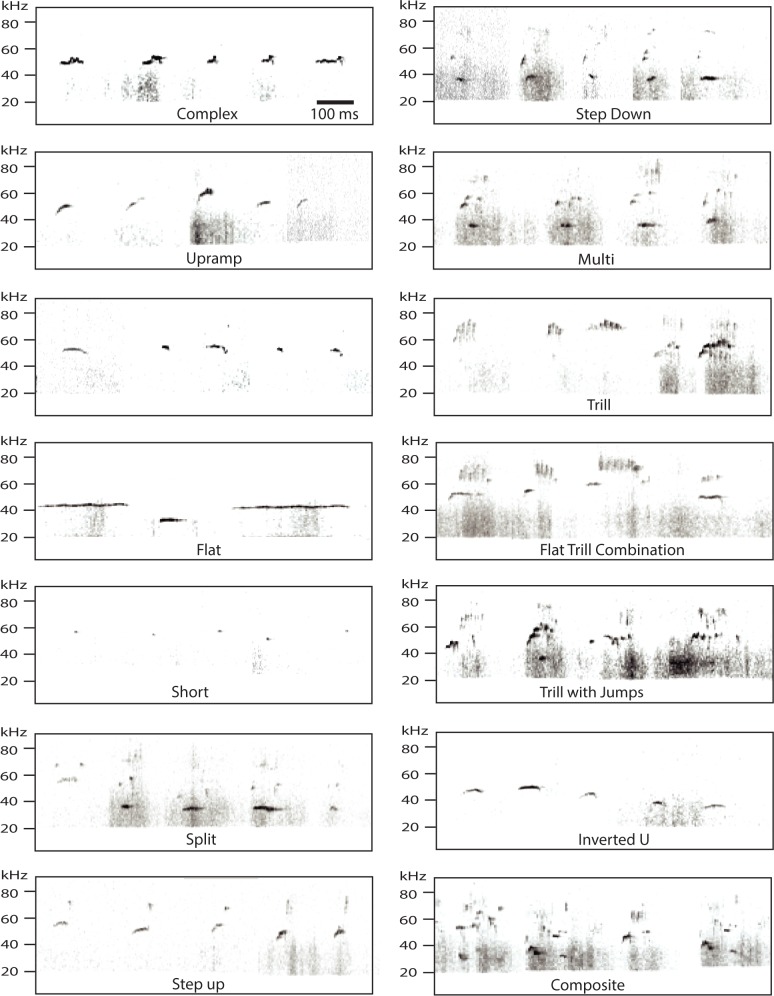
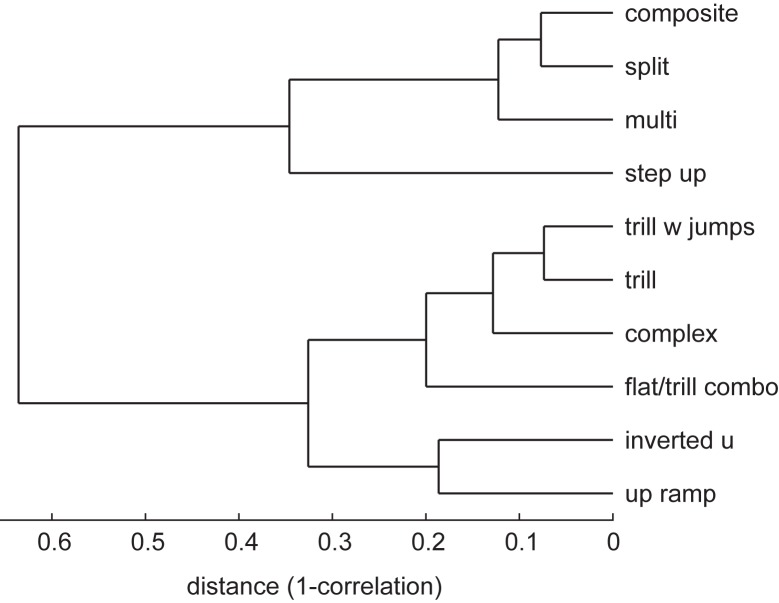
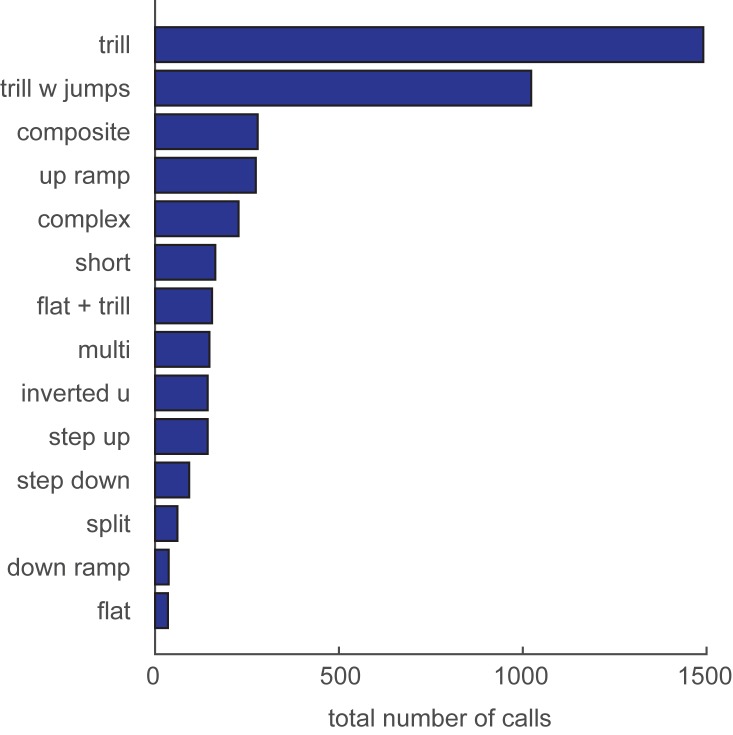
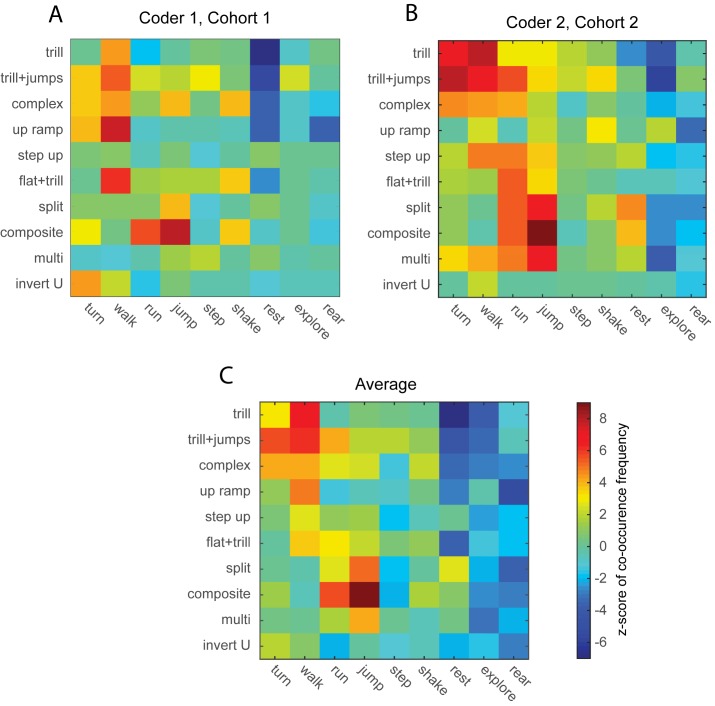
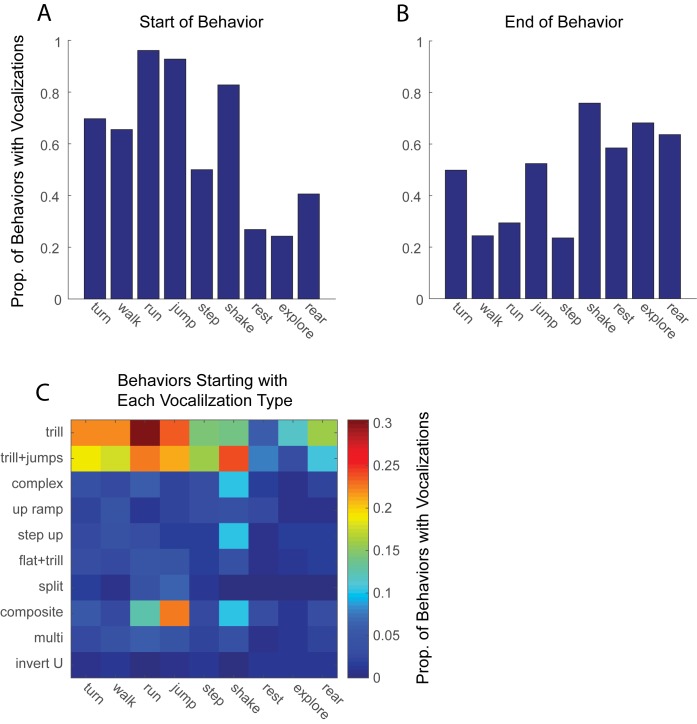
Rat ultrasonic vocalizations have been suggested to be either a byproduct of physical movement or, in the case of 50-kHz calls, a means to communicate positive affect. Yet there are up to 14 distinct types of 50-kHz calls, raising issues for both explanations. To discriminate between these theories and address the purpose for the numerous 50-kHz call types, we studied single juvenile rats that were waiting to play with a partner, a situation associated with a high number of 50-kHz calls. We used a Monte-Carlo shuffling procedure to identify vocalization-behavior correlations that were statistically different from chance. We found that certain call types ("split", "composite" and "multi-step") were strongly associated with running and jumping while other call types (those involving "trills") were more common during slower movements. Further, non-locomotor states such as resting and rearing were strongly predictive of a lack of vocalizations. We also found that the various sub-types of USVs can be clustered into 3-4 categories based on similarities in the way they are used. We did not find a one-to-one relationship between any movements and specific vocalizations, casting doubt on the motion byproduct theory. On the other hand, the use of specific calls during specific behaviors is problematic for the affect communication hypothesis. Based on our results, we suggest that ultrasonic calls may serve to coordinate moment-to-moment social interactions.
大鼠的超声波发声被认为要么是身体运动的副产品,要么就50千赫叫声而言,是传达积极情绪的一种方式。然而,50千赫的叫声有多达14种不同类型,这对两种解释都提出了问题。为了区分这些理论并探讨众多50千赫叫声类型的目的,我们研究了等待与伙伴玩耍的幼年大鼠个体,这种情况与大量50千赫叫声相关。我们使用蒙特卡洛重排程序来识别与发声 - 行为的相关性,这些相关性在统计学上与随机情况不同。我们发现某些叫声类型(“分裂”、“复合”和“多步”)与奔跑和跳跃密切相关,而其他叫声类型(那些涉及“颤音”的)在较慢运动时更常见。此外,诸如休息和直立等非运动状态强烈预示着不会发声。我们还发现,基于超声波发声(USV)的使用方式的相似性,其各种子类型可以聚类为3 - 4类。我们没有发现任何运动与特定发声之间存在一一对应的关系,这对运动副产品理论提出了质疑。另一方面,特定行为中特定叫声的使用对于情感交流假说来说也存在问题。根据我们的研究结果,我们认为超声波叫声可能有助于协调即时的社会互动。