Vitikainen Emma I K, Marshall Harry H, Thompson Faye J, Sanderson Jenni L, Bell Matthew B V, Gilchrist Jason S, Hodge Sarah J, Nichols Hazel J, Cant Michael A
Centre for Ecology and Conservation, University of Exeter, Penryn Campus, Cornwall TR10 9FE, UK
Centre for Ecology and Conservation, University of Exeter, Penryn Campus, Cornwall TR10 9FE, UK.
Proc Biol Sci. 2017 May 17;284(1854). doi: 10.1098/rspb.2016.2384.
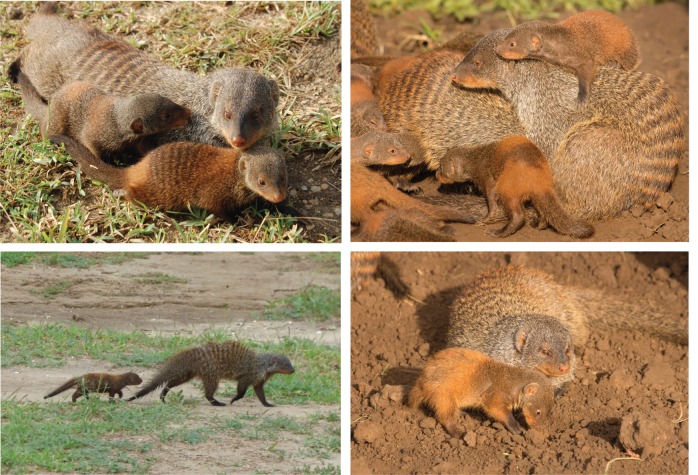
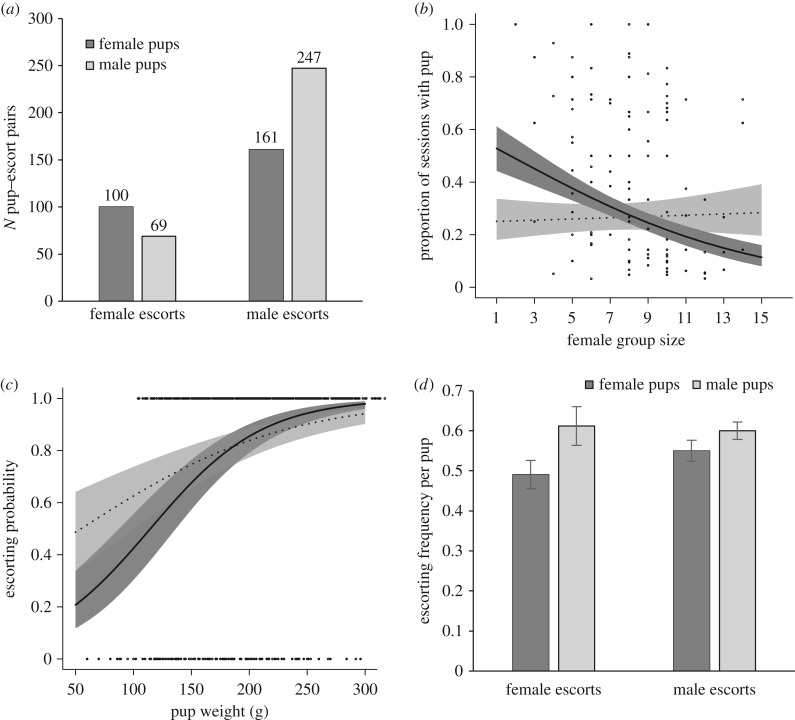
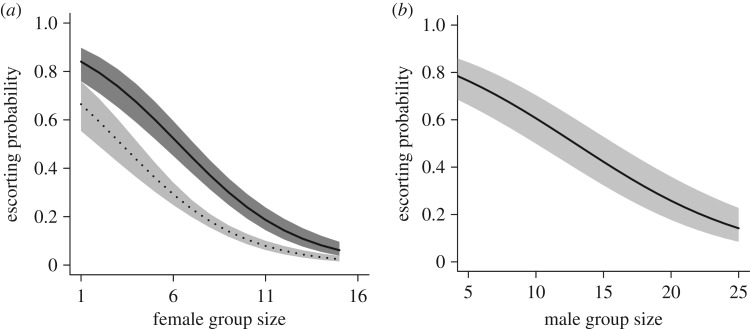
Kin selection theory predicts that animals should direct costly care where inclusive fitness gains are highest. Individuals may achieve this by directing care at closer relatives, yet evidence for such discrimination in vertebrates is equivocal. We investigated patterns of cooperative care in banded mongooses, where communal litters are raised by adult 'escorts' who form exclusive caring relationships with individual pups. We found no evidence that escorts and pups assort by parentage or relatedness. However, the time males spent escorting increased with increasing relatedness to the other group members, and to the pup they had paired with. Thus, we found no effect of relatedness in partner choice, but (in males) increasing helping effort with relatedness once partner choices had been made. Unexpectedly, the results showed clear assortment by sex, with female carers being more likely to tend to female pups, and male carers to male pups. This sex-specific assortment in helping behaviour has potential lifelong impacts on individual development and may impact the future size and composition of natal groups and dispersing cohorts. Where relatedness between helpers and recipients is already high, individuals may be better off choosing partners using other predictors of the costs and benefits of cooperation, without the need for possibly costly within-group kin discrimination.
亲缘选择理论预测,动物应该将代价高昂的照料行为指向亲缘系数收益最高的对象。个体可以通过照料关系更近的亲属来实现这一点,然而脊椎动物中这种歧视行为的证据并不明确。我们研究了带状獴的合作照料模式,在这种动物群体中,共同出生的幼崽由成年“护卫者”抚养,这些护卫者与单个幼崽形成排他性的照料关系。我们没有发现证据表明护卫者和幼崽是根据亲子关系或亲缘关系来分类的。然而,雄性护卫幼崽的时间会随着与其他群体成员以及与其配对幼崽的亲缘关系增加而增加。因此,我们发现亲缘关系对伴侣选择没有影响,但(在雄性中)一旦做出伴侣选择,帮助行为的努力程度会随着亲缘关系增加。出乎意料的是,结果显示出明显的性别分类,雌性照料者更倾向于照料雌性幼崽,而雄性照料者则更倾向于照料雄性幼崽。这种帮助行为中的性别特异性分类可能会对个体发育产生终身影响,并可能影响出生群体和扩散群体未来的规模和组成。当帮助者和接受者之间的亲缘关系已经很高时,个体可能会更好地利用合作成本和收益的其他预测因素来选择伴侣,而无需在群体内部进行可能代价高昂的亲缘歧视。