School of Physics, Shandong University, Jinan, 250100, Shandong, China.
School of Physics and Technology, University of Jinan, Jinan, 250022, Shandong, China.
Sci Rep. 2017 May 3;7(1):1483. doi: 10.1038/s41598-017-01488-8.
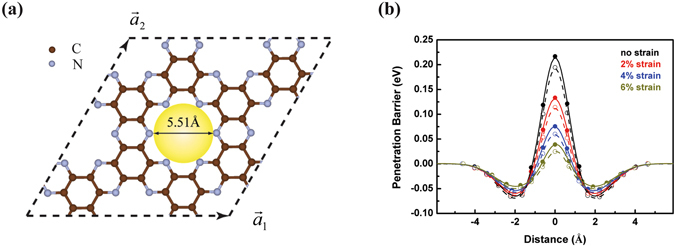
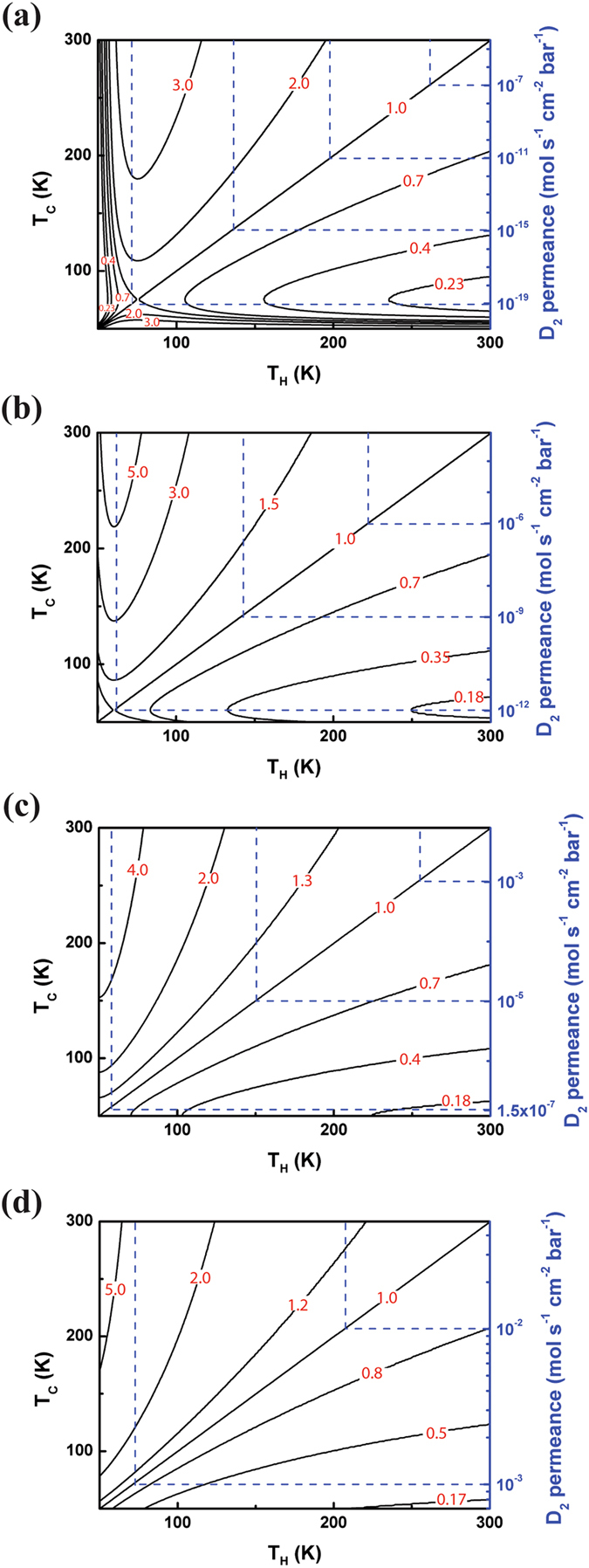
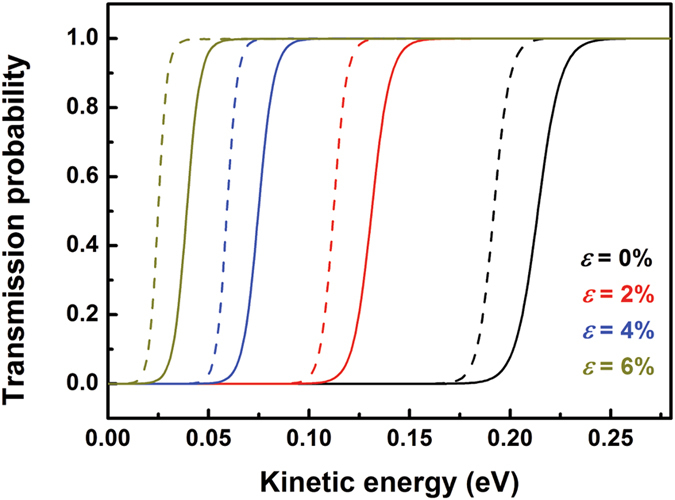
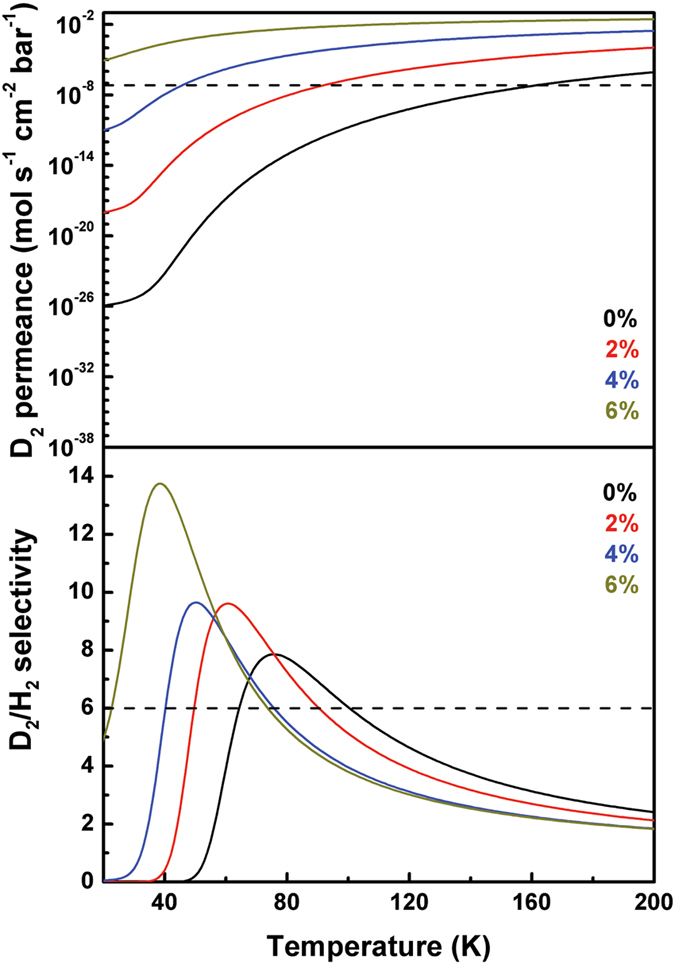
Isotopes separation through quantum sieving effect of membranes is quite promising for industrial applications. For the light hydrogen isotopologues (eg. H, D), the confinement of potential wells in porous membranes to isotopologues was commonly regarded to be crucial for highly efficient separation ability. Here, we demonstrate from first-principles that a potential barrier is also favorable for efficient hydrogen isotopologues separation. Taking an already-synthesized two-dimensional carbon nitride (CN-h2D) as an example, we predict that the competition between quantum tunneling and zero-point-energy (ZPE) effects regulated by the tensile strain leads to high selectivity and permeance. Both kinetic quantum sieving and equilibrium quantum sieving effects are considered. The quantum effects revealed in this work offer a prospective strategy for highly efficient hydrogen isotopologues separation.
通过膜的量子筛分效应进行同位素分离在工业应用中很有前景。对于轻氢同位素(例如 H、D),多孔膜中势阱对同位素的限制通常被认为是实现高效分离能力的关键。在这里,我们从第一性原理证明,势垒对于高效的氢同位素分离也是有利的。以已经合成的二维碳氮化物(CN-h2D)为例,我们预测拉伸应变调节的量子隧穿和零点能(ZPE)效应之间的竞争导致高选择性和渗透性。同时考虑了动力学量子筛分和平衡量子筛分效应。这项工作中揭示的量子效应为高效氢同位素分离提供了有前景的策略。