Sadhu Satya S, Wang Shenggang, Dachineni Rakesh, Averineni Ranjith Kumar, Yang Yang, Yin Huihui, Bhat G Jayarama, Guan Xiangming
Department of Pharmaceutical Sciences, College of Pharmacy & Allied Health Professions, South Dakota State University, Brookings, SD, USA.
Department of Biopharma Formulations, Zoetis, Kalamazoo, MI, USA.
Cancer Growth Metastasis. 2017 Mar 10;10:1179064417696070. doi: 10.1177/1179064417696070. eCollection 2017.
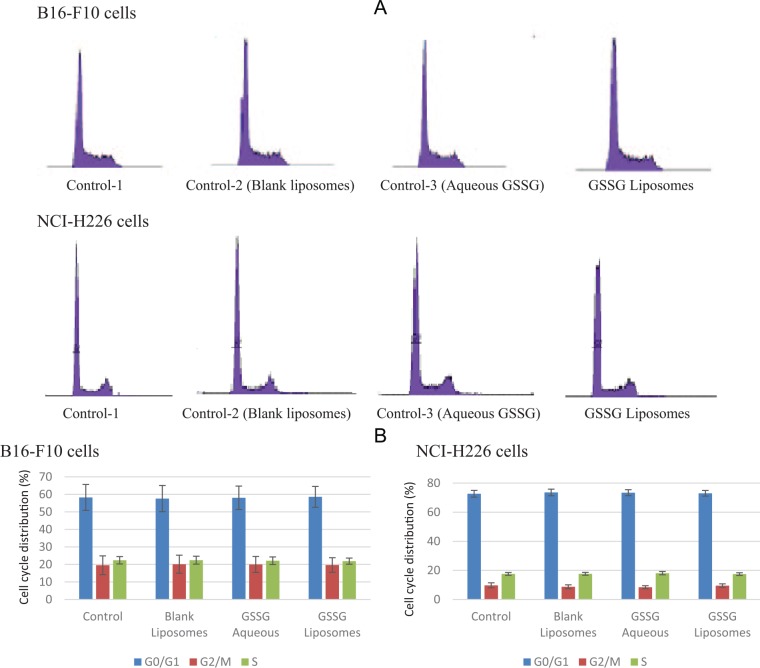
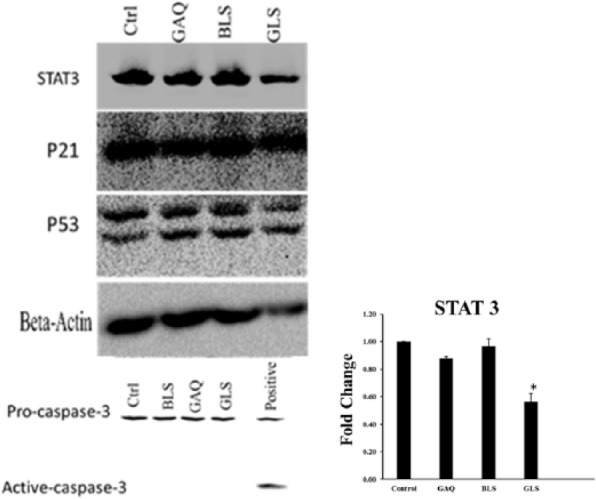
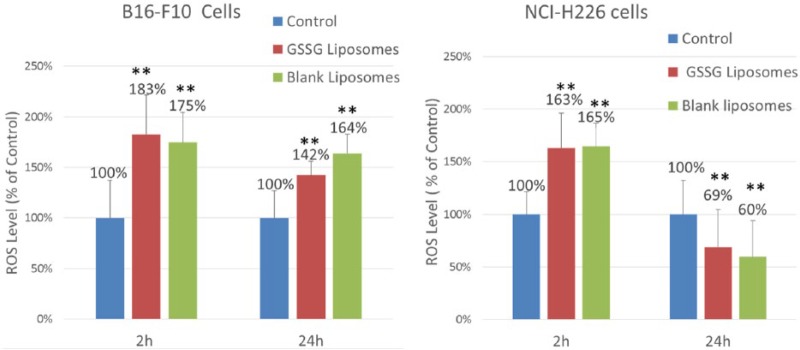
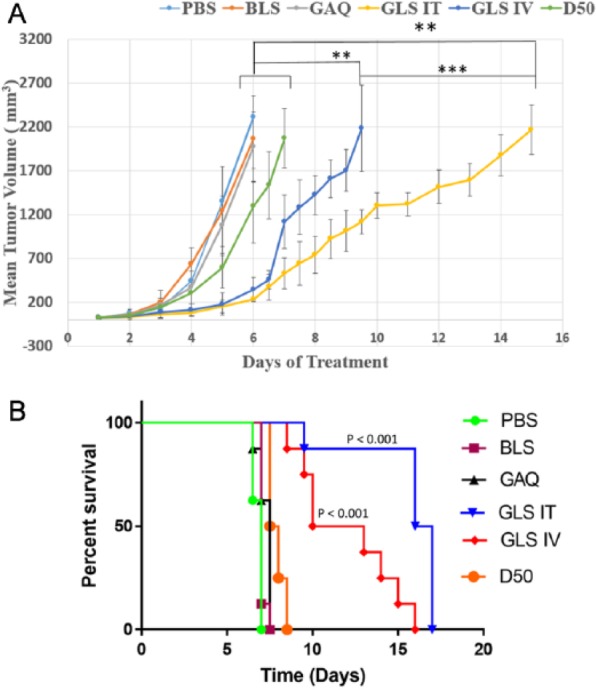
Glutathione disulfide (GSSG) is an endogenous peptide and the oxidized form of glutathione. The impacts of GSSG on cell function/dysfunction remain largely unexplored due to a lack of method to specifically increase intracellular GSSG. We recently developed GSSG liposomes that can specifically increase intracellular GSSG. The increase affected 3 of the 4 essential steps (cell detachment, migration, invasion, and adhesion) of cancer metastasis in vitro and, accordingly, produced a significant inhibition of cancer metastasis in vivo. In this investigation, the effect of GSSG liposomes on cancer growth was investigated with B16-F10 and NCI-H226 cells in vitro and with B16-F10 cells in C57BL/6 mice in vivo. Experiments were conducted to elucidate the effect on cell death through promotion of apoptosis and the effect on the cell cycle. The in vivo results with C57BL/6 mice implanted subcutaneously with B16-F10 cells showed that GSSG liposomes retarded tumor proliferation more effectively than that of dacarbazine, a chemotherapeutic drug for the treatment of melanoma. The GSSG liposomes by intravenous injection (GLS IV) and GSSG liposomes by intratumoral injection (GLS IT) showed a tumor proliferation retardation of 85% ± 5.7% and 90% ± 3.9%, respectively, compared with the phosphate-buffered saline (PBS) control group. The median survival rates for mice treated with PBS, blank liposomes, aqueous GSSG, dacarbazine, GLS IV, and GLS IT were 7, 7, 7.5, 7.75, 11.5, and 16.5 days, respectively. The effective antimetastatic and antigrowth activities warrant further investigation of the GSSG liposomes as a potentially effective therapeutic treatment for cancer.
谷胱甘肽二硫化物(GSSG)是一种内源性肽,也是谷胱甘肽的氧化形式。由于缺乏特异性增加细胞内GSSG的方法,GSSG对细胞功能/功能障碍的影响在很大程度上仍未得到探索。我们最近开发了能够特异性增加细胞内GSSG的GSSG脂质体。这种增加影响了体外癌症转移4个基本步骤(细胞脱离、迁移、侵袭和黏附)中的3个,因此在体内产生了对癌症转移的显著抑制作用。在本研究中,使用B16-F10和NCI-H226细胞在体外以及使用C57BL/6小鼠体内的B16-F10细胞研究了GSSG脂质体对癌症生长的影响。进行实验以阐明通过促进凋亡对细胞死亡的影响以及对细胞周期的影响。对皮下植入B16-F10细胞的C57BL/6小鼠的体内实验结果表明,GSSG脂质体比达卡巴嗪(一种用于治疗黑色素瘤的化疗药物)更有效地抑制肿瘤增殖。与磷酸盐缓冲盐水(PBS)对照组相比,静脉注射GSSG脂质体(GLS IV)和瘤内注射GSSG脂质体(GLS IT)分别显示出85%±5.7%和90%±3.9%的肿瘤增殖抑制率。用PBS、空白脂质体、GSSG水溶液、达卡巴嗪、GLS IV和GLS IT处理的小鼠的中位生存时间分别为7、7、7.5、7.75、11.5和16.5天。GSSG脂质体有效的抗转移和抗生长活性值得进一步研究其作为一种潜在有效的癌症治疗方法。