Ju Ling-Sha, Yang Jiao-Jiao, Lei Lei, Xia Jiang-Yan, Luo Dan, Ji Mu-Huo, Martynyuk Anatoly E, Yang Jian-Jun
Department of Anesthesiology, Zhongda Hospital, Medical School, Southeast UniversityNanjing, China.
Department of Anesthesiology and the McKnight Brain Institute, University of Florida College of MedicineGainesville, FL, USA.
Front Cell Neurosci. 2017 Apr 20;11:100. doi: 10.3389/fncel.2017.00100. eCollection 2017.
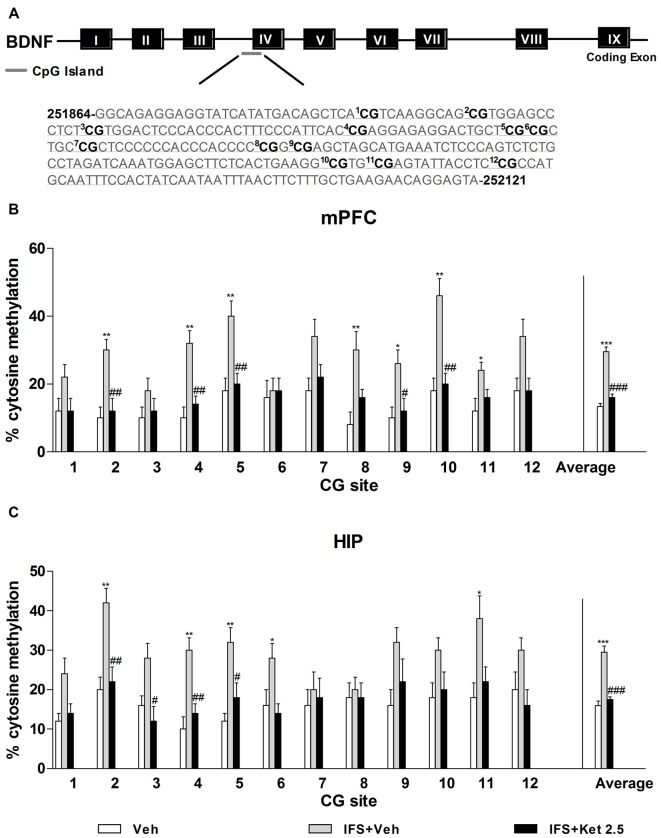
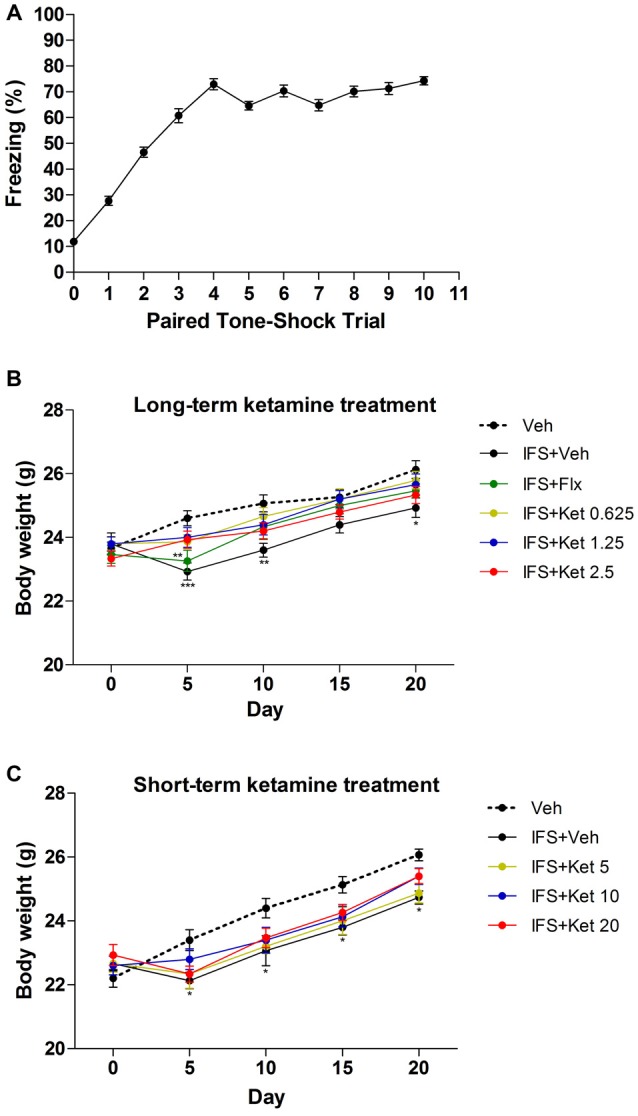
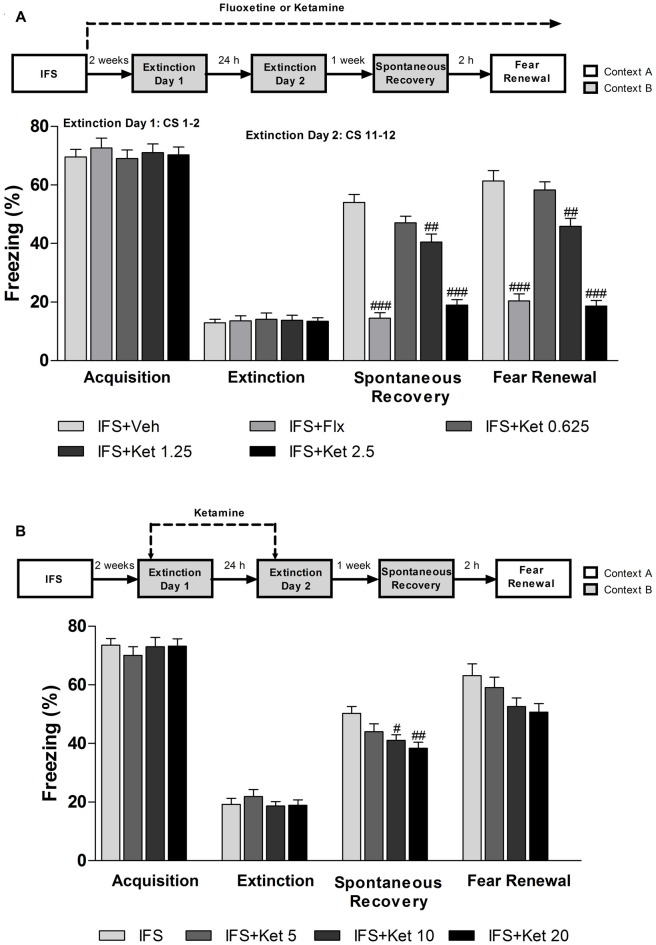
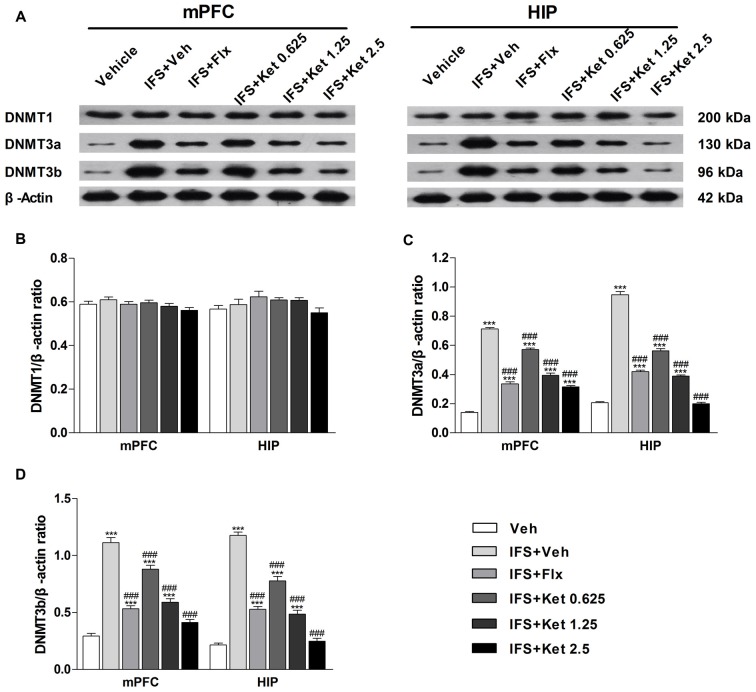
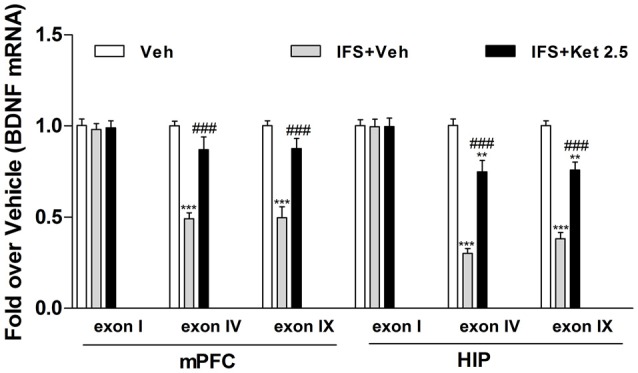
A combination of antidepressant drugs and psychotherapy exhibits more promising efficacy in treating fear disorders than either treatment alone, but underlying mechanisms of such treatments remain largely unknown. Here we investigated the role of DNA methylation of the brain-derived neurotrophic factor (Bdnf) gene in the therapeutic effects of ketamine in combination with extinction training in a mouse model of post-traumatic stress disorder (PTSD) induced by inescapable electric foot shocks (IFS). Male mice received ketamine for 22 consecutive days starting 1 h after the IFS (long-term ketamine treatment) or 2 h prior to the extinction training on days 15 and 16 after the IFS (short-term ketamine treatment). The Open Field (OF) and Elevated Plus Maze (EPM) tests were conducted on days 18 and 20. The spontaneous recovery and fear renewal tests were performed on day 23. Mice, subjected to IFS, exhibited anxiety-like behavior and fear relapse, accompanied by the increased levels of DNA methyltransferases, hyper-methylation of Bdnf gene, and decreased BDNF mRNA expression in the medial prefrontal cortex (mPFC) and hippocampus (HIP). Long-term treatment with ketamine combined with extinction training alleviated the IFS-induced abnormalities. These results suggest that long-term ketamine treatment in combination with extinction training may ameliorate fear relapse in the murine model of PTSD, at least in part, by normalizing DNA methylation of Bdnf gene.
与单独使用任何一种治疗方法相比,抗抑郁药物与心理治疗相结合在治疗恐惧障碍方面显示出更有前景的疗效,但此类治疗的潜在机制在很大程度上仍不清楚。在此,我们在由不可逃避的足部电击(IFS)诱导的创伤后应激障碍(PTSD)小鼠模型中,研究了脑源性神经营养因子(Bdnf)基因的DNA甲基化在氯胺酮联合消退训练治疗效果中的作用。雄性小鼠在IFS后1小时开始连续22天接受氯胺酮治疗(长期氯胺酮治疗),或在IFS后第15天和第16天的消退训练前2小时接受氯胺酮治疗(短期氯胺酮治疗)。在第18天和第20天进行旷场(OF)和高架十字迷宫(EPM)测试。在第23天进行自发恢复和恐惧重现测试。遭受IFS的小鼠表现出焦虑样行为和恐惧复发,同时内侧前额叶皮质(mPFC)和海马体(HIP)中的DNA甲基转移酶水平升高、Bdnf基因超甲基化以及BDNF mRNA表达降低。氯胺酮长期治疗联合消退训练减轻了IFS诱导的异常。这些结果表明,氯胺酮长期治疗联合消退训练可能至少部分通过使Bdnf基因的DNA甲基化正常化来改善PTSD小鼠模型中的恐惧复发。