Gioia Roberta, Tonelli Francesca, Ceppi Ilaria, Biggiogera Marco, Leikin Sergey, Fisher Shannon, Tenedini Elena, Yorgan Timur A, Schinke Thorsten, Tian Kun, Schwartz Jean-Marc, Forte Fabiana, Wagener Raimund, Villani Simona, Rossi Antonio, Forlino Antonella
Department of Molecular Medicine, Biochemistry Unit, University of Pavia, Pavia, Italy.
Department of Biology and Biotechnology, University of Pavia, Pavia, Italy.
Hum Mol Genet. 2017 Aug 1;26(15):2897-2911. doi: 10.1093/hmg/ddx171.
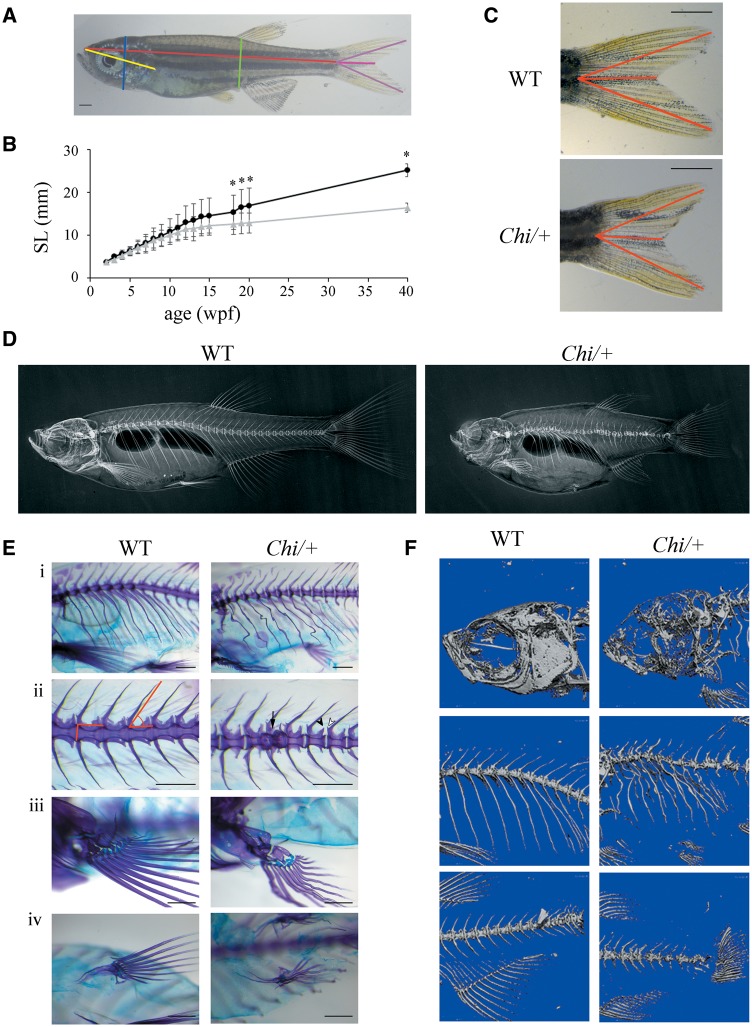
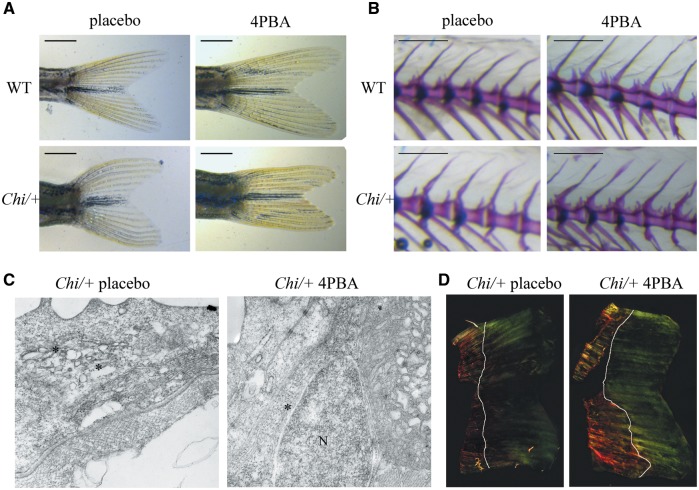
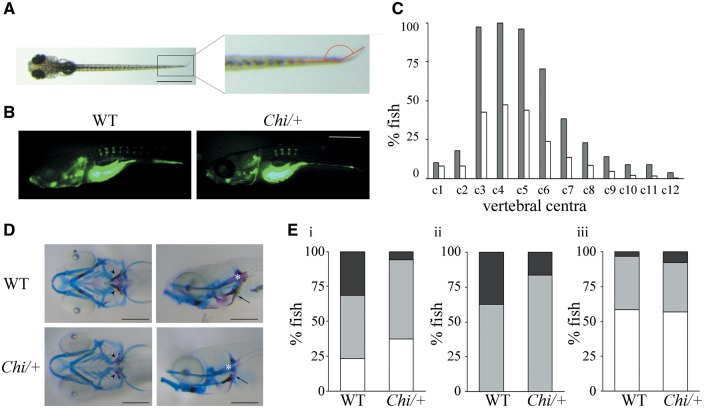
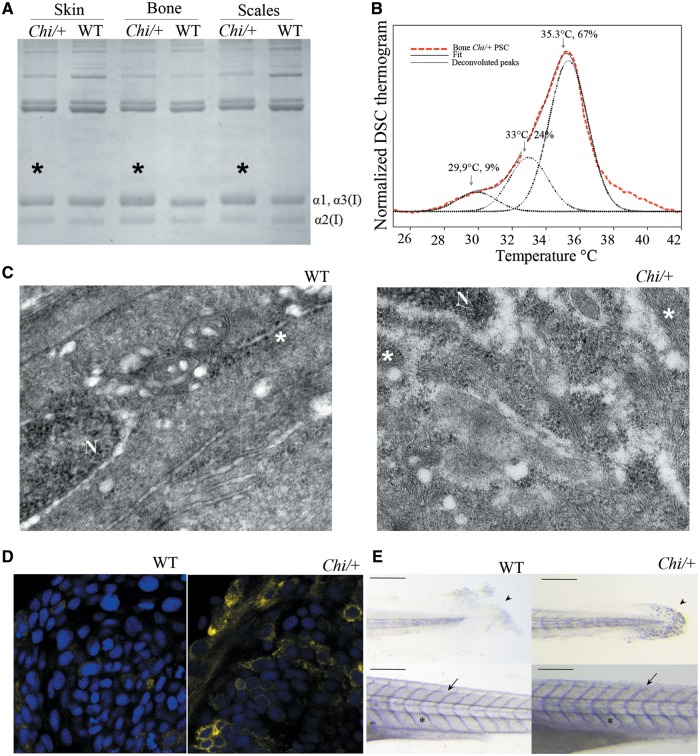
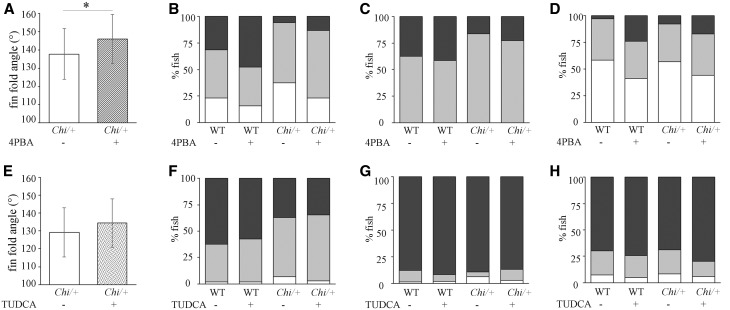
Classical osteogenesis imperfecta (OI) is a bone disease caused by type I collagen mutations and characterized by bone fragility, frequent fractures in absence of trauma and growth deficiency. No definitive cure is available for OI and to develop novel drug therapies, taking advantage of a repositioning strategy, the small teleost zebrafish (Danio rerio) is a particularly appealing model. Its small size, high proliferative rate, embryo transparency and small amount of drug required make zebrafish the model of choice for drug screening studies, when a valid disease model is available. We performed a deep characterization of the zebrafish mutant Chihuahua, that carries a G574D (p.G736D) substitution in the α1 chain of type I collagen. We successfully validated it as a model for classical OI. Growth of mutants was delayed compared with WT. X-ray, µCT, alizarin red/alcian blue and calcein staining revealed severe skeletal deformity, presence of fractures and delayed mineralization. Type I collagen extracted from different tissues showed abnormal electrophoretic migration and low melting temperature. The presence of endoplasmic reticulum (ER) enlargement due to mutant collagen retention in osteoblasts and fibroblasts of mutant fish was shown by electron and confocal microscopy. Two chemical chaperones, 4PBA and TUDCA, were used to ameliorate the cellular stress and indeed 4PBA ameliorated bone mineralization in larvae and skeletal deformities in adult, mainly acting on reducing ER cisternae size and favoring collagen secretion. In conclusion, our data demonstrated that ER stress is a novel target to ameliorate OI phenotype; chemical chaperones such as 4PBA may be, alone or in combination, a new class of molecules to be further investigated for OI treatment.
经典型成骨不全症(OI)是一种由I型胶原蛋白突变引起的骨病,其特征为骨脆性增加、在无外伤情况下频繁骨折以及生长发育迟缓。目前尚无针对OI的确切治愈方法,为开发新型药物疗法,利用药物重新定位策略,小型硬骨鱼斑马鱼(Danio rerio)是一种特别有吸引力的模型。斑马鱼体型小、增殖率高、胚胎透明且所需药物量少,当有有效的疾病模型时,使其成为药物筛选研究的首选模型。我们对斑马鱼突变体吉娃娃进行了深入表征,该突变体在I型胶原蛋白的α1链中携带G574D(p.G736D)替代。我们成功将其验证为经典OI的模型。与野生型相比,突变体的生长延迟。X射线、显微CT、茜素红/阿尔新蓝和钙黄绿素染色显示严重的骨骼畸形、骨折的存在以及矿化延迟。从不同组织中提取的I型胶原蛋白显示出异常的电泳迁移和低熔点温度。电子显微镜和共聚焦显微镜显示,由于突变胶原蛋白在突变鱼的成骨细胞和成纤维细胞中滞留,导致内质网(ER)扩张。使用两种化学伴侣4-苯基丁酸(4PBA)和牛磺熊去氧胆酸(TUDCA)来改善细胞应激,实际上4PBA改善了幼虫的骨矿化和成年鱼的骨骼畸形,主要作用是减小内质网池大小并促进胶原蛋白分泌。总之,我们的数据表明内质网应激是改善OI表型的一个新靶点;化学伴侣如4PBA可能单独或联合使用,是一类有待进一步研究用于OI治疗的新分子。