Franx Bart A A, Arnoldussen Ilse A C, Kiliaan Amanda J, Gustafson Deborah R
Department of Anatomy, Donders Institute for Brain, Cognition and Behaviour, Radboud University Medical Center, Nijmegen, The Netherlands.
Department of Neurology, Section for NeuroEpidemiology, State University of New York, Downstate Medical Center, 450 Clarkson Avenue, Box 1213, Brooklyn, NY, 11203, USA.
Drugs Aging. 2017 Jun;34(6):425-436. doi: 10.1007/s40266-017-0462-x.
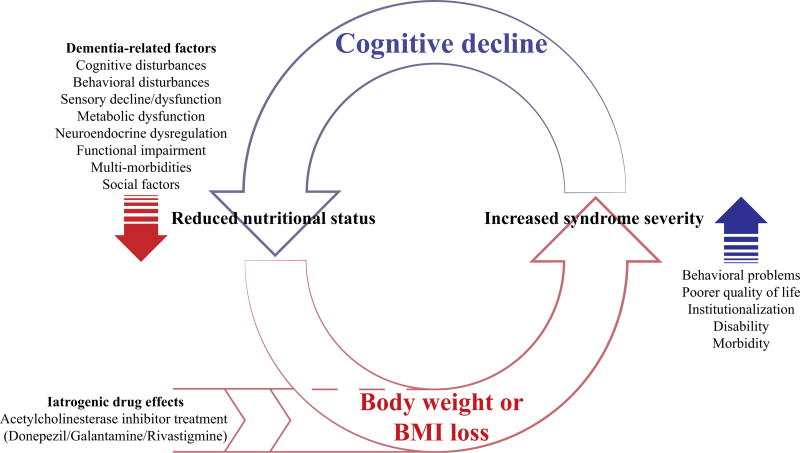
Unintentional body weight loss is common in patients with dementia and is linked to cognitive impairment and poorer disease outcomes. It is proposed that some dementia medications with market approval, while aiming to improve cognitive and functional outcomes of a patient with dementia, are associated with reported body weight or body mass index loss. This review presents evidence in the published literature on body weight loss in dementia, describes selected theories behind body weight loss, evaluates the potential impact of approved dementia pharmacotherapies on body weight, considers the potential role for medical foods, understands the potential influence of treatments for neuropsychiatric symptoms and signs, and finally, summarizes this important area.
痴呆症患者中意外体重减轻很常见,且与认知障碍和较差的疾病预后相关。有人提出,一些已获市场批准的痴呆症药物,虽然旨在改善痴呆症患者的认知和功能预后,但却与报告的体重或体重指数下降有关。本综述展示了已发表文献中关于痴呆症患者体重减轻的证据,描述了体重减轻背后的一些理论,评估了已批准的痴呆症药物治疗对体重的潜在影响,考虑了医学食品的潜在作用,了解了针对神经精神症状和体征的治疗的潜在影响,最后,总结了这一重要领域。