Santra Tapesh, Roche Sandra, Conlon Neil, O'Donovan Norma, Crown John, O'Connor Robert, Kolch Walter
Systems Biology Ireland, University College Dublin, Belfield, Dublin, Ireland.
National Institute for Cellular Biotechnology, Dublin City University, Dublin, Ireland.
PLoS One. 2017 May 8;12(5):e0177058. doi: 10.1371/journal.pone.0177058. eCollection 2017.
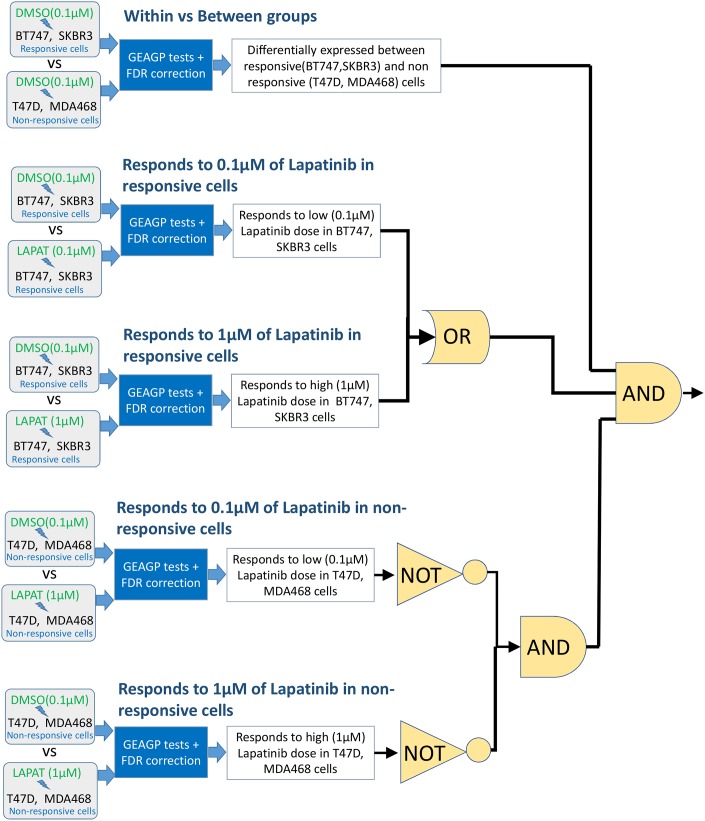
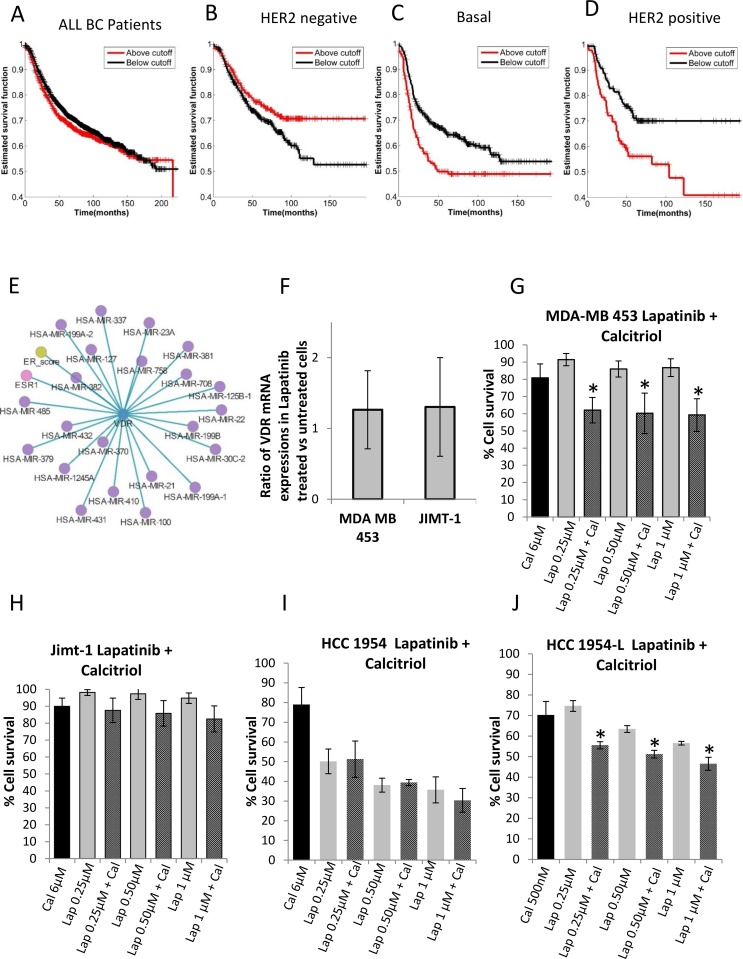
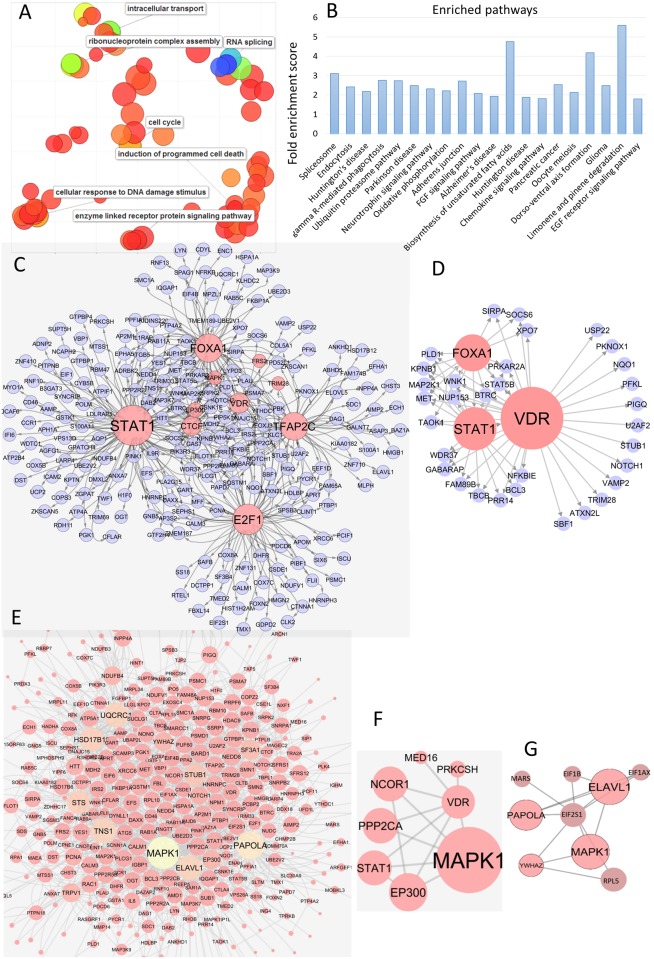
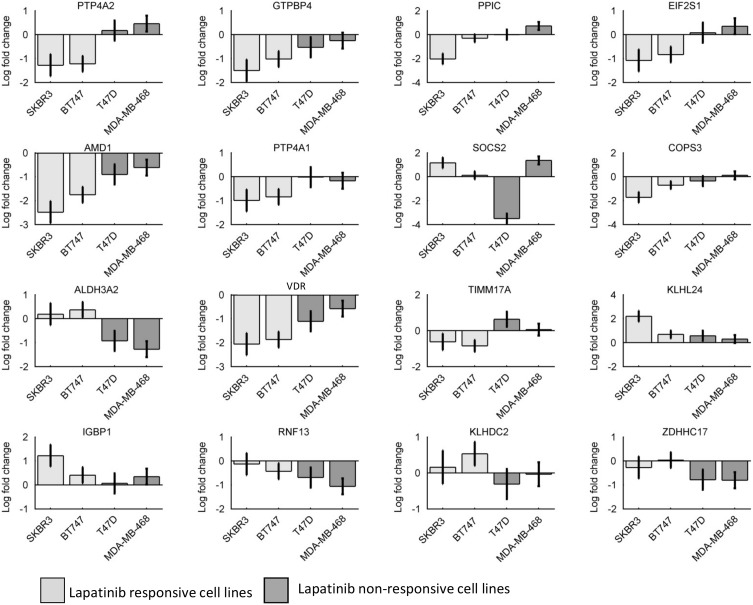
Molecularly targeted therapeutics hold promise of revolutionizing treatments of advanced malignancies. However, a large number of patients do not respond to these treatments. Here, we take a systems biology approach to understand the molecular mechanisms that prevent breast cancer (BC) cells from responding to lapatinib, a dual kinase inhibitor that targets human epidermal growth factor receptor 2 (HER2) and epidermal growth factor receptor (EGFR). To this end, we analysed temporal gene expression profiles of four BC cell lines, two of which respond and the remaining two do not respond to lapatinib. For this analysis, we developed a Gaussian process based algorithm which can accurately find differentially expressed genes by analysing time course gene expression profiles at a fraction of the computational cost of other state-of-the-art algorithms. Our analysis identified 519 potential genes which are characteristic of lapatinib non-responsiveness in the tested cell lines. Data from the Genomics of Drug Sensitivity in Cancer (GDSC) database suggested that the basal expressions 120 of the above genes correlate with the response of BC cells to HER2 and/or EGFR targeted therapies. We selected 27 genes from the larger panel of 519 genes for experimental verification and 16 of these were successfully validated. Further bioinformatics analysis identified vitamin D receptor (VDR) as a potential target of interest for lapatinib non-responsive BC cells. Experimentally, calcitriol, a commonly used reagent for VDR targeted therapy, in combination with lapatinib additively inhibited proliferation in two HER2 positive cell lines, lapatinib insensitive MDA-MB-453 and lapatinib resistant HCC 1954-L cells.
分子靶向疗法有望彻底改变晚期恶性肿瘤的治疗方式。然而,大量患者对这些治疗并无反应。在此,我们采用系统生物学方法来理解那些阻止乳腺癌(BC)细胞对拉帕替尼产生反应的分子机制,拉帕替尼是一种靶向人类表皮生长因子受体2(HER2)和表皮生长因子受体(EGFR)的双激酶抑制剂。为此,我们分析了四种BC细胞系的时间基因表达谱,其中两种对拉帕替尼有反应,另外两种则无反应。对于该分析,我们开发了一种基于高斯过程的算法,该算法通过分析时间进程基因表达谱,能够以其他最先进算法一小部分的计算成本准确找到差异表达基因。我们的分析确定了519个潜在基因,这些基因是受试细胞系中拉帕替尼无反应的特征。癌症药物敏感性基因组学(GDSC)数据库的数据表明,上述基因中的120个基因的基础表达与BC细胞对HER2和/或EGFR靶向疗法的反应相关。我们从519个基因的更大列表中选择了27个基因进行实验验证,其中16个成功得到验证。进一步的生物信息学分析确定维生素D受体(VDR)是拉帕替尼无反应的BC细胞的一个潜在感兴趣靶点。在实验中,骨化三醇是一种常用于VDR靶向治疗的试剂,与拉帕替尼联合使用可在两种HER2阳性细胞系(拉帕替尼不敏感的MDA - MB - 453和拉帕替尼耐药的HCC 1954 - L细胞)中协同抑制增殖。