Schaffer Yael, Ben Zeev Bruria, Cohen Roni, Shufer Avinoam, Geva Ronny
Department of Psychology, Bar-Ilan University, Ramat Gan, Israel.
The Gonda Multidisciplinary Brain Research Center, Bar-Ilan University, Ramat Gan, Israel.
Front Neurol. 2017 Apr 21;8:86. doi: 10.3389/fneur.2017.00086. eCollection 2017.
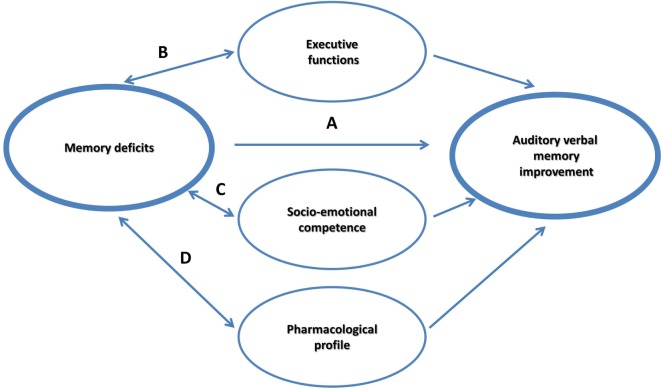
Recent studies on pharmacoresponsive epilepsies demonstrate specific memory, executive functions (EF), and psychosocial deficits in this group. These deficits are often undertreated, and little is known about the neuropsychological factors that may support moderation of the deficits through intervention. The aim of this study was to explore the effects of a structured cognitive behavioral group intervention on both memory and emotional domains and to evaluate the factors influencing its efficacy.
The feasibility study implemented a newly designed intervention for children with pharmacoresponsive epilepsies ( = 33, aged 9-14 years, 51% girls), hypothesizing that memory and psychosocial symptoms in children with pharmacoresponsive epilepsies are sensitive to intervention using structured memory and psychosocial modules in a weekly group session setting. Comparable memory and psychosocial assessments were used to evaluate performance at baseline and post-intervention. Results were compared to age- and education-matched healthy controls ( = 27, aged 9-14 years).
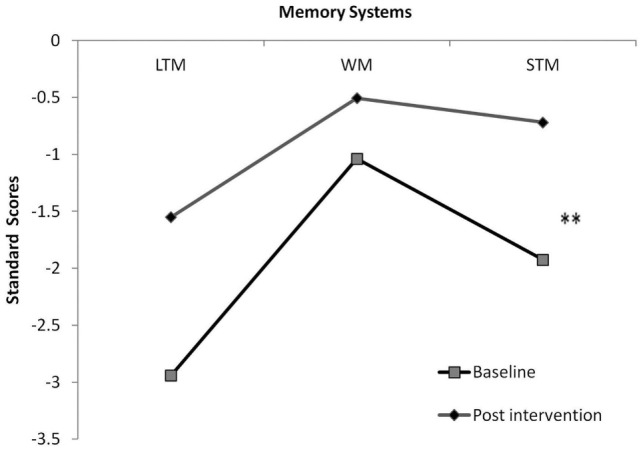
Pre-post-intervention comparisons show improvements in STM ( < 0.01, η = 0.358), optimism ( < 0.05, η = 0.245), and self-efficacy ( < 0.05, η = 0.164). Unique negative relations between memory deficits and psychosocial phenotype were seen in epilepsy patients and not in controls in response to the intervention. EF moderated this intervention effect ( < 0.05, η = 0.252), whereas psychosocial status and pharmacological profile did not.
Cognitive behavioral therapy focusing on memory and psychosocial perceptions for children with pharmacoresponsive epilepsies seems promising, with greater improvement in memory and psychosocial functioning in children with more affected EF.
近期关于药物反应性癫痫的研究表明,该群体存在特定的记忆、执行功能(EF)和心理社会缺陷。这些缺陷常常未得到充分治疗,对于可能通过干预来缓解这些缺陷的神经心理学因素也知之甚少。本研究的目的是探讨结构化认知行为团体干预对记忆和情感领域的影响,并评估影响其疗效的因素。
这项可行性研究对药物反应性癫痫患儿(n = 33,年龄9 - 14岁,51%为女孩)实施了一项新设计的干预措施,假设药物反应性癫痫患儿的记忆和心理社会症状在每周一次的团体会议环境中对使用结构化记忆和心理社会模块的干预敏感。使用可比的记忆和心理社会评估来评估基线和干预后的表现。将结果与年龄和教育程度匹配的健康对照组(n = 27,年龄9 - 14岁)进行比较。
干预前后比较显示,短时记忆(p < 0.01,η = 0.358)、乐观主义(p < 0.05,η = 0.245)和自我效能感(p < 0.05,η = 0.164)有所改善。在癫痫患者中,记忆缺陷与心理社会表型之间存在独特负相关,而在对照组中对干预无此反应。执行功能调节了这种干预效果(p < 0.05,η = 0.252),而心理社会状态和药物特征则没有。
针对药物反应性癫痫患儿的以记忆和心理社会认知为重点的认知行为疗法似乎很有前景,执行功能受影响更大的患儿在记忆和心理社会功能方面有更大改善。