Santos Alina E, Cruz-Ortega Rocio, Meza-Figueroa Diana, Romero Francisco M, Sanchez-Escalante Jose Jesus, Maier Raina M, Neilson Julia W, Alcaraz Luis David, Molina Freaner Francisco E
Departamento de Ecologia de la Biodiversidad, Instituto de Ecologia, Universidad Nacional Autonoma de Mexico, Hermosillo, Sonora, Mexico.
Departamento de Ecologia Funcional, Instituto de Ecologia, Universidad Nacional Autonoma de Mexico, Ciudad de Mexico, Mexico.
PeerJ. 2017 May 4;5:e3280. doi: 10.7717/peerj.3280. eCollection 2017.
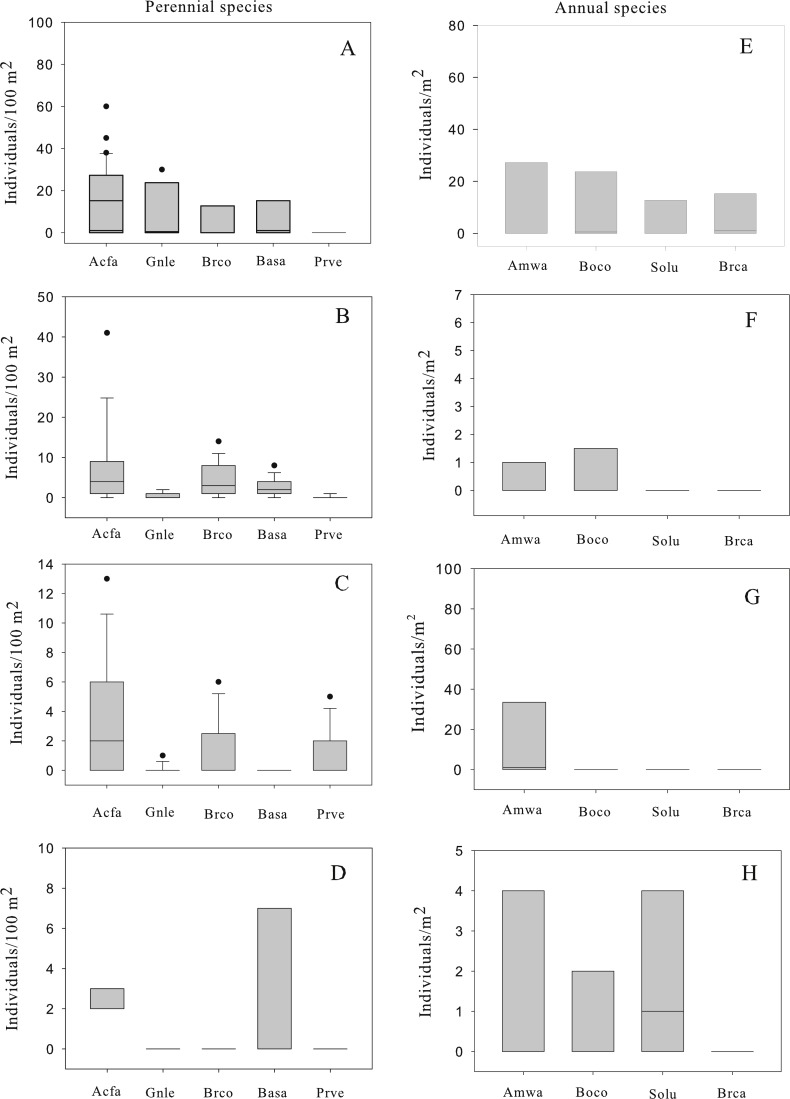
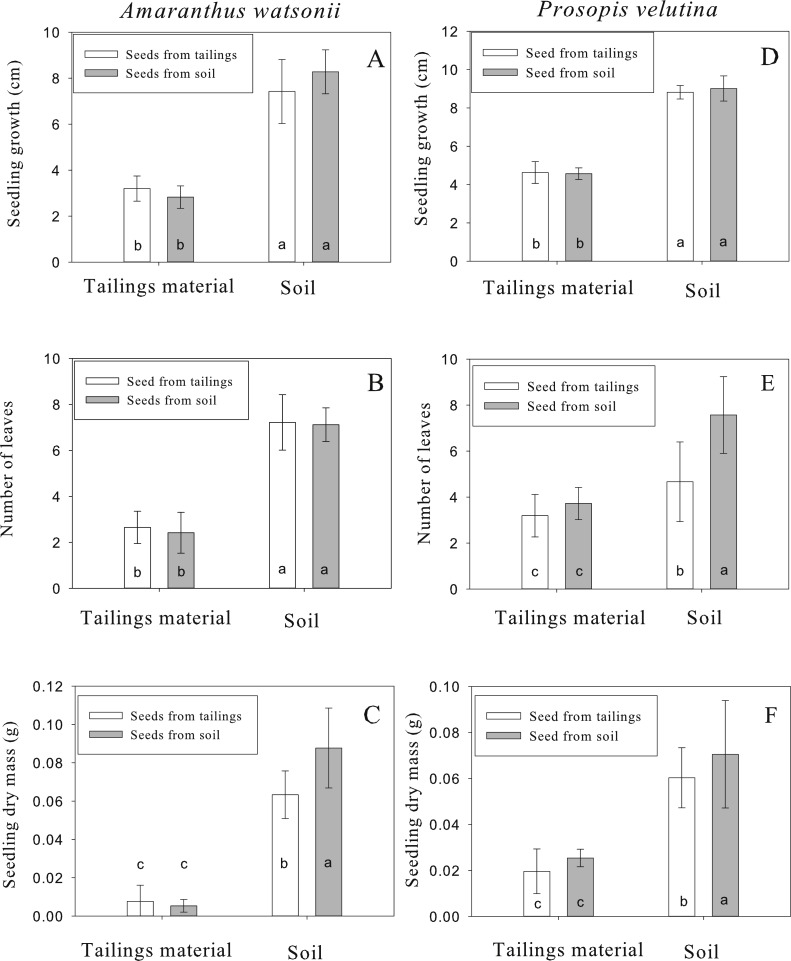
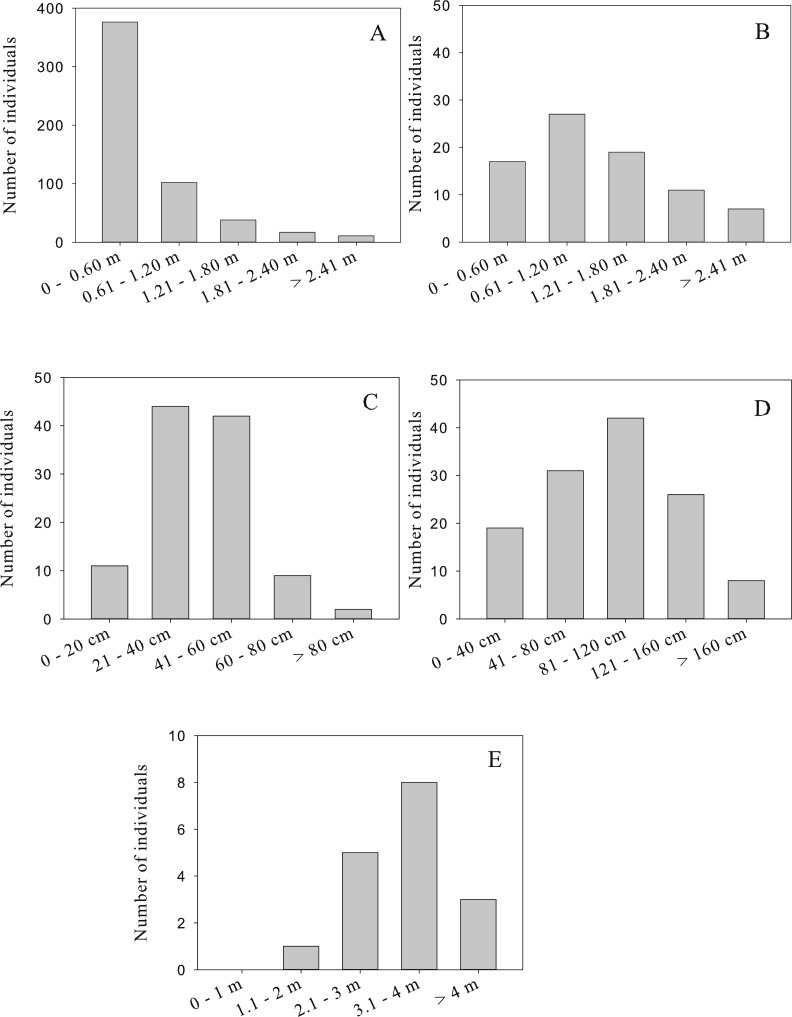
Phytostabilization is a remediation technology that uses plants for in-situ stabilization of contamination in soils and mine tailings. The objective of this study was to identify native plant species with potential for phytostabilization of the abandoned mine tailings in Nacozari, Sonora in northern Mexico. A flora of 42 species in 16 families of angiosperms was recorded on the tailings site and the abundance of the most common perennial species was estimated. Four of the five abundant perennial species showed evidence of regeneration: the ability to reproduce and establish new seedlings. A comparison of selected physicochemical properties of the tailings in vegetated patches with adjacent barren areas suggests that pH, electrical conductivity, texture, and concentration of potentially toxic elements do not limit plant distribution. For the most abundant species, the accumulation factor for most metals was <1, with the exception of Zn in two species. A short-term experiment on adaptation revealed limited evidence for the formation of local ecotypes in and . Overall, the results of this study indicate that five native plant species might have potential for phytostabilization of the Nacozari tailings and that seed could be collected locally to revegetate the site. More broadly, this study provides a methodology that can be used to identify native plants and evaluate their phytostabilization potential for similar mine tailings.
植物稳定化是一种修复技术,利用植物对土壤和矿山尾矿中的污染物进行原位稳定化处理。本研究的目的是确定墨西哥北部索诺拉州纳科萨里废弃矿山尾矿具有植物稳定化潜力的本地植物物种。在尾矿场地记录了16个被子植物科的42种植物区系,并估算了最常见多年生植物的丰度。五种丰富的多年生植物中有四种显示出再生迹象:即繁殖和建立新幼苗的能力。对植被斑块中的尾矿与相邻贫瘠区域的选定理化性质进行比较表明,pH值、电导率、质地和潜在有毒元素的浓度并不限制植物分布。对于最丰富的物种,大多数金属的积累因子<1,但有两个物种中的锌除外。一项关于适应性的短期实验显示,在[具体物种1]和[具体物种2]中形成本地生态型的证据有限。总体而言,本研究结果表明,五种本地植物物种可能具有纳科萨里尾矿植物稳定化的潜力,可以在当地收集种子用于该场地的植被恢复。更广泛地说,本研究提供了一种方法,可用于识别本地植物并评估它们对类似矿山尾矿的植物稳定化潜力。