Seher Axel, Lagler Charlotte, Stühmer Thorsten, Müller-Richter Urs Dietmar Achim, Kübler Alexander Christian, Sebald Walter, Müller Thomas Dieter, Nickel Joachim
Department of Oral and Maxillofacial Plastic Surgery, University Hospital Würzburg, Würzburg, Germany.
Department of Internal Medicine II, University Hospital Würzburg, Würzburg, Germany.
PLoS One. 2017 May 10;12(5):e0174884. doi: 10.1371/journal.pone.0174884. eCollection 2017.
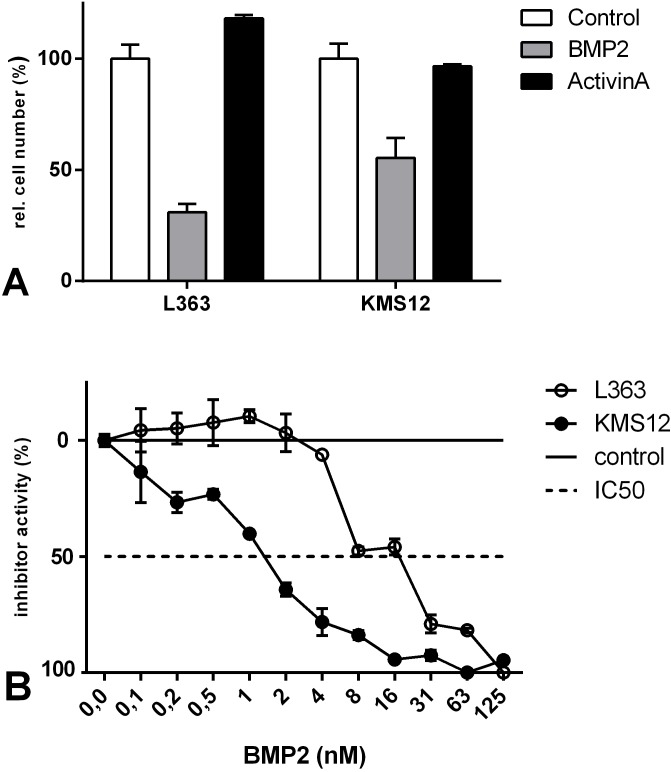
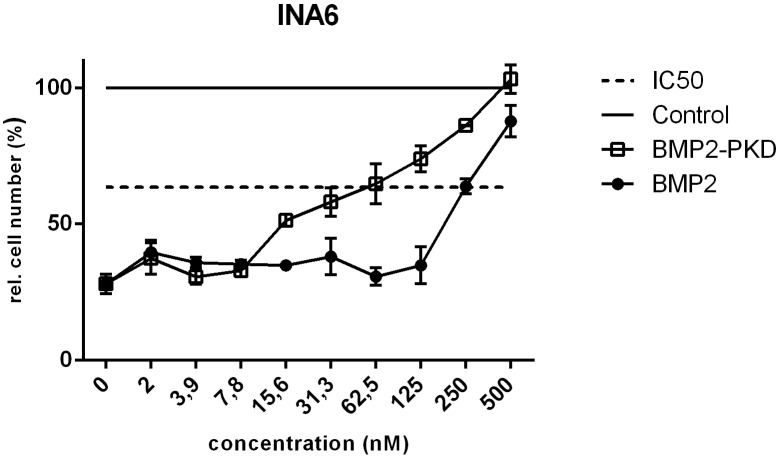
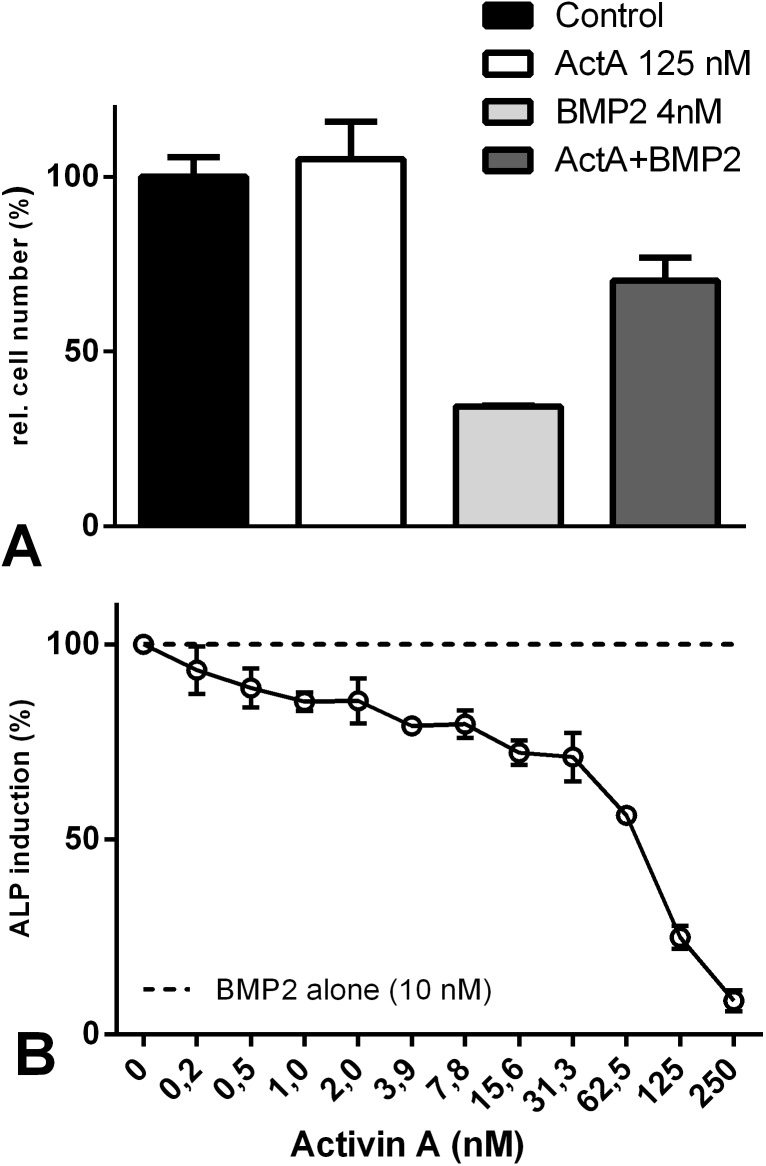
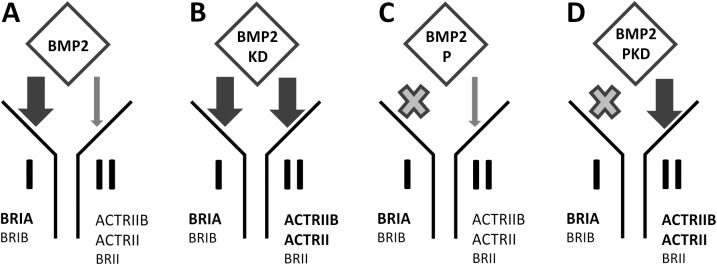
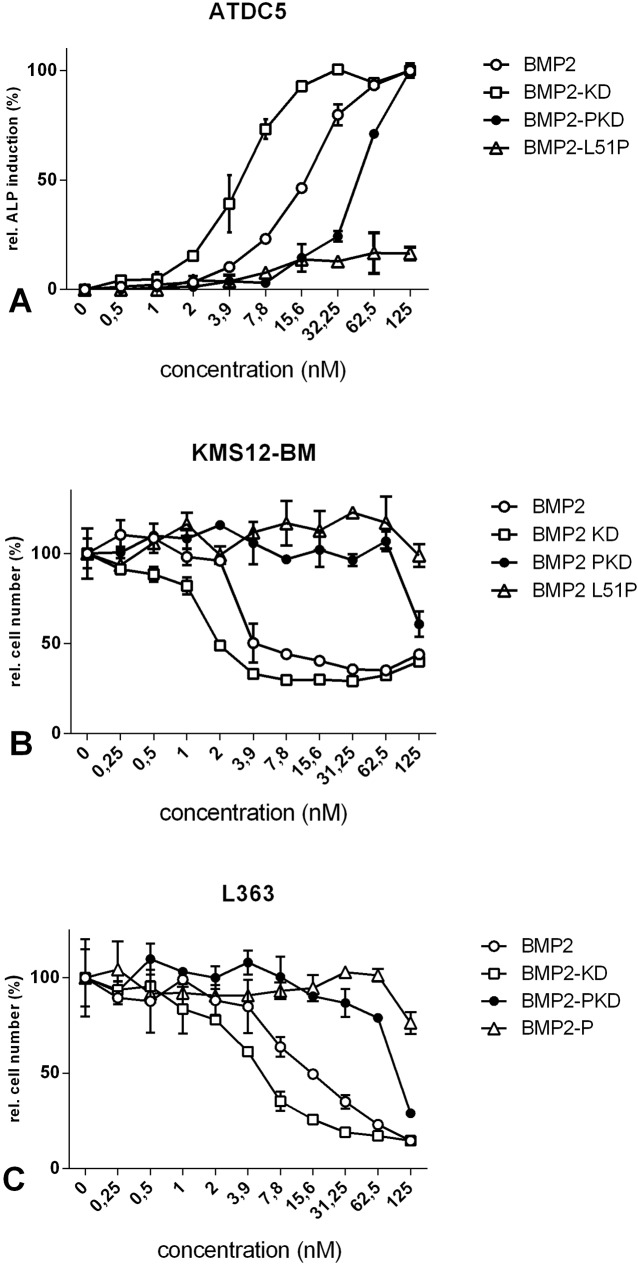
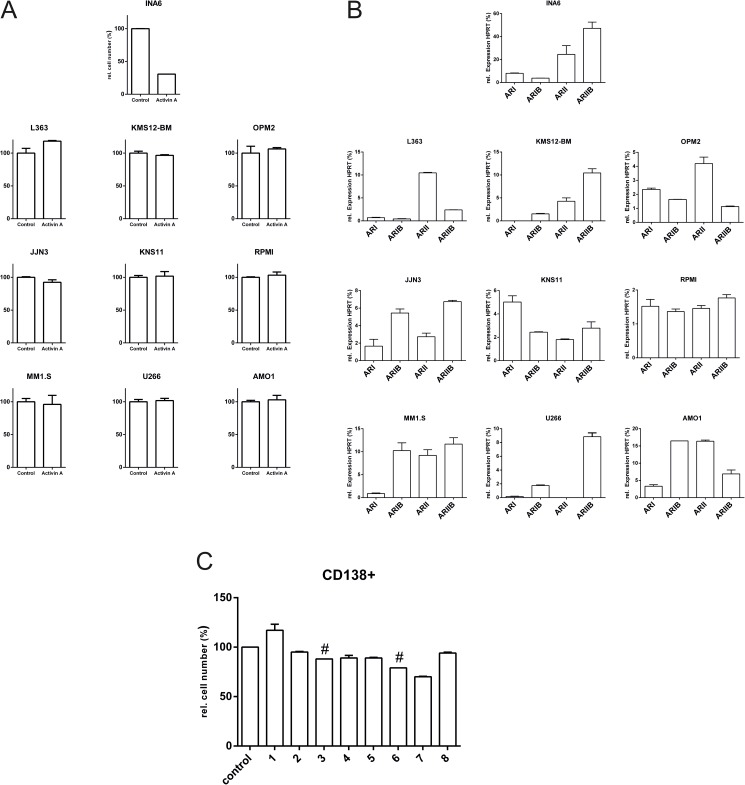
Multiple myeloma (MM) represents a haematological cancer characterized by the pathological hyper proliferation of antibody-producing B-lymphocytes. Patients typically suffer from kidney malfunction and skeletal disorders. In the context of MM, the transforming growth factor β (TGFβ) member Activin A was recently identified as a promoter of both accompanying symptoms. Because studies have shown that bone morphogenetic protein (BMP)-2-mediated activities are counteracted by Activin A, we analysed whether BMP2, which also binds to the Activin A receptors ActRII and ActRIIB but activates the alternative SMAD-1/5/8 pathway, can be used to antagonize Activin A activities, such as in the context of MM. Therefore three BMP2 derivatives were generated with modified binding activities for the type II (ActRIIB) and/or type I receptor (BMPRIA) showing either increased or decreased BMP2 activity. In the context of MM these BMP2 muteins show two functionalities since they act as a) an anti-proliferative/apoptotic agent against neoplastic B-cells, b) as a bone-formation promoting growth factor. The molecular basis of both activities was shown in two different cellular models to clearly rely on the properties of the investigated BMP2 muteins to compete for the binding of Activin A to the Activin type II receptors. The experimental outcome suggests new therapeutic strategies using BMP2 variants in the treatment of MM-related pathologies.
多发性骨髓瘤(MM)是一种血液系统癌症,其特征在于产生抗体的B淋巴细胞发生病理性过度增殖。患者通常会出现肾功能障碍和骨骼疾病。在MM的背景下,转化生长因子β(TGFβ)成员激活素A最近被确定为这两种伴随症状的促进因子。由于研究表明骨形态发生蛋白(BMP)-2介导的活性会被激活素A抵消,我们分析了同样与激活素A受体ActRII和ActRIIB结合但激活替代SMAD-1/5/8途径的BMP2是否可用于拮抗激活素A的活性,例如在MM的背景下。因此,我们生成了三种BMP2衍生物,它们对II型(ActRIIB)和/或I型受体(BMPRIA)的结合活性有所改变,表现出BMP2活性的增加或降低。在MM的背景下,这些BMP2突变体表现出两种功能,因为它们a)作为针对肿瘤性B细胞的抗增殖/凋亡剂,b)作为促进骨形成的生长因子。在两种不同的细胞模型中表明,这两种活性的分子基础显然依赖于所研究的BMP2突变体竞争激活素A与激活素II型受体结合的特性。实验结果表明,使用BMP2变体治疗MM相关病症有新的治疗策略。