Du Toit Riëtte, Herbst Phillip G, van Rensburg Annari, Snyman Hendrik W, Reuter Helmuth, Doubell Anton F
Division of Rheumatology, Department of Medicine, Faculty of Medicine and Health Sciences, Stellenbosch University and Tygerberg Academic Hospital, Cape Town, South Africa
Division Cardiology, Department of Medicine, Faculty of Medicine and Health Sciences, Stellenbosch University and Tygerberg Academic Hospital, Cape Town, South Africa.
Echo Res Pract. 2017 Jun;4(2):9-19. doi: 10.1530/ERP-17-0005. Epub 2017 May 10.
Lupus myocarditis occurs in 5-10% of patients with systemic lupus erythematosus (SLE). No single feature is diagnostic of lupus myocarditis. Speckle tracking echocardiography (STE) can detect subclinical left ventricular dysfunction in SLE patients, with limited research on its utility in clinical lupus myocarditis. We report on STE in comparison to conventional echocardiography in patients with clinical lupus myocarditis.
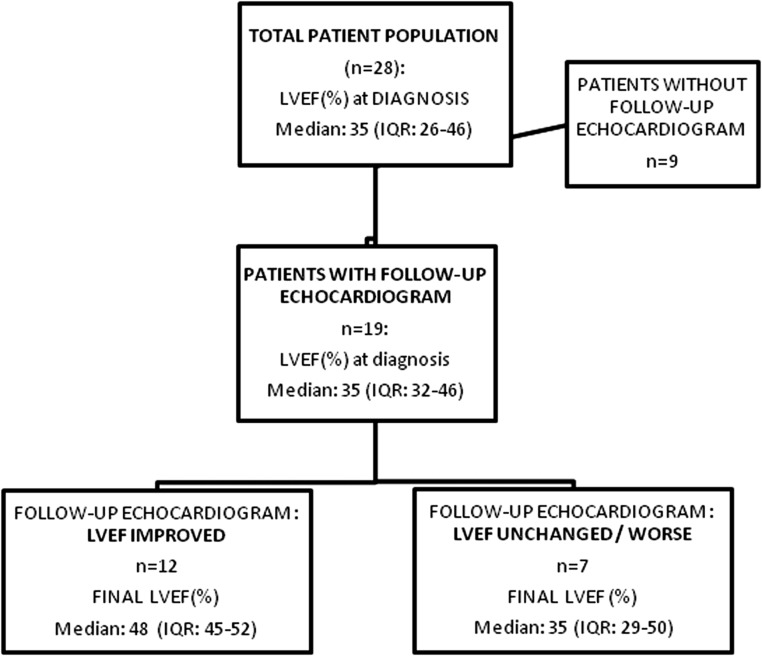
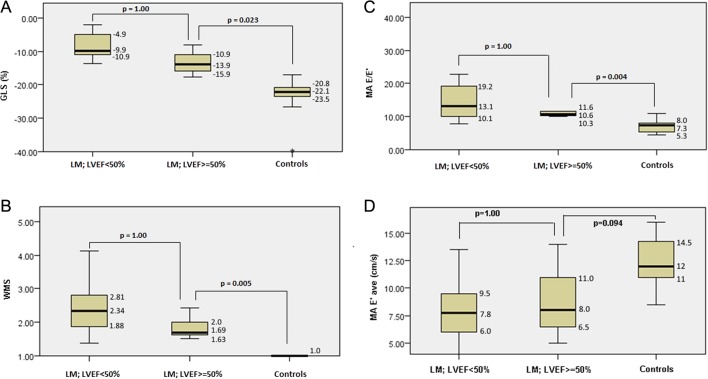
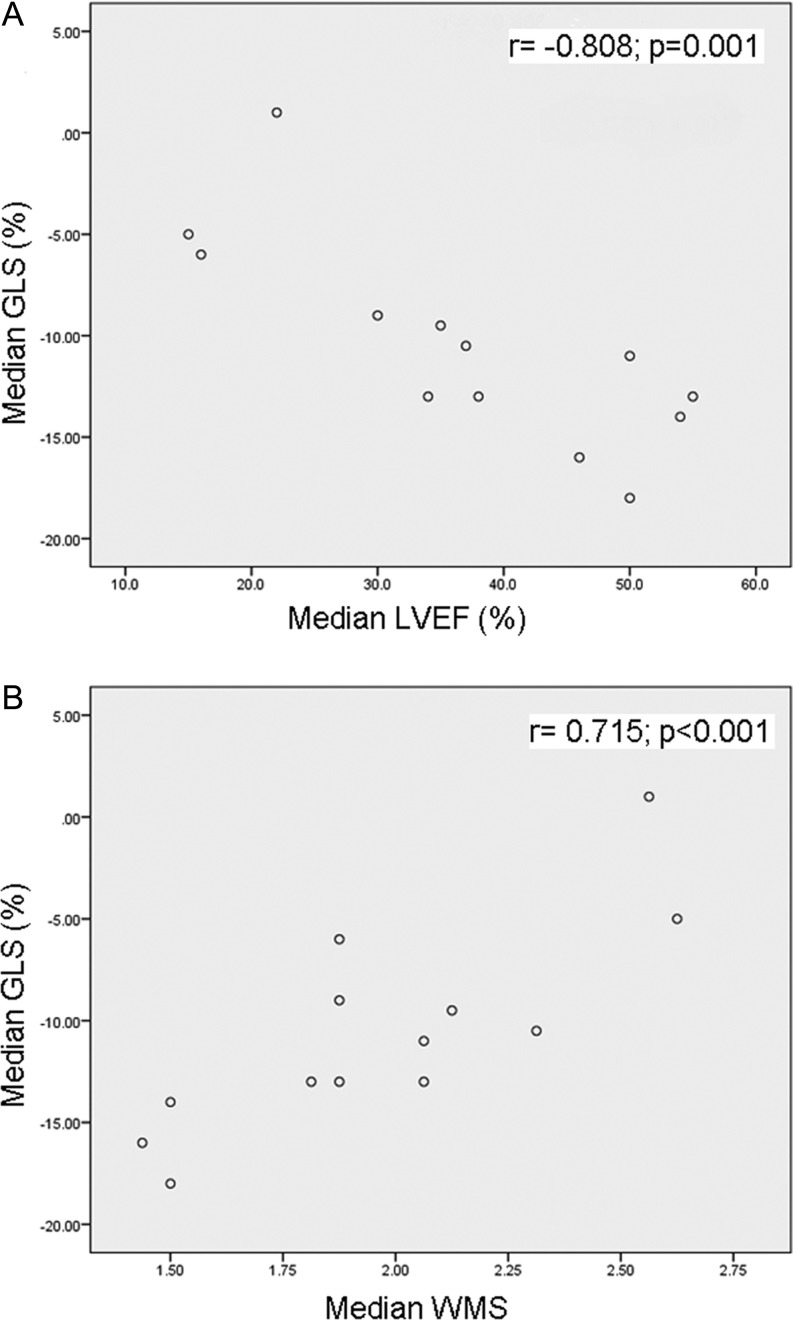
A retrospective study was done at a tertiary referral hospital in South Africa. SLE patients with lupus myocarditis were included and compared to healthy controls. Echocardiographic images were reanalyzed, including global longitudinal strain through STE. A poor echocardiographic outcome was defined as final left ventricular ejection fraction (LVEF) <40%. 28 SLE patients fulfilled the criteria. Global longitudinal strain correlated with global (LVEF: = -0.808; = 0.001) and regional (wall motion score: = 0.715; < 0.001) function. In patients presenting with a LVEF ≥50%, global longitudinal strain ( = 0.023), wall motion score ( = 0.005) and diastolic function ( = 0.004) were significantly impaired vs controls. Following treatment, LVEF (35-47% ( = 0.023)) and wall motion score (1.88-1.5 ( = 0.017)) improved but not global longitudinal strain. Initial LVEF (34%; = 0.046) and global longitudinal strain (-9.5%; = 0.095) were lower in patients with a final LVEF <40%.
This is the first known report on STE in a series of patients with clinical lupus myocarditis. Global longitudinal strain correlated with regional and global left ventricular function. Global longitudinal strain, wall motion score and diastolic parameters may be more sensitive markers of lupus myocarditis in patients presenting with a preserved LVEF ≥50%. A poor initial LVEF and global longitudinal strain were associated with a persistent LVEF <40%. Echocardiography is a non-invasive tool with diagnostic and prognostic value in lupus myocarditis.
狼疮性心肌炎发生于5%至10%的系统性红斑狼疮(SLE)患者中。没有单一特征可诊断狼疮性心肌炎。斑点追踪超声心动图(STE)可检测SLE患者的亚临床左心室功能障碍,但其在临床狼疮性心肌炎中的应用研究有限。我们报告了临床狼疮性心肌炎患者中STE与传统超声心动图的比较情况。
在南非一家三级转诊医院进行了一项回顾性研究。纳入患有狼疮性心肌炎的SLE患者并与健康对照进行比较。对超声心动图图像进行重新分析,包括通过STE测量整体纵向应变。超声心动图不良结果定义为最终左心室射血分数(LVEF)<40%。28例SLE患者符合标准。整体纵向应变与整体(LVEF:= -0.808;= 0.001)和局部(室壁运动评分:= 0.715;< 0.001)功能相关。在LVEF≥50%的患者中,与对照组相比,整体纵向应变(= 0.023)、室壁运动评分(= 0.005)和舒张功能(= 0.004)明显受损。治疗后,LVEF(35 - 47%(= 0.023))和室壁运动评分(1.88 - 1.5(= 0.017))有所改善,但整体纵向应变未改善。最终LVEF<40%的患者初始LVEF(34%;= 0.046)和整体纵向应变(-9.5%;= 0.095)较低。
这是关于一系列临床狼疮性心肌炎患者STE的首份已知报告。整体纵向应变与局部和整体左心室功能相关。在LVEF≥50%的患者中,整体纵向应变、室壁运动评分和舒张参数可能是狼疮性心肌炎更敏感的标志物。初始LVEF差和整体纵向应变与持续的LVEF<40%相关。超声心动图是一种在狼疮性心肌炎中具有诊断和预后价值的非侵入性工具。