Shen Ping, Fan Jianzhong, Guo Lihua, Li Jiahua, Li Ang, Zhang Jing, Ying Chaoqun, Ji Jinru, Xu Hao, Zheng Beiwen, Xiao Yonghong
Collaborative Innovation Center for Diagnosis and Treatment of Infectious Diseases, State Key Laboratory for Diagnosis and Treatment of Infectious Diseases, The First Affiliated Hospital, School of Medicine, Zhejiang University, Hangzhou, 310003, China.
Department of Clinical Laboratory, Hangzhou First People's Hospital, Hangzhou, 310006, China.
Ann Clin Microbiol Antimicrob. 2017 May 12;16(1):37. doi: 10.1186/s12941-017-0212-2.
Shigellosis is the most common cause of gastrointestinal infections in developing countries. In China, the species most frequently responsible for shigellosis is Shigella flexneri. S. flexneri remains largely unexplored from a genomic standpoint and is still described using a vocabulary based on biochemical and serological properties. Moreover, increasing numbers of ESBL-producing Shigella strains have been isolated from clinical samples. Despite this, only a few cases of ESBL-producing Shigella have been described in China. Therefore, a better understanding of ESBL-producing Shigella from a genomic standpoint is required. In this study, a S. flexneri type 1a isolate SP1 harboring bla, which was recovered from the patient with diarrhea, was subjected to whole genome sequencing.
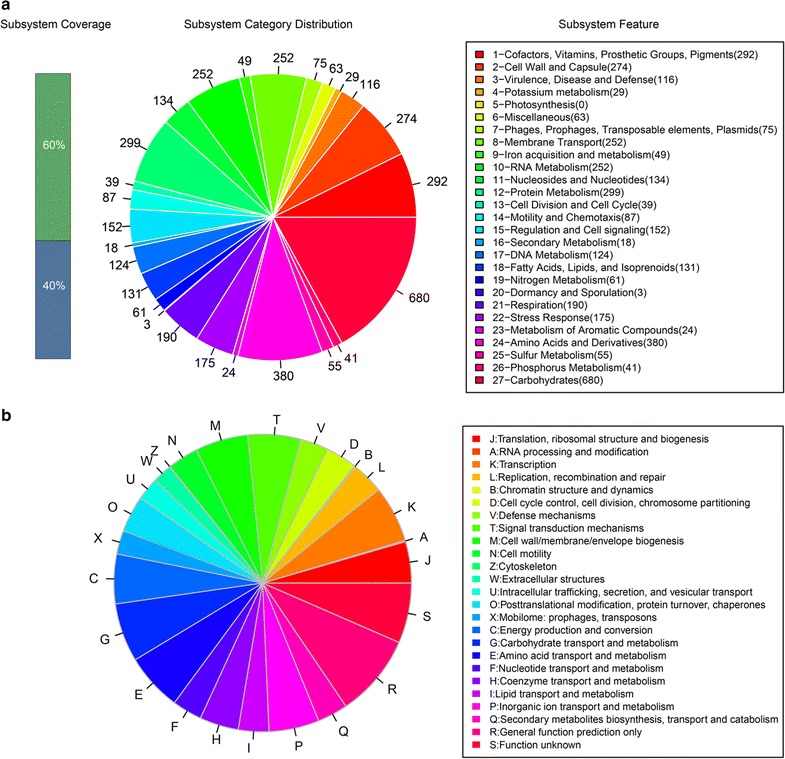
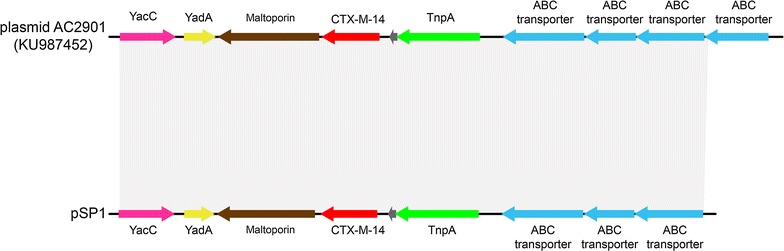
The draft genome assembly of S. flexneri strain SP1 consisted of 4,592,345 bp with a G+C content of 50.46%. RAST analysis revealed the genome contained 4798 coding sequences (CDSs) and 100 RNA-encoding genes. We detected one incomplete prophage and six candidate CRISPR loci in the genome. In vitro antimicrobial susceptibility testing demonstrated that strain SP1 is resistant to ampicillin, amoxicillin/clavulanic acid, cefazolin, ceftriaxone and trimethoprim. In silico analysis detected genes mediating resistance to aminoglycosides, β-lactams, phenicol, tetracycline, sulphonamides, and trimethoprim. The bla gene was located on an IncFII2 plasmid. A series of virulence factors were identified in the genome.
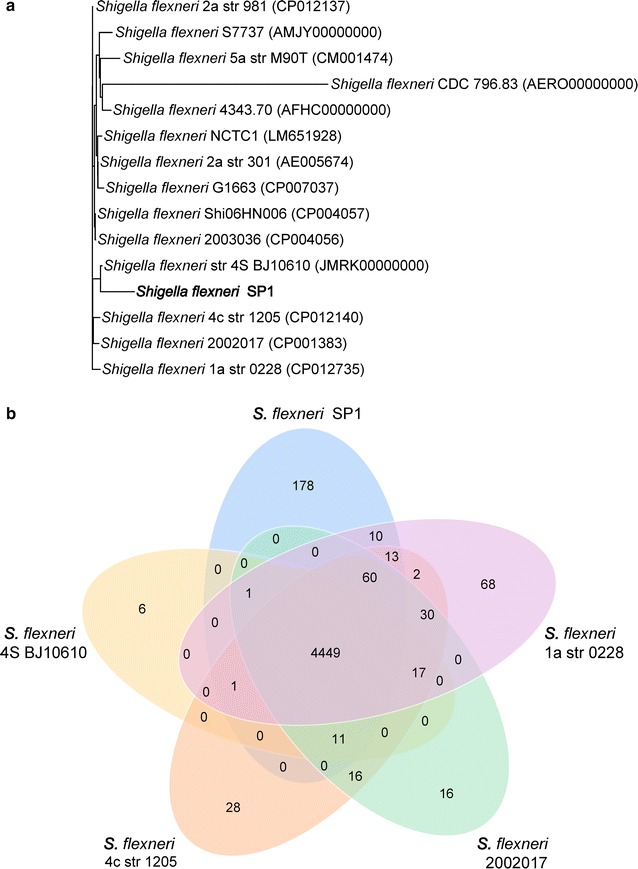
In this study, we report the whole genome sequence of a bla-encoding S. flexneri strain SP1. Dozens of resistance determinants were detected in the genome and may be responsible for the multidrug-resistance of this strain, although further confirmation studies are warranted. Numerous virulence factors identified in the strain suggest that isolate SP1 is potential pathogenic. The availability of the genome sequence and comparative analysis with other S. flexneri strains provides the basis to further address the evolution of drug resistance mechanisms and pathogenicity in S. flexneri.
志贺氏菌病是发展中国家胃肠道感染的最常见病因。在中国,引起志贺氏菌病最常见的菌种是福氏志贺氏菌。从基因组角度来看,福氏志贺氏菌在很大程度上仍未被深入研究,目前仍使用基于生化和血清学特性的术语来描述。此外,从临床样本中分离出的产超广谱β-内酰胺酶(ESBL)的志贺氏菌菌株数量不断增加。尽管如此,中国仅报道了少数产ESBL的志贺氏菌病例。因此,需要从基因组角度更好地了解产ESBL的志贺氏菌。在本研究中,从腹泻患者中分离出的一株携带bla基因的1a型福氏志贺氏菌菌株SP1进行了全基因组测序。
福氏志贺氏菌菌株SP1的基因组草图组装大小为4,592,345 bp,G+C含量为50.46%。RAST分析显示该基因组包含4798个编码序列(CDS)和100个RNA编码基因。我们在基因组中检测到一个不完整的前噬菌体和六个候选CRISPR位点。体外抗菌药敏试验表明,菌株SP1对氨苄西林、阿莫西林/克拉维酸、头孢唑林、头孢曲松和甲氧苄啶耐药。计算机分析检测到介导对氨基糖苷类、β-内酰胺类、氯霉素、四环素、磺胺类和甲氧苄啶耐药的基因。bla基因位于IncFII2质粒上。在基因组中鉴定出一系列毒力因子。
在本研究中,我们报道了一株携带bla基因的福氏志贺氏菌菌株SP1的全基因组序列。尽管需要进一步的确认研究,但在基因组中检测到了数十个耐药决定簇,可能是该菌株多重耐药的原因。在该菌株中鉴定出的众多毒力因子表明菌株SP1具有潜在致病性。该基因组序列的可用性以及与其他福氏志贺氏菌菌株的比较分析为进一步研究福氏志贺氏菌耐药机制的演变和致病性提供了基础。