Department of Integrative Structural and Computational Biology, The Scripps Research Institute, La Jolla, California 92037, USA.
Department of Chemistry, The Scripps Research Institute, La Jolla, California 92037, USA.
Nat Commun. 2017 May 15;8:15371. doi: 10.1038/ncomms15371.
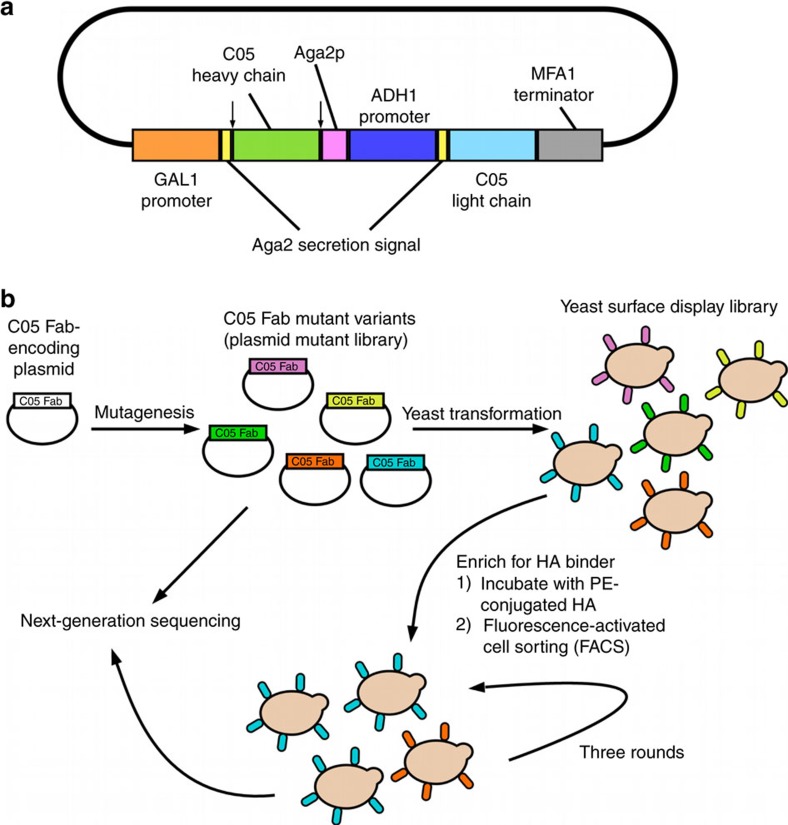
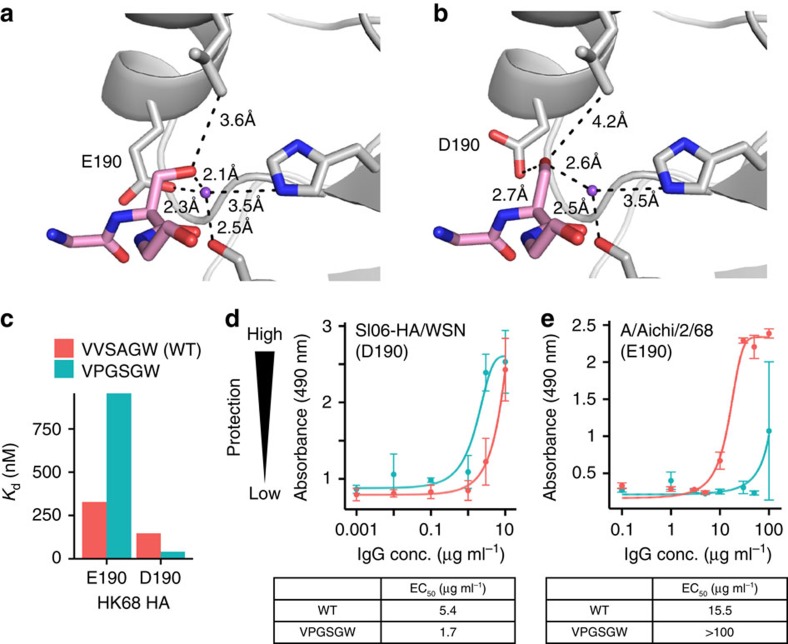
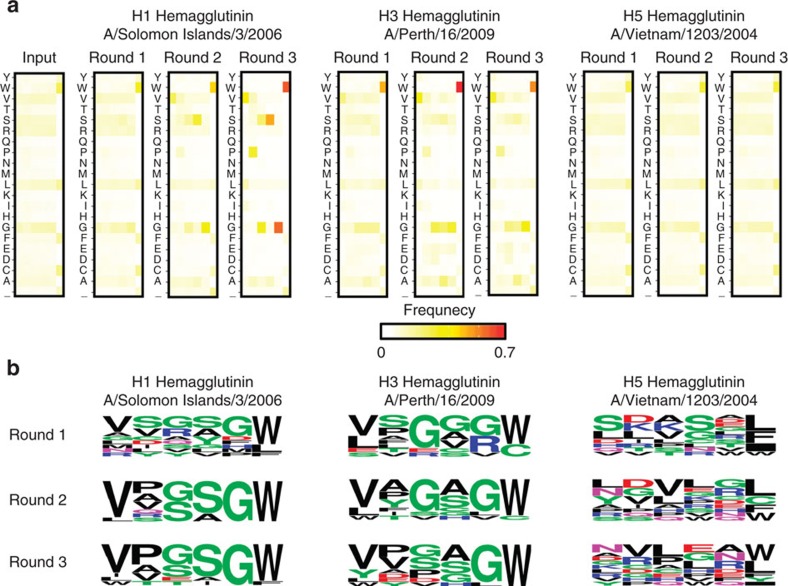
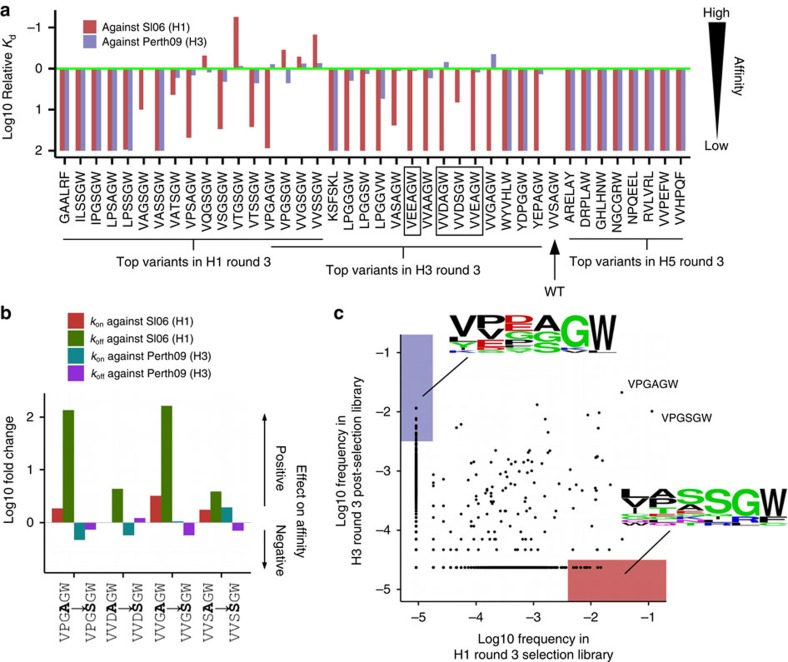
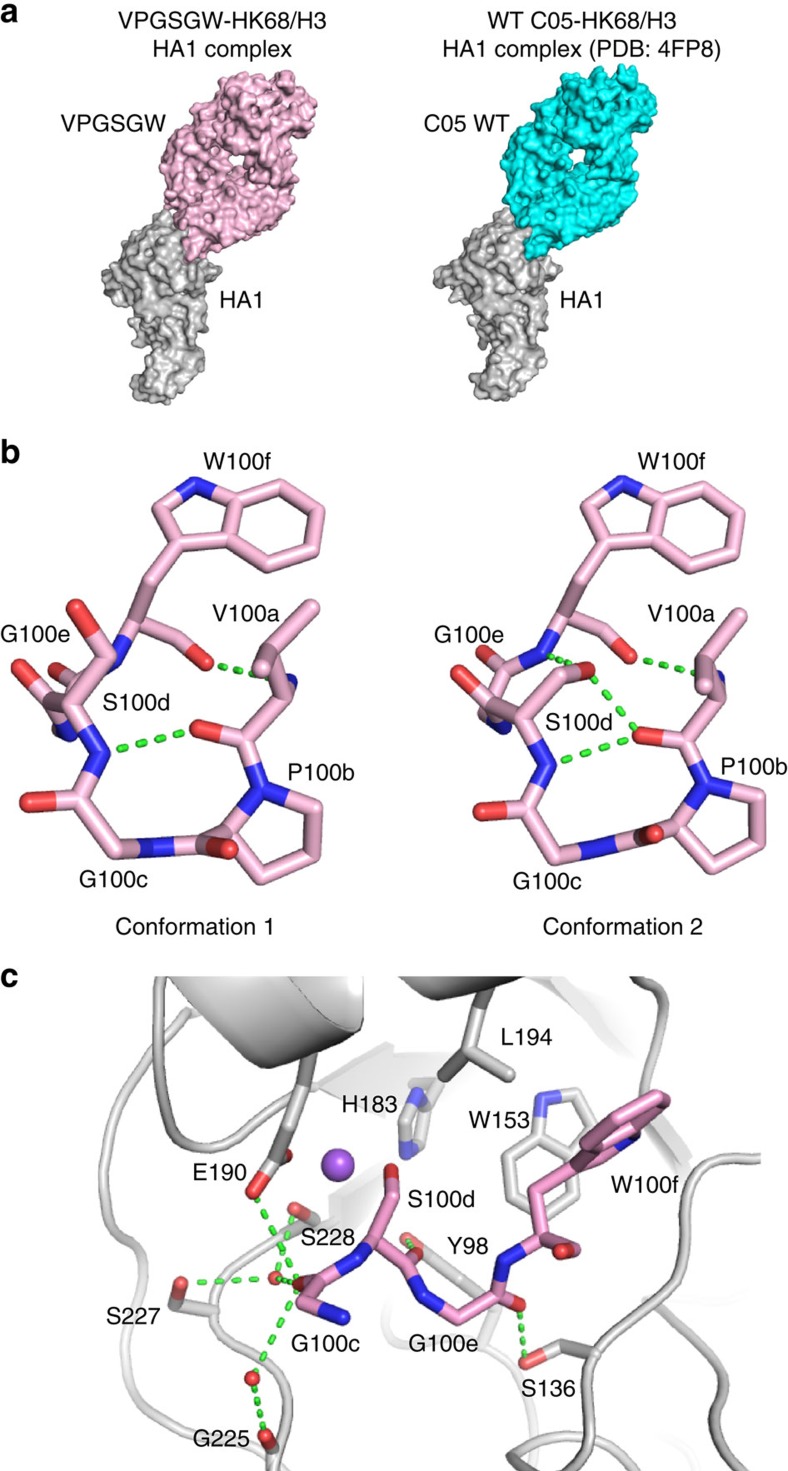
The relatively recent discovery and characterization of human broadly neutralizing antibodies (bnAbs) against influenza virus provide valuable insights into antiviral and vaccine development. However, the factors that influence the evolution of high-affinity bnAbs remain elusive. We therefore explore the functional sequence space of bnAb C05, which targets the receptor-binding site (RBS) of influenza haemagglutinin (HA) via a long CDR H3. We combine saturation mutagenesis with yeast display to enrich for C05 variants of CDR H3 that bind to H1 and H3 HAs. The C05 variants evolve up to 20-fold higher affinity but increase specificity to each HA subtype used in the selection. Structural analysis reveals that the fine specificity is strongly influenced by a highly conserved substitution that regulates receptor binding in different subtypes. Overall, this study suggests that subtle natural variations in the HA RBS between subtypes and species may differentially influence the evolution of high-affinity bnAbs.
近年来,人类广谱中和抗体(bnAbs)针对流感病毒的发现和特征描述为抗病毒和疫苗开发提供了有价值的见解。然而,影响高亲和力 bnAbs 进化的因素仍然难以捉摸。因此,我们探索了 bnAb C05 的功能序列空间,该抗体通过长 CDR H3 靶向流感血凝素(HA)的受体结合位点(RBS)。我们将饱和诱变与酵母展示相结合,以富集与 H1 和 H3 HA 结合的 CDR H3 的 C05 变体。C05 变体的亲和力提高了多达 20 倍,但对选择中使用的每种 HA 亚型的特异性增加。结构分析表明,精细的特异性受到高度保守取代的强烈影响,这种取代调节不同亚型中的受体结合。总体而言,这项研究表明,亚型和物种之间 HA RBS 中的细微自然变异可能会对高亲和力 bnAbs 的进化产生不同的影响。