Croft Laura V, Ashton Nicholas W, Paquet Nicolas, Bolderson Emma, O'Byrne Kenneth J, Richard Derek J
School of Biomedical Research, Institute of Health and Biomedical Innovation at the Translational Research Institute, Queensland University of Technology, 37 Kent Street, Woolloongabba, QLD, 4102, Australia.
Princess Alexandra Hospital, 199 Ipswich Road, Woolloongabba, QLD, 4102, Australia.
BMC Mol Biol. 2017 May 15;18(1):13. doi: 10.1186/s12867-017-0090-3.
Maintenance of genome stability is critical in human cells. Mutations in or loss of genome stability pathways can lead to a number of pathologies including cancer. hSSB1 is a critical DNA repair protein functioning in the repair and signalling of stalled DNA replication forks, double strand DNA breaks and oxidised DNA lesions. The BLM helicase is central to the repair of both collapsed DNA replication forks and double strand DNA breaks by homologous recombination.
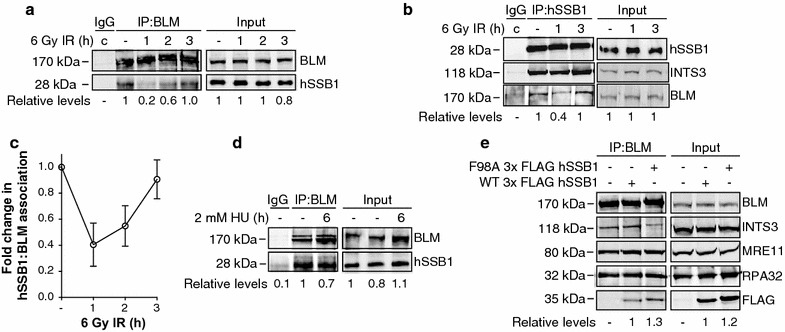
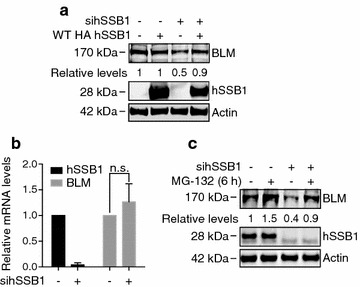
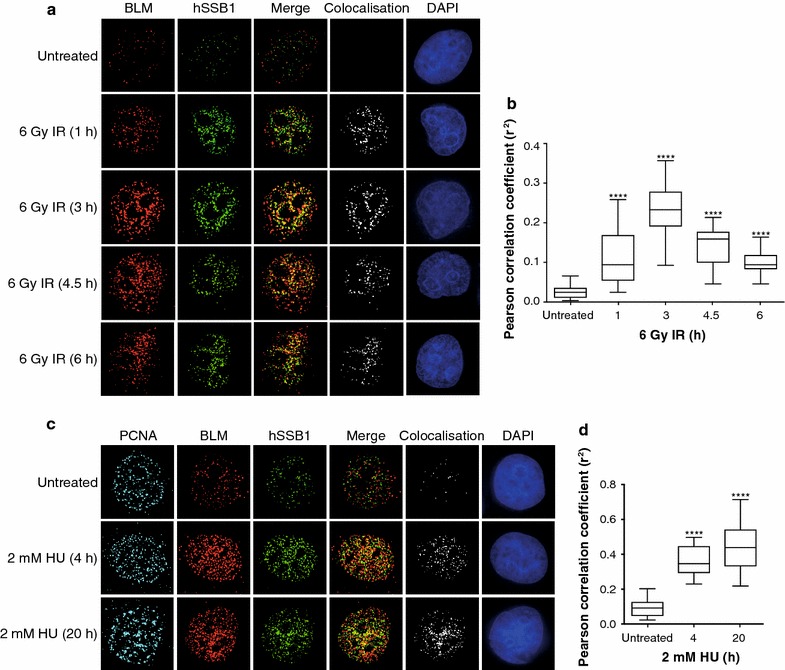
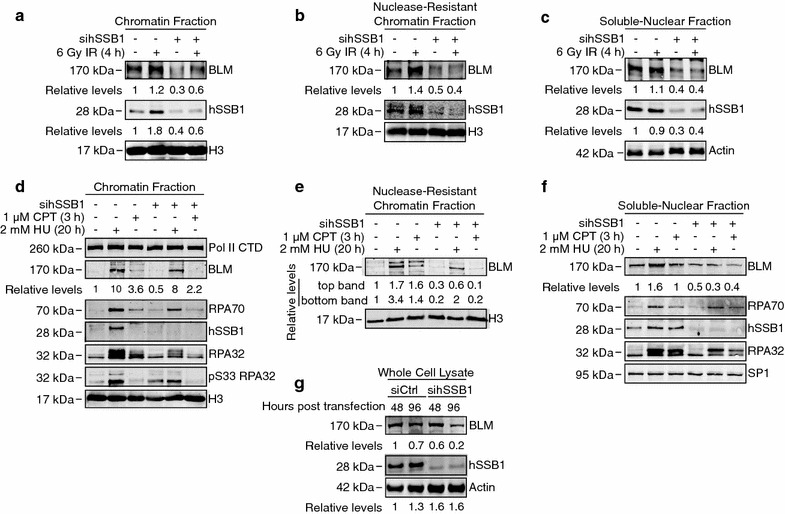
In this study, we demonstrate that hSSB1 and BLM helicase form a complex in cells and the interaction is altered in response to ionising radiation (IR). BLM and hSSB1 also co-localised at nuclear foci following IR-induced double strand breaks and stalled replication forks. We show that hSSB1 depleted cells contain less BLM protein and that this deficiency is due to proteasome mediated degradation of BLM. Consequently, there is a defect in recruitment of BLM to chromatin in response to ionising radiation-induced DSBs and to hydroxyurea-induced stalled and collapsed replication forks.
Our data highlights that BLM helicase and hSSB1 function in a dynamic complex in cells and that this complex is likely required for BLM protein stability and function.
基因组稳定性的维持在人类细胞中至关重要。基因组稳定性途径中的突变或缺失会导致包括癌症在内的多种病理状况。hSSB1是一种关键的DNA修复蛋白,在停滞的DNA复制叉、双链DNA断裂和氧化的DNA损伤的修复及信号传导中发挥作用。BLM解旋酶对于通过同源重组修复塌陷的DNA复制叉和双链DNA断裂至关重要。
在本研究中,我们证明hSSB1和BLM解旋酶在细胞中形成复合物,并且该相互作用会因电离辐射(IR)而改变。在IR诱导双链断裂和停滞的复制叉后,BLM和hSSB1也共定位于核灶。我们表明,hSSB1缺失的细胞中BLM蛋白较少,并且这种缺陷是由于蛋白酶体介导的BLM降解所致。因此,在响应电离辐射诱导的双链断裂以及羟基脲诱导的停滞和塌陷的复制叉时,BLM募集到染色质存在缺陷。
我们的数据表明,BLM解旋酶和hSSB1在细胞中以动态复合物发挥作用,并且该复合物可能是BLM蛋白稳定性和功能所必需的。