Groh Janos, Berve Kristina, Martini Rudolf
Developmental Neurobiology, Department of Neurology, University Hospital Würzburg, Josef-Schneider-Str. 11, 97080 Würzburg, Germany.
Developmental Neurobiology, Department of Neurology, University Hospital Würzburg, Josef-Schneider-Str. 11, 97080 Würzburg, Germany.
Mol Ther. 2017 Aug 2;25(8):1889-1899. doi: 10.1016/j.ymthe.2017.04.021. Epub 2017 May 13.
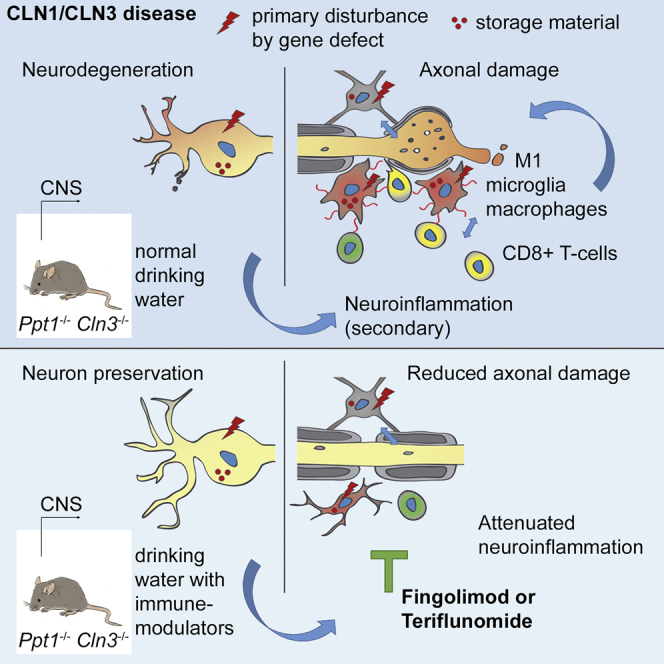
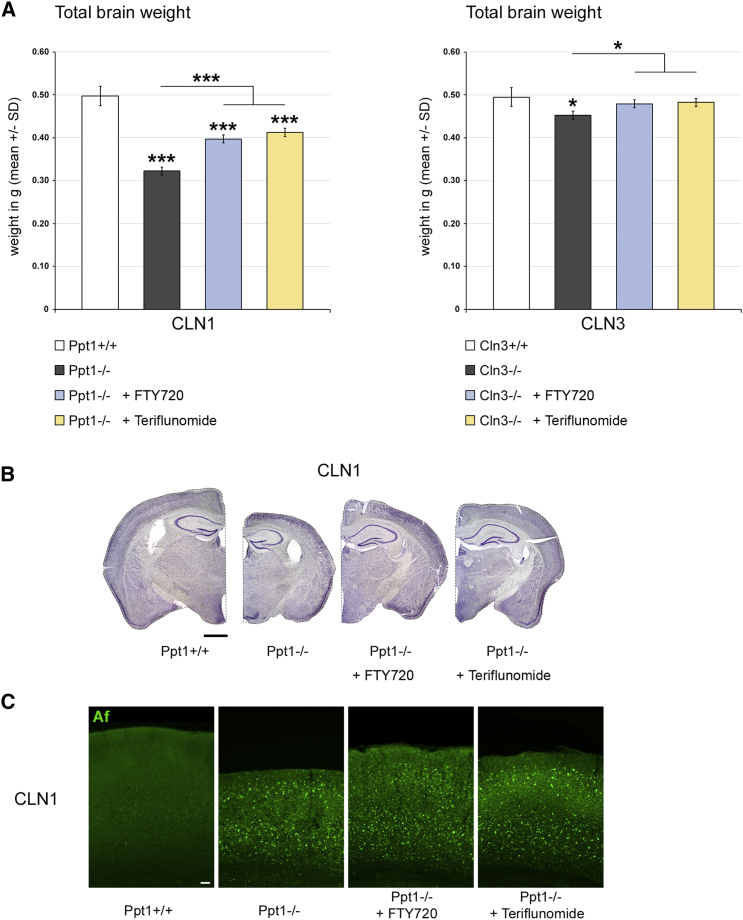
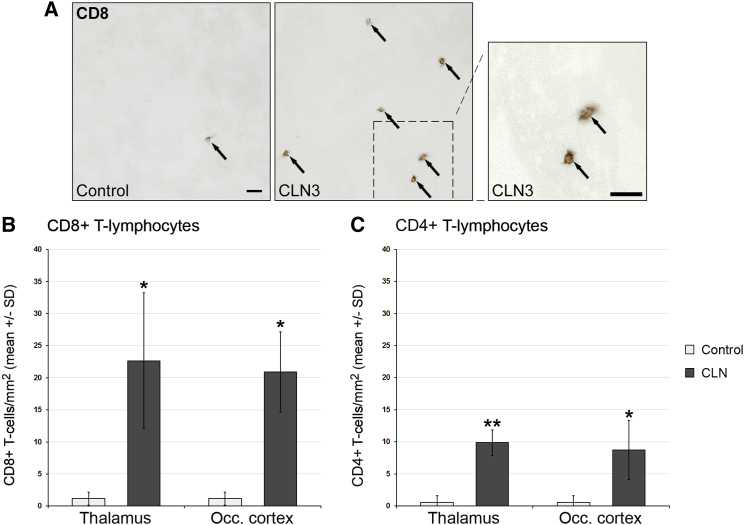
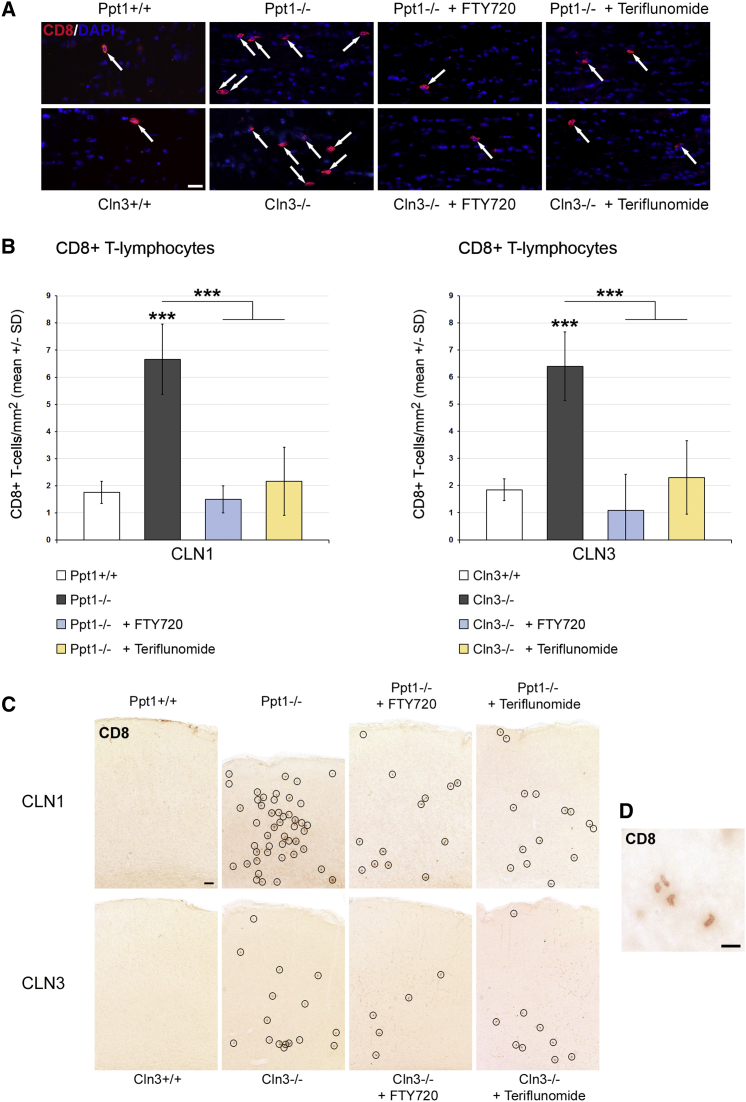
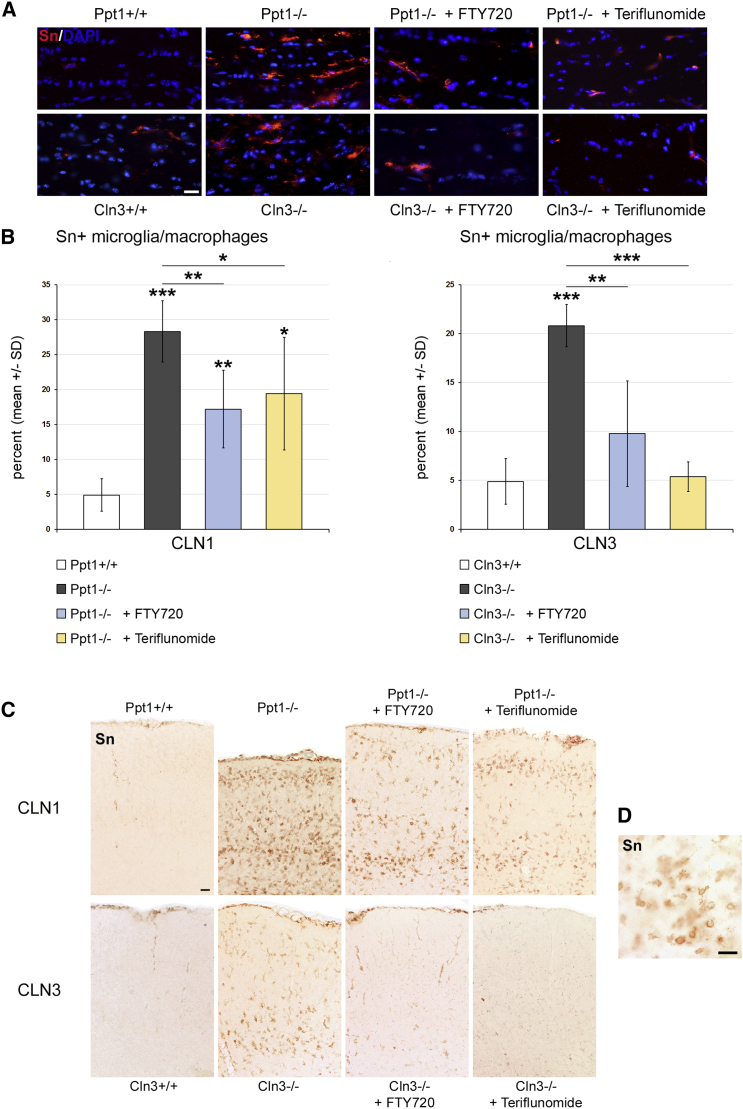
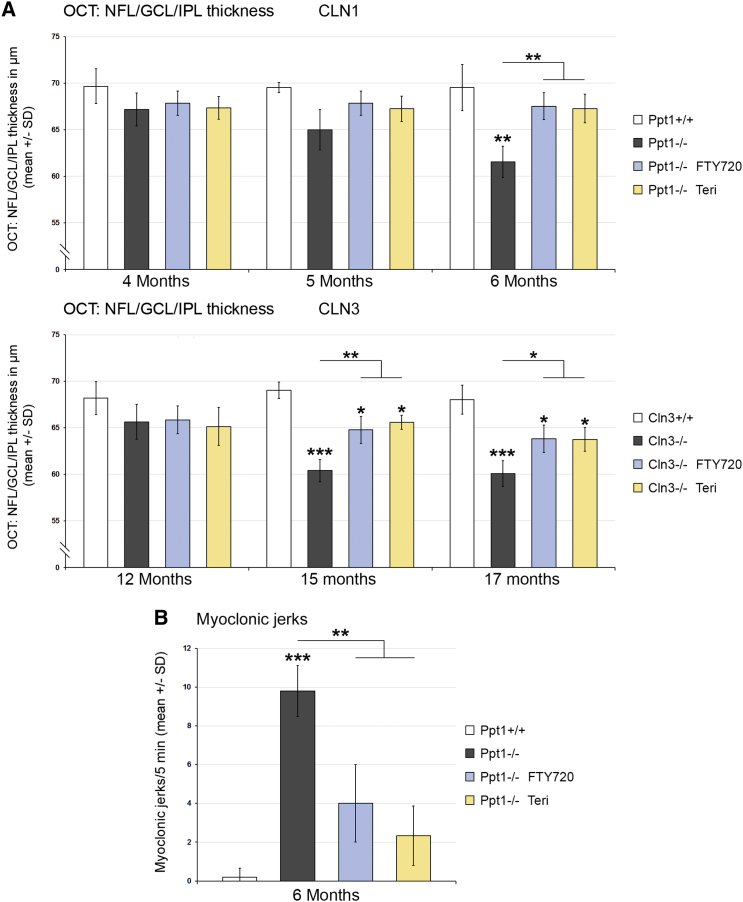
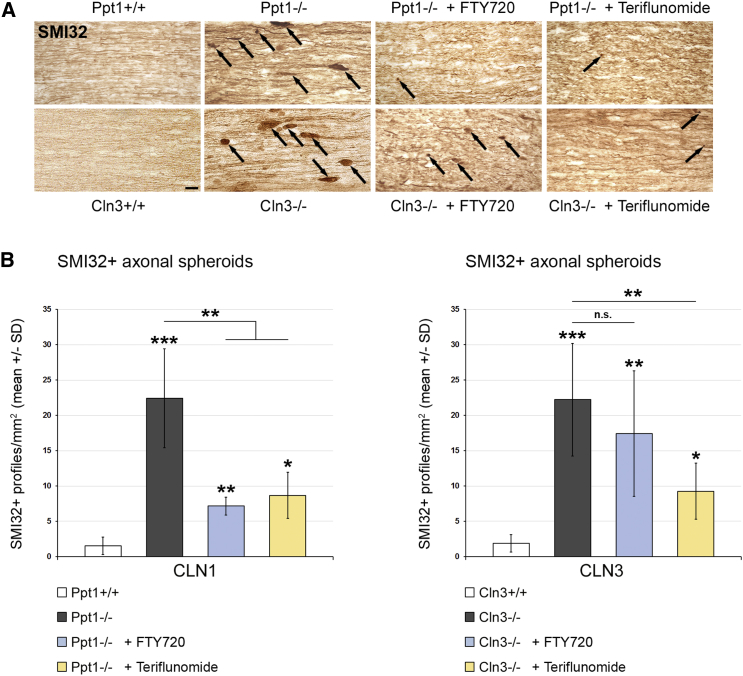
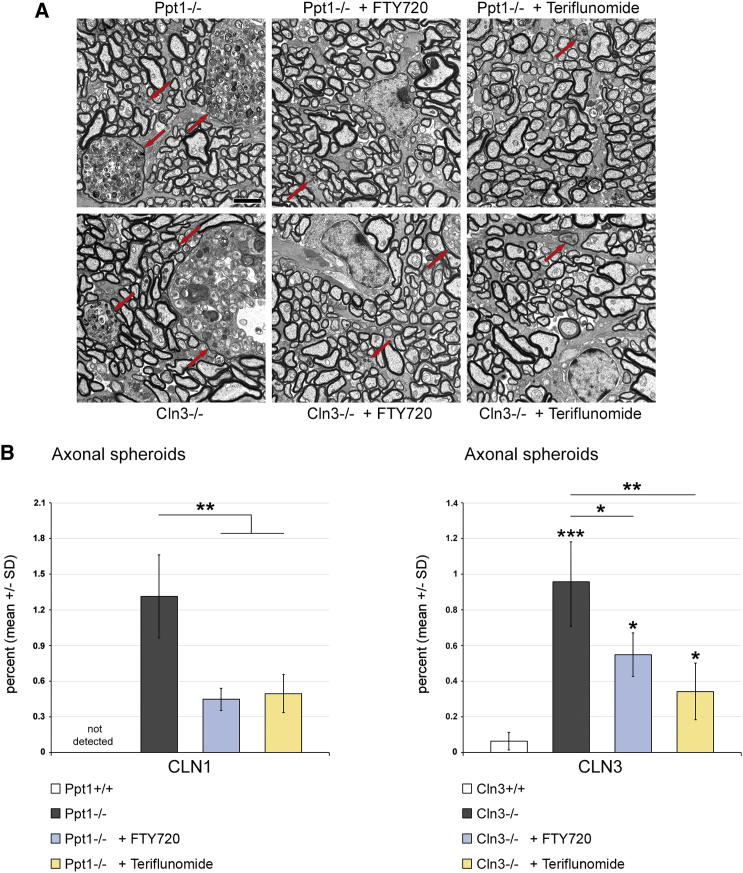
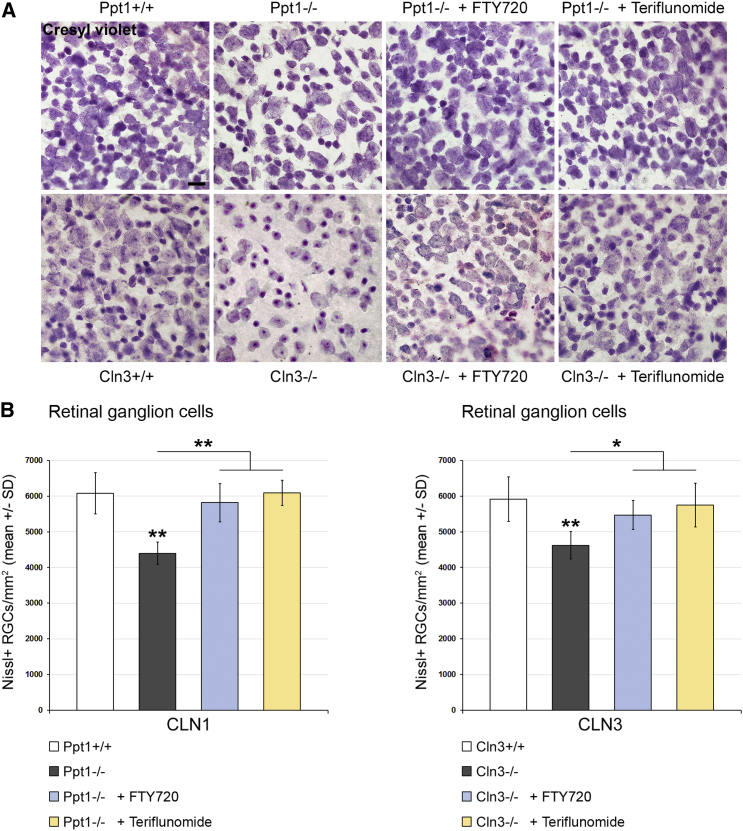
CLN diseases are rare lysosomal storage diseases characterized by progressive axonal degeneration and neuron loss in the CNS, manifesting in disability, blindness, and premature death. We have previously demonstrated that, in animal models of infantile and juvenile forms of CLN disease (CLN1 and CLN3, respectively), secondary neuroinflammation in the CNS substantially amplifies neural damage, opening the possibility that immunomodulatory treatment might improve disease outcome. First, we recapitulated the inflammatory phenotype, originally seen in mice in autopsies of CLN patients. We then treated mouse models of CLN1 and CLN3 disease with the clinically approved immunomodulatory compounds fingolimod (0.5 mg/kg/day) and teriflunomide (10 mg/kg/day) by consistent supply in the drinking water for 5 months. The treatment was well tolerated and reduced T cell numbers and microgliosis in the CNS of both models. Moreover, axonal damage, neuron loss, retinal thinning, and brain atrophy were substantially attenuated in both models, along with reduced frequency of myoclonic jerks in Ppt1 mice. Based on these findings, and because side effects were not detected, we suggest that clinically approved immune modulators such as fingolimod and teriflunomide may be suitable to attenuate progression of CLN1 and CLN3 disease and, possibly, other orphan diseases with pathogenically relevant neuroinflammation.
CLN疾病是罕见的溶酶体贮积病,其特征是中枢神经系统进行性轴突退变和神经元丢失,表现为残疾、失明和过早死亡。我们之前已经证明,在婴儿型和青少年型CLN疾病(分别为CLN1和CLN3)的动物模型中,中枢神经系统的继发性神经炎症会显著加剧神经损伤,这使得免疫调节治疗可能改善疾病预后成为可能。首先,我们重现了最初在CLN患者尸检小鼠中观察到的炎症表型。然后,我们通过在饮用水中持续供应5个月,用临床批准的免疫调节化合物芬戈莫德(0.5毫克/千克/天)和特立氟胺(10毫克/千克/天)治疗CLN1和CLN3疾病的小鼠模型。该治疗耐受性良好,减少了两个模型中枢神经系统中的T细胞数量和小胶质细胞增生。此外,两个模型中的轴突损伤、神经元丢失、视网膜变薄和脑萎缩都得到了显著减轻,同时Ppt1小鼠的肌阵挛发作频率也降低了。基于这些发现,并且由于未检测到副作用,我们建议临床批准的免疫调节剂如芬戈莫德和特立氟胺可能适合减轻CLN1和CLN3疾病的进展,并且可能适用于其他具有致病性相关神经炎症的罕见病。