Abe Michiaki, Joh Kensuke, Ieiri Norio, Hotta Osamu, Utsunomiya Yasunori, Sato Hiroshi, Kisu Kiyomi, Sakumo Naoki, Kiyomoto Hideyasu, Sato Toshinobu, Taguma Yoshio, Ito Sadayoshi
Department of Nephrology, Japan Community Health Care Organization Sendai Hospital, Sendai, Japan.
Department of Education and Support for Regional Medicine, Tohoku University Hospital, 1-1 Seiryo-cho, Aoba-ku, Sendai, 980-8574, Japan.
CEN Case Rep. 2015 Nov;4(2):228-232. doi: 10.1007/s13730-015-0177-y. Epub 2015 Apr 9.
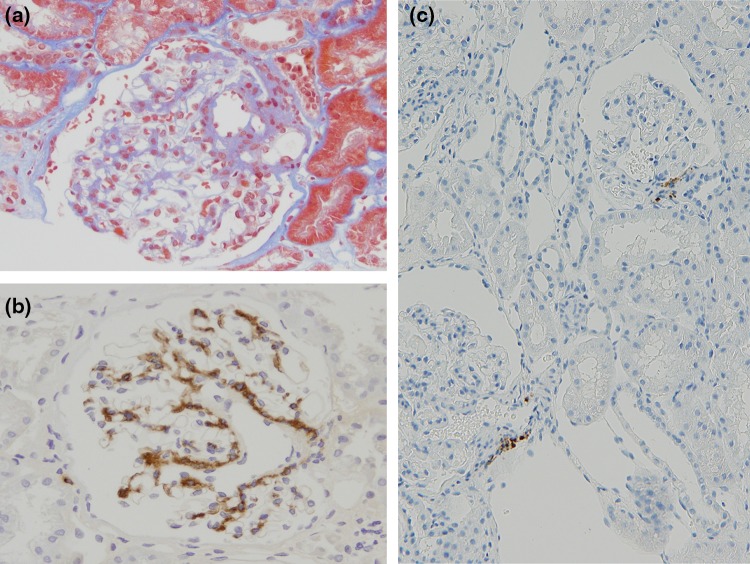
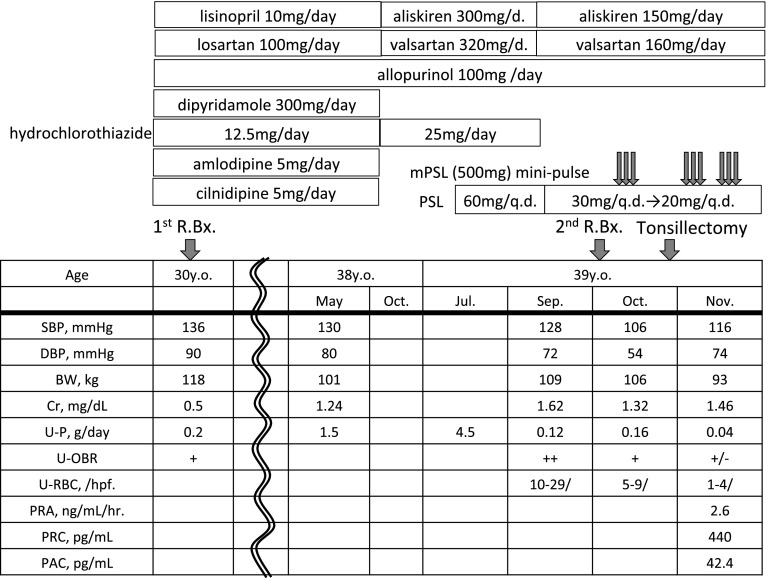
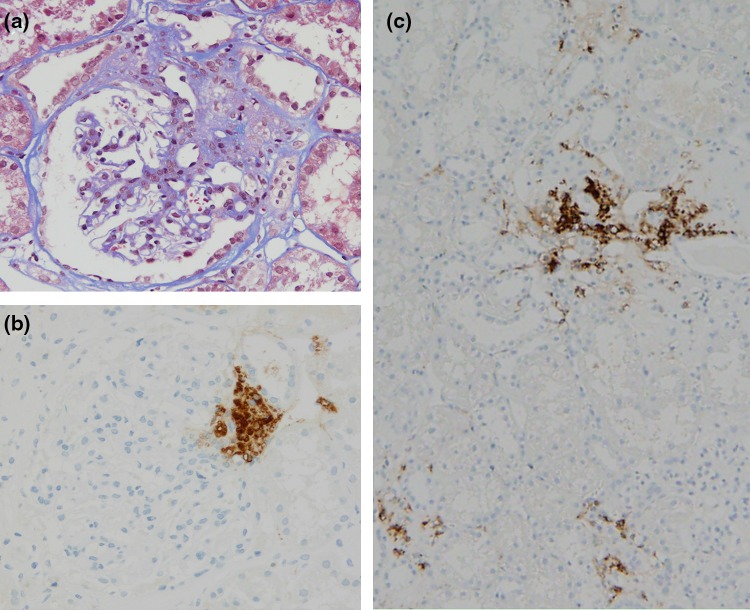
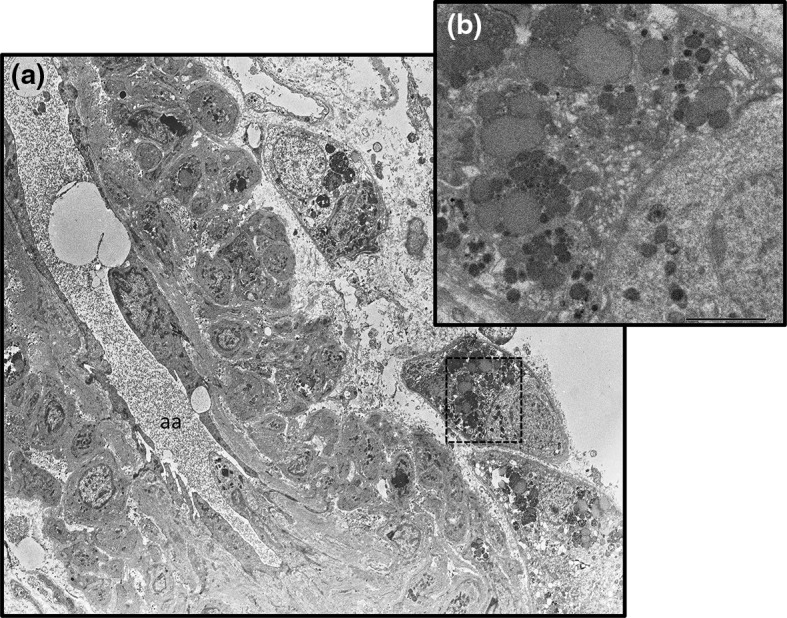
Juxtaglomerular apparatus (JGA) hyperplasia rarely happened in renal biopsy and has been controversial clinically, because synthesis and secretion of renin were susceptible to the effect of clinical condition and medication. Here we present the case of a 39-year-old who got JGA hyperplasia of IgA nephropathy (IgAN) after long-term inhibition of the renin-angiotensin system (RAS) with an angiotensin receptor blocker (ARB), and a direct renin inhibitor (DRI) in combination with a diuretic. He was diagnosed with IgAN in his first renal biopsy, and was treated with supra-maximal dosages of ARB, DRI and a diuretic. In the second biopsy, because of the massive proteinuria and occurrence of steroid-induced diabetes, it was revealed that the area and the number of JGA cells were strikingly increased in observed glomeruli. Immunohistopathologically, the both specimens were stained by human renin antibody. The hyperplastic JG cells contained a large amount of renin granules. Putative renin granules were observed in some interstitial cells adjacent to an afferent arteriole by electron microscopy. The increasing response of renin granules co-localized in prominent JGA hyperplasia should be worried while physicians treat hypertensive patients with potent RAS inhibitors and diuretics even though they have diabetes. This is the first report showing a clinical course of forming prominent JGA hyperplasia directly after a full combination of RAS inhibitors and diuretics in adult IgA nephropathy.
肾小球旁器(JGA)增生在肾活检中很少发生,临床上一直存在争议,因为肾素的合成和分泌易受临床状况和药物的影响。在此,我们报告一例39岁患者,其在长期使用血管紧张素受体阻滞剂(ARB)和直接肾素抑制剂(DRI)联合利尿剂抑制肾素-血管紧张素系统(RAS)后发生了IgA肾病(IgAN)的JGA增生。他在首次肾活检时被诊断为IgAN,并接受了超大剂量的ARB、DRI和利尿剂治疗。在第二次活检时,由于大量蛋白尿和类固醇诱导的糖尿病的发生,发现观察到的肾小球中JGA细胞的面积和数量显著增加。免疫组织病理学检查显示,两份标本均用人肾素抗体染色。增生的肾小球旁细胞含有大量肾素颗粒。通过电子显微镜在与入球小动脉相邻的一些间质细胞中观察到了假定的肾素颗粒。即使患者患有糖尿病,医生在使用强效RAS抑制剂和利尿剂治疗高血压患者时,也应警惕肾素颗粒在显著的JGA增生中共同定位的增加反应。这是第一份报告显示在成人IgA肾病中,RAS抑制剂和利尿剂完全联合使用后直接形成显著JGA增生的临床过程。