Clemente Maria Grazia, Dore Elena, Abis Lidia, Molicotti Paola, Zanetti Stefania, Olmeo Paolina, Antonucci Roberto
Pediatric Clinic, Department of Surgical, Microsurgical and Medical Sciences, University of Sassari, Sassari, Italy.
Department of Biomedical Science, University of Sassari, Sassari, Italy.
Mediterr J Hematol Infect Dis. 2017 Apr 15;9(1):e2017027. doi: 10.4084/MJHID.2017.027. eCollection 2017.
Migration flux is an increasing phenomenon in Italy, and it raises several public health issues and concerns in pediatric infectious diseases. This study investigated the clinical characteristics and outcomes of a pediatric population at high-risk for tuberculosis (TB) and the potential role of immigration as a risk factor.
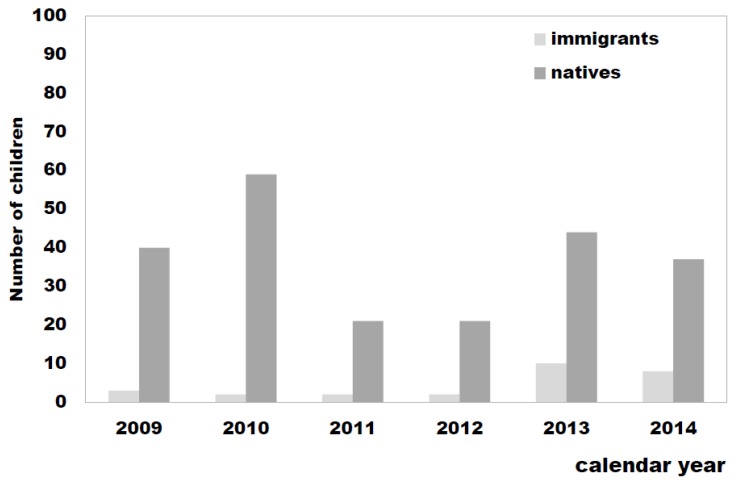
We performed an observational retrospective study of children referred to the only Pediatric Infectious Diseases Unit for Northern Sardinia over a 6-year-period (2009-2014). Main variables assessed included TB skin test (TST), confirmed by quantiFERON Gold in Tube test, thorax X-ray (TX), microbiological culture, direct microscopy for acid-fast bacilli and molecular assays.
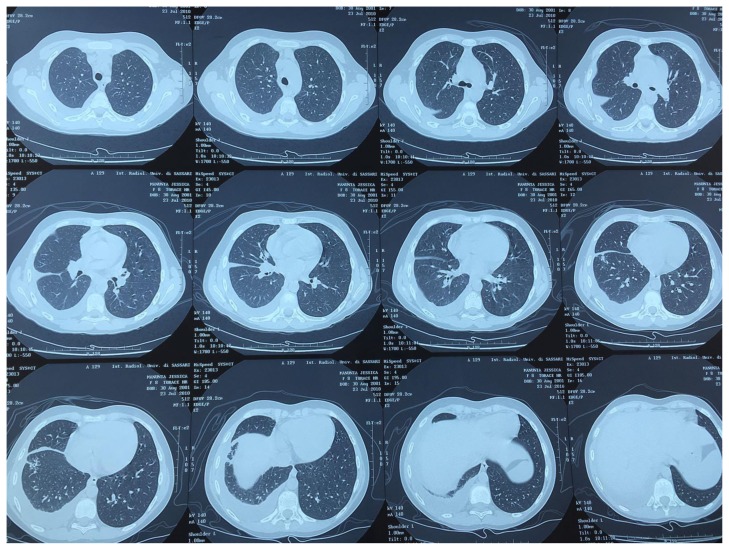
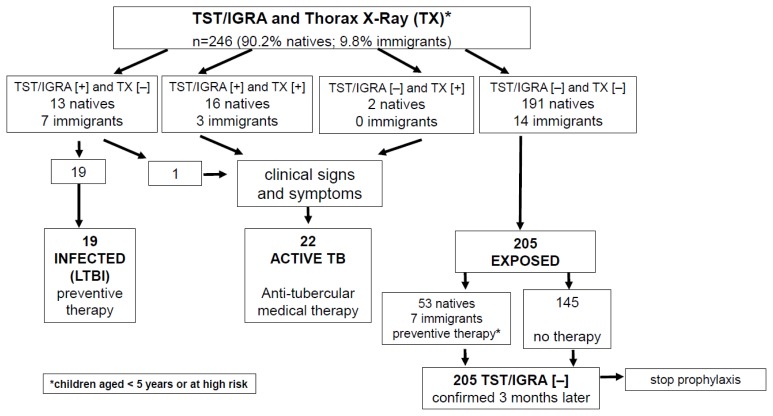
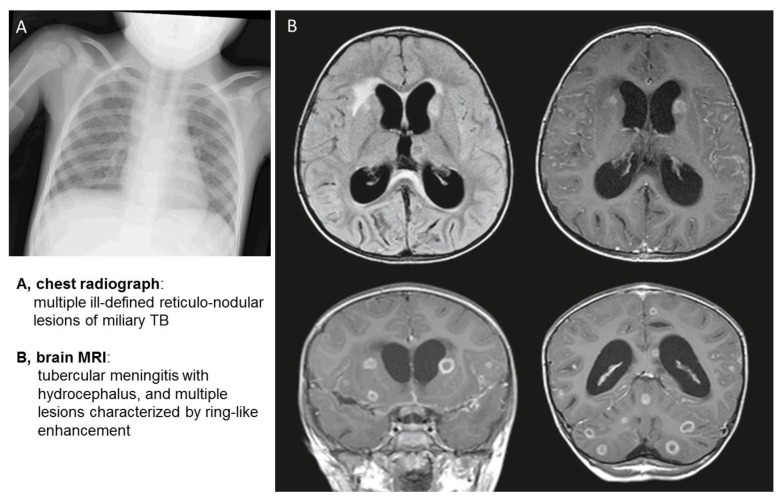
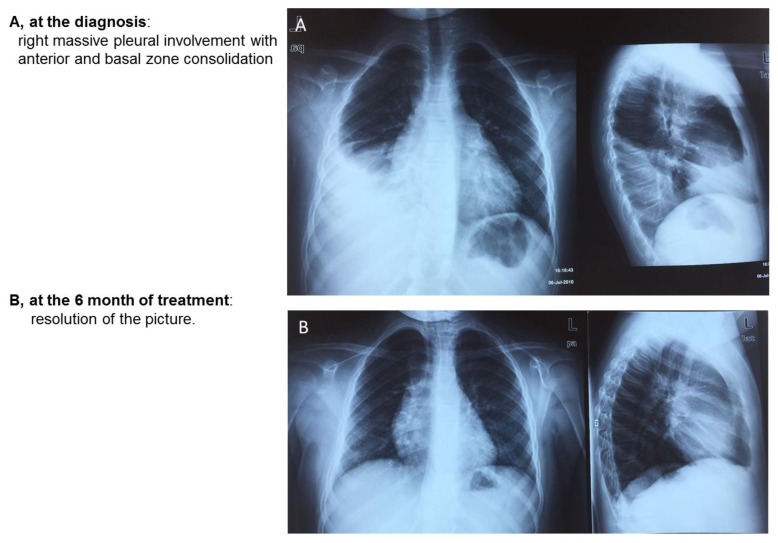
Of the 246 children (mean age = 5.8 ± 3.9 years) identified, 222 (90.2%) were native to Sardinia and 24 (9.8%) were immigrants. The majority of children (n=205; 83%) were TB-exposed but not infected based on a negative TST and TX. Among the TST positive group (n= 39; 16%), 19 (49%) had latent TB (TX negative), while 20 (51%) had active TB (TX positive). The percent of TST positive children was significantly higher in the immigrant than the native group (42.5% versus 14%, p<0.001). Clinical presentations included pulmonary involvement with hilar lymphadenopathy (72%), pleurisy (13,5%), lateral-cervical lymphadenopathy (9%), pneumonia with calcifications (4.5%) and disseminated TB (4.5%). One child had multidrug-resistant tuberculosis.
Pediatric TB represents a relevant and potentially worsening public health problem in Northern Sardinia. A strict surveillance system and appropriate treatment can prevent the most severe forms and reduce TB transmission.
移民潮在意大利日益凸显,引发了儿科传染病领域的若干公共卫生问题与担忧。本研究调查了结核病(TB)高风险儿科人群的临床特征与转归,以及移民作为风险因素的潜在作用。
我们对6年间(2009 - 2014年)转诊至撒丁岛北部唯一一家儿科传染病科的儿童进行了一项观察性回顾研究。评估的主要变量包括经管饲定量荧光金标法确认的结核菌素皮肤试验(TST)、胸部X线检查(TX)、微生物培养、抗酸杆菌直接显微镜检查和分子检测。
在确定的246名儿童(平均年龄 = 5.8 ± 3.9岁)中,222名(90.2%)为撒丁岛本地人,24名(9.8%)为移民。大多数儿童(n = 205;83%)基于TST和TX阴性,虽接触过结核菌但未感染。在TST阳性组(n = 39;16%)中,19名(49%)有潜伏性结核(TX阴性),而20名(51%)有活动性结核(TX阳性)。移民组TST阳性儿童的比例显著高于本地组(42.5%对14%,p < 0.001)。临床表现包括肺部受累伴肺门淋巴结肿大(72%)、胸膜炎(13.5%)、颈外侧淋巴结肿大(9%)、伴有钙化的肺炎(4.5%)和播散性结核(4.5%)。一名儿童患有耐多药结核病。
儿科结核病在撒丁岛北部是一个相关且可能恶化的公共卫生问题。严格的监测系统和适当的治疗可预防最严重的形式并减少结核菌传播。