Slovenian NMR Centre, National Institute of Chemistry, SI-1000 Ljubljana, Slovenia.
EN-FIST Centre of Excellence, SI-1000 Ljubljana, Slovenia.
Nat Commun. 2017 May 17;8:15355. doi: 10.1038/ncomms15355.
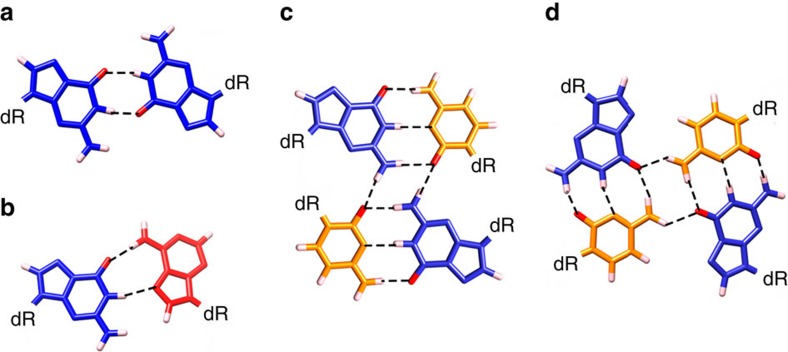
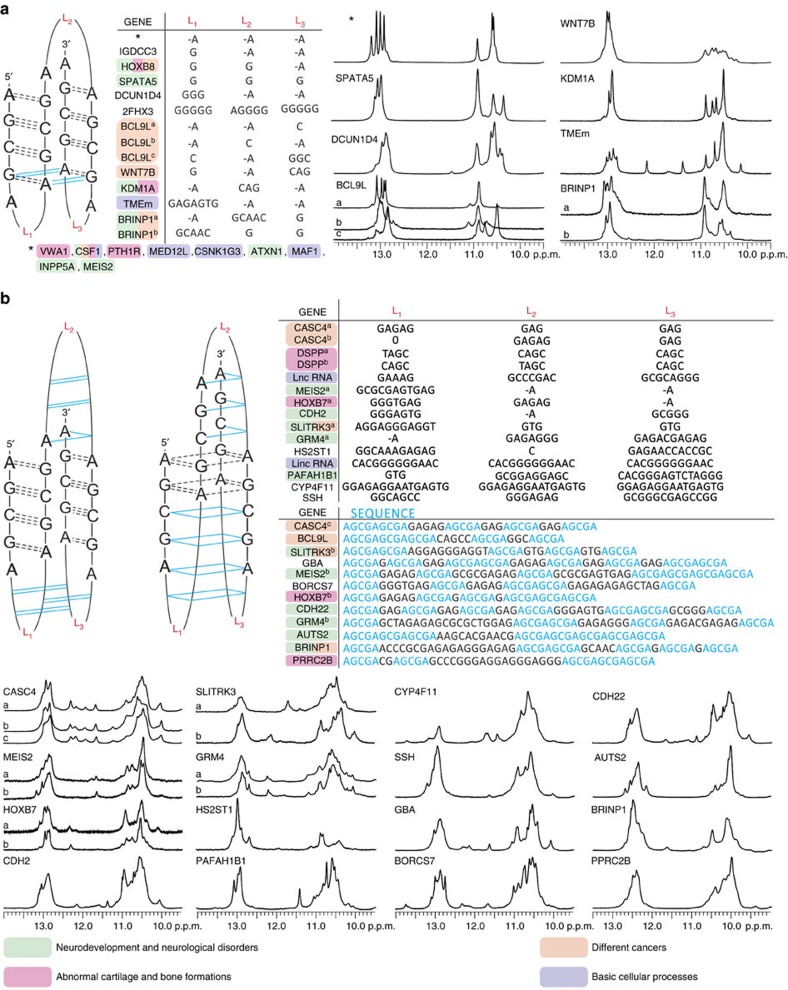
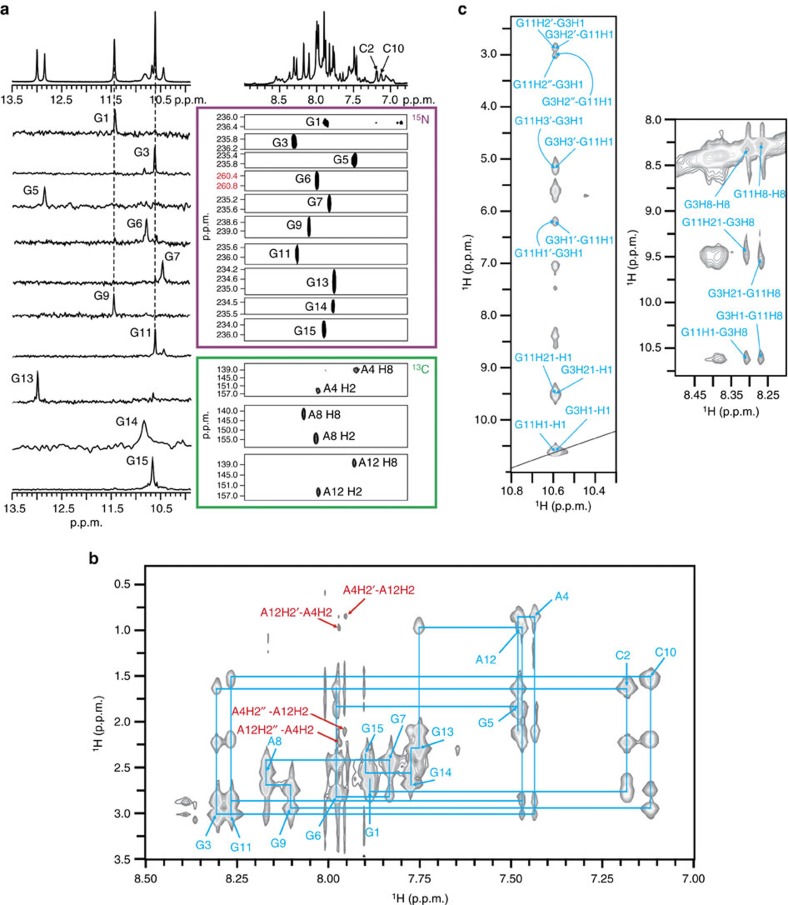
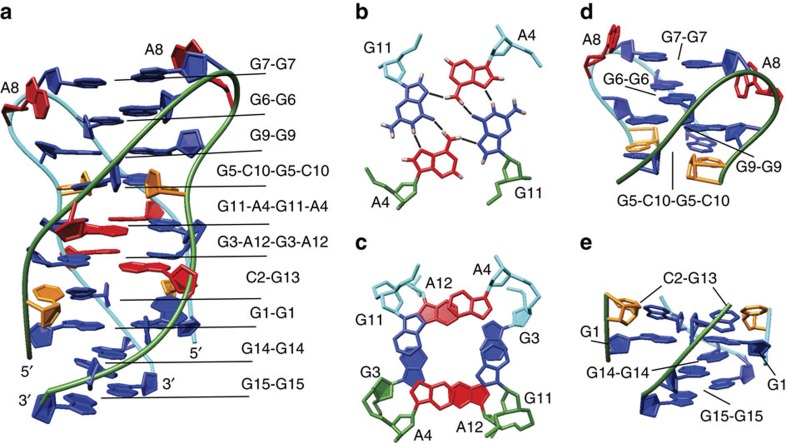
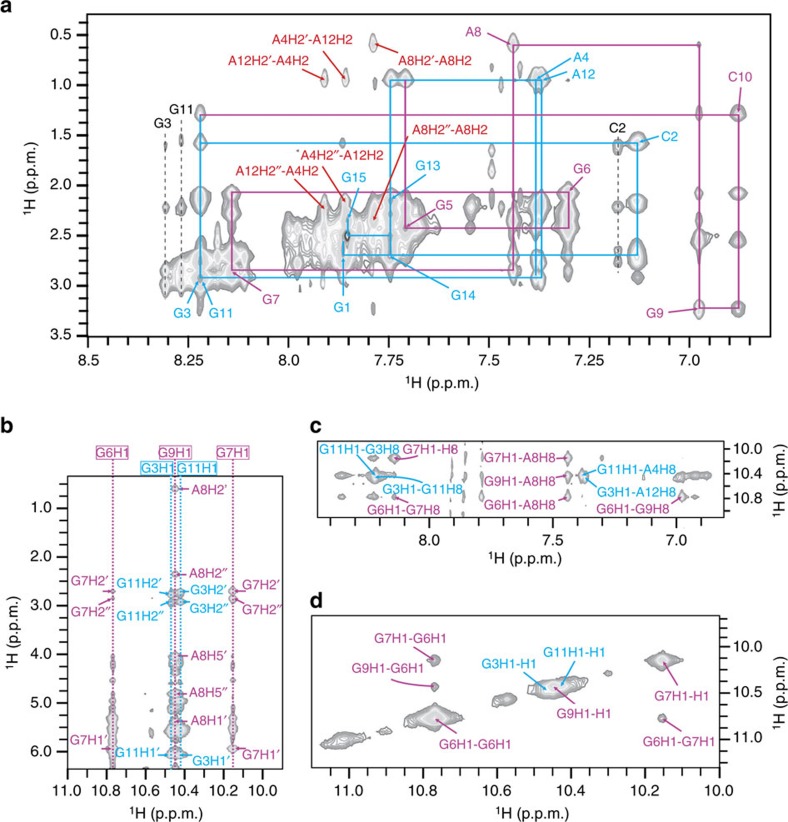
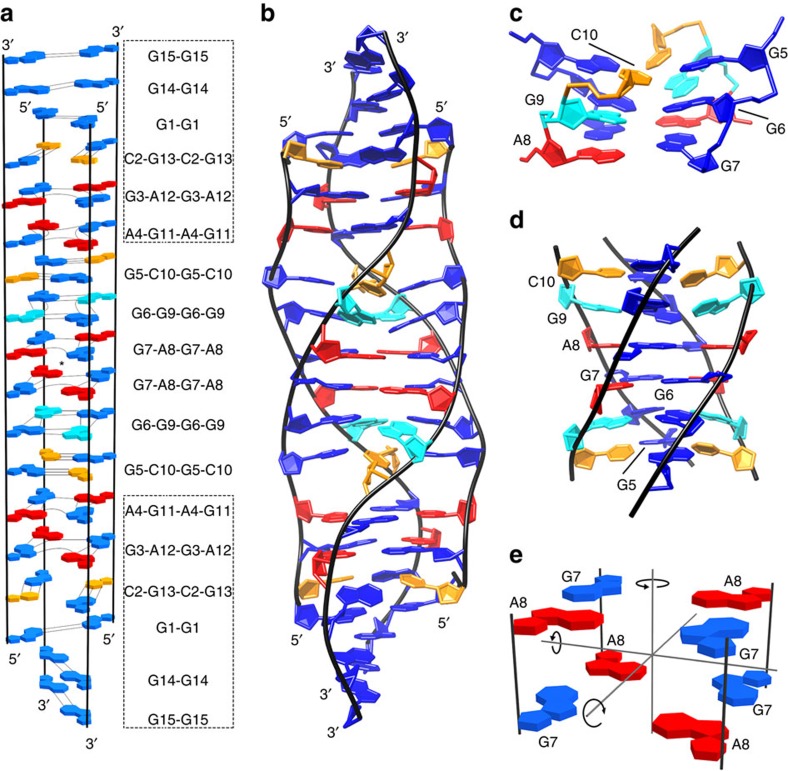
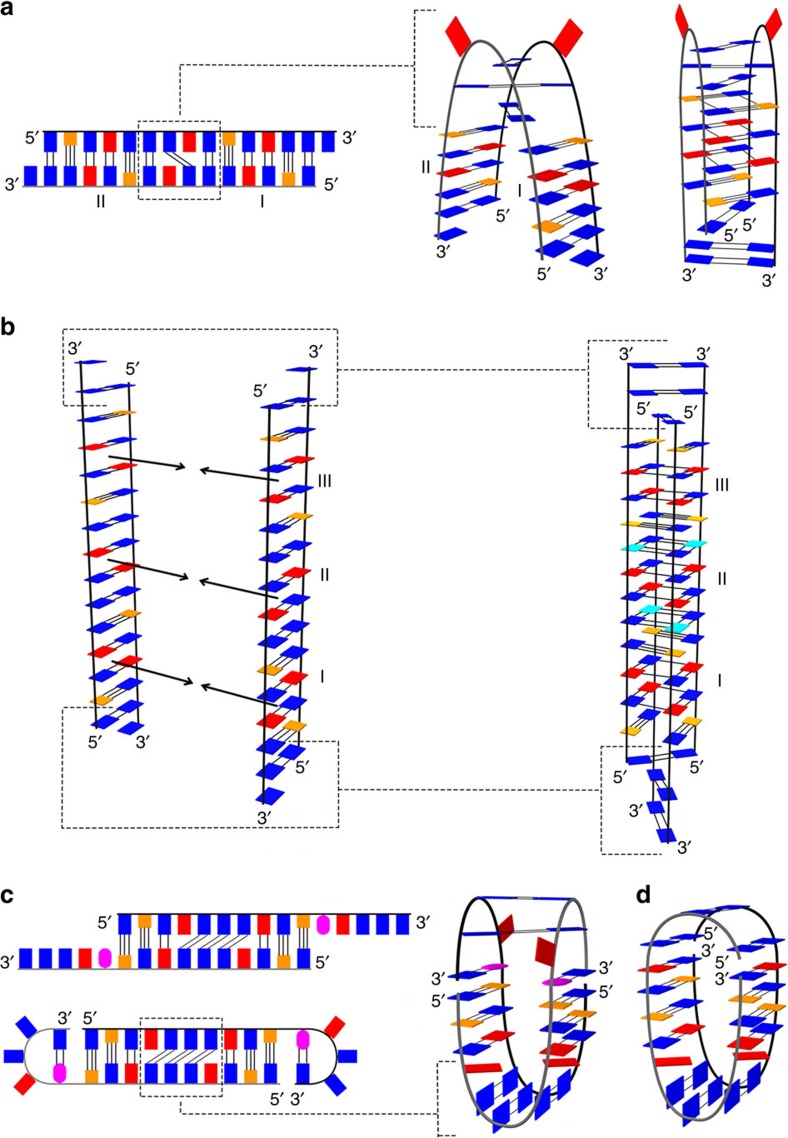
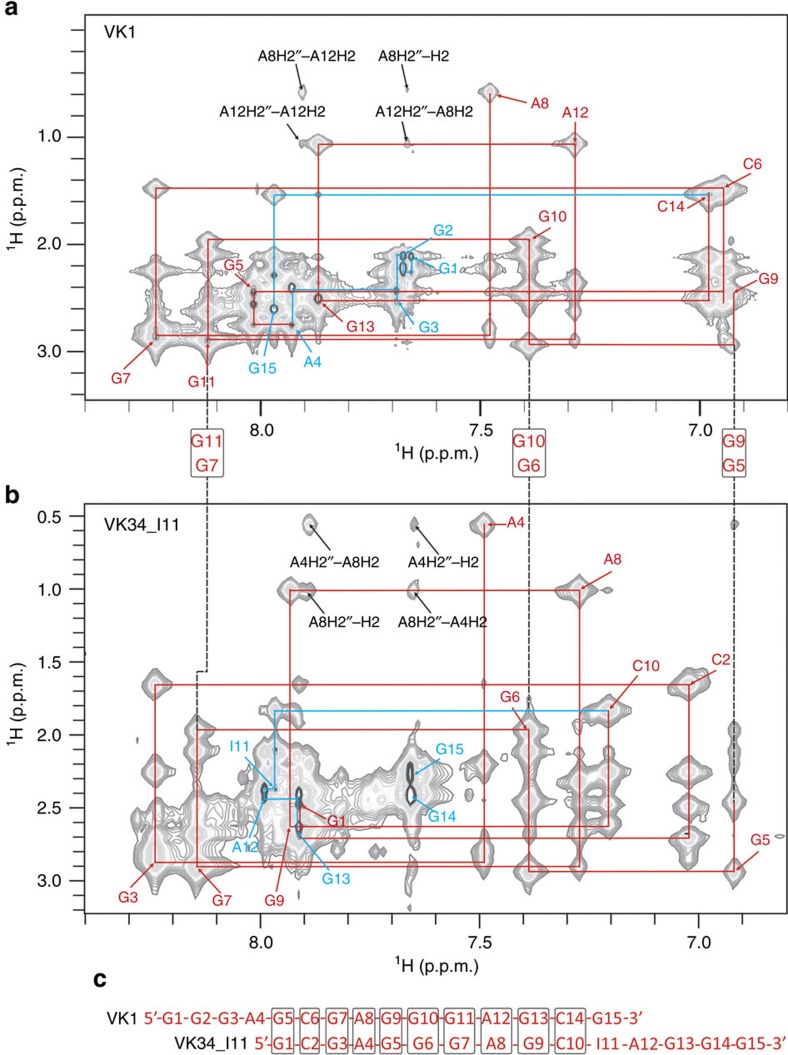
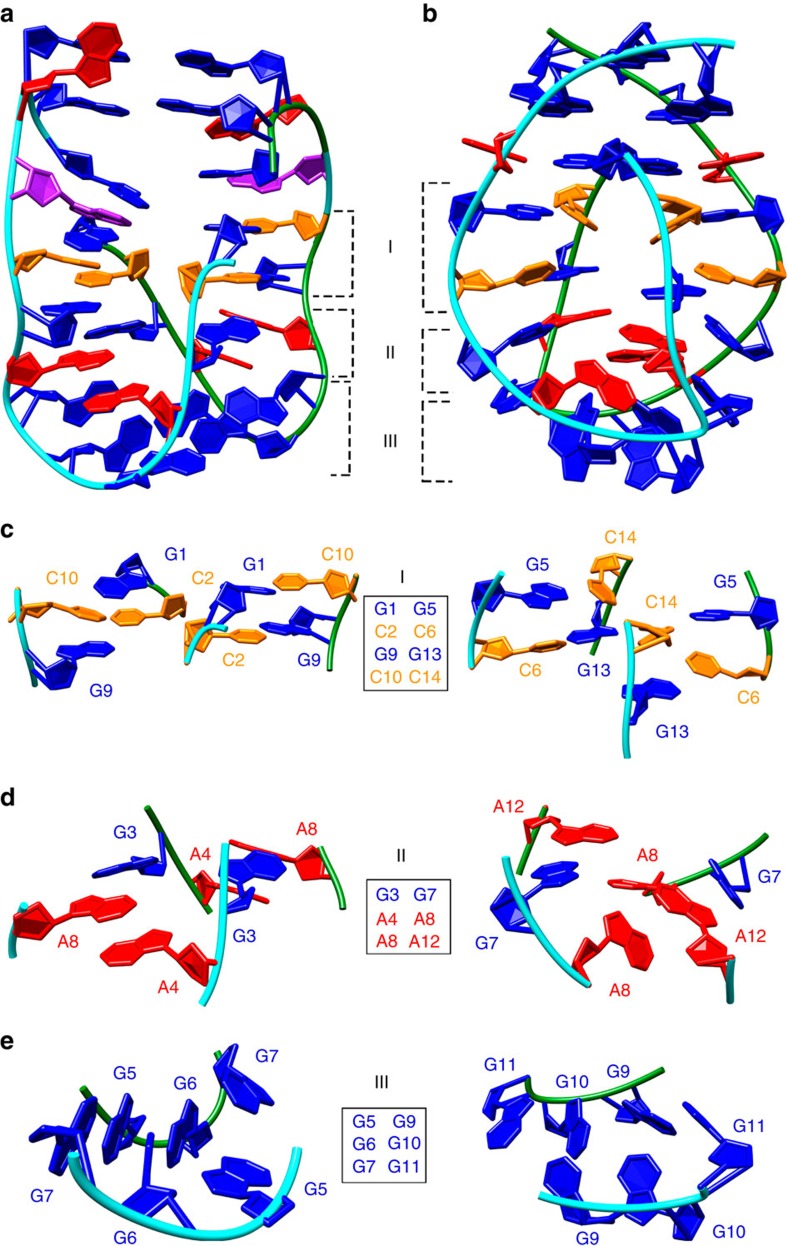
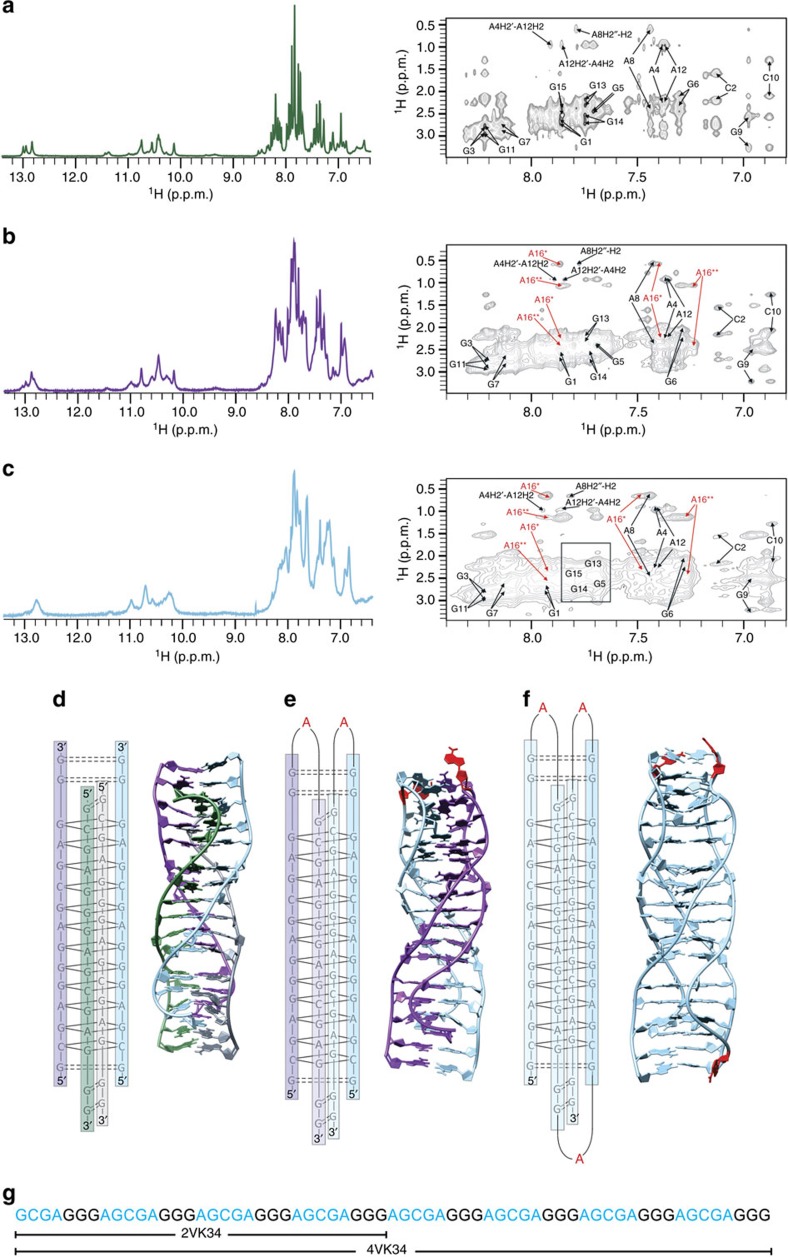
Here we describe AGCGA-quadruplexes, an unexpected addition to the well-known tetrahelical families, G-quadruplexes and i-motifs, that have been a focus of intense research due to their potential biological impact in G- and C-rich DNA regions, respectively. High-resolution structures determined by solution-state nuclear magnetic resonance (NMR) spectroscopy demonstrate that AGCGA-quadruplexes comprise four 5'-AGCGA-3' tracts and are stabilized by G-A and G-C base pairs forming GAGA- and GCGC-quartets, respectively. Residues in the core of the structure are connected with edge-type loops. Sequences of alternating 5'-AGCGA-3' and 5'-GGG-3' repeats could be expected to form G-quadruplexes, but are shown herein to form AGCGA-quadruplexes instead. Unique structural features of AGCGA-quadruplexes together with lower sensitivity to cation and pH variation imply their potential biological relevance in regulatory regions of genes responsible for basic cellular processes that are related to neurological disorders, cancer and abnormalities in bone and cartilage development.
在这里,我们描述了 AGCGA-四链体,这是一种出乎意料的四螺旋家族,分别是 G-四链体和 i- 型结构,由于它们分别在富含 G 和 C 的 DNA 区域具有潜在的生物学影响,因此一直是研究的焦点。通过溶液态核磁共振(NMR)光谱确定的高分辨率结构表明,AGCGA-四链体包含四个 5'-AGCGA-3' 链段,并由形成 GAGA- 和 GCGC-四联体的 G-A 和 G-C 碱基对稳定。结构核心的残基与边缘型环相连。预期交替的 5'-AGCGA-3' 和 5'-GGG-3' 重复序列可以形成 G-四链体,但本文显示它们形成 AGCGA-四链体。AGCGA-四链体的独特结构特征以及对阳离子和 pH 变化的敏感性较低,暗示它们在负责与神经紊乱、癌症和骨骼和软骨发育异常等基本细胞过程相关的基因的调控区域具有潜在的生物学相关性。