Li Huizi Keiko, Morokoshi Yukie, Nagatsu Kotaro, Kamada Tadashi, Hasegawa Sumitaka
Radiation and Cancer Biology Team, National Institutes for Quantum and Radiological Science and Technology, Chiba, Japan.
Graduate School of Medical and Pharmaceutical Sciences, Chiba University, Chiba, Japan.
Cancer Sci. 2017 Aug;108(8):1648-1656. doi: 10.1111/cas.13282. Epub 2017 Jun 27.
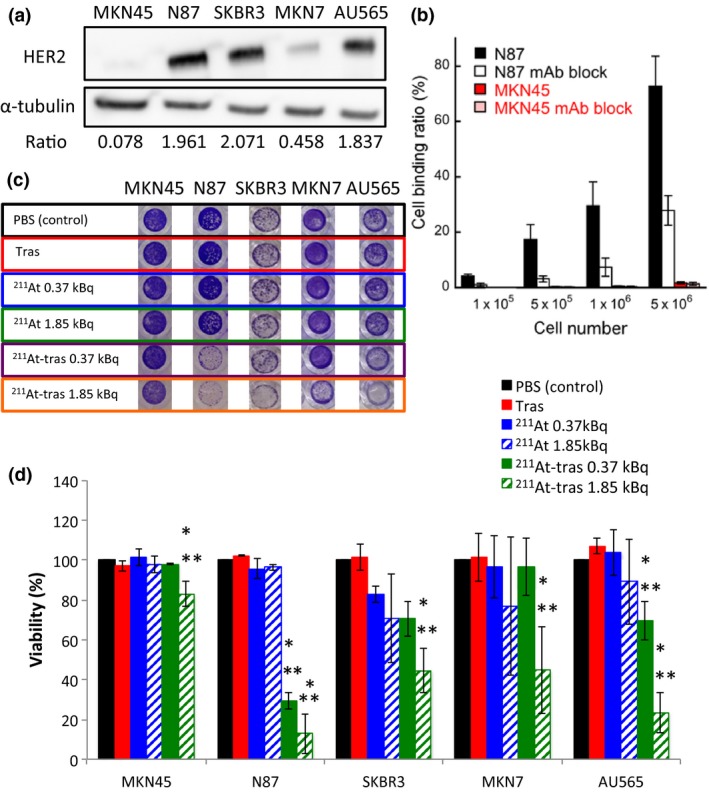
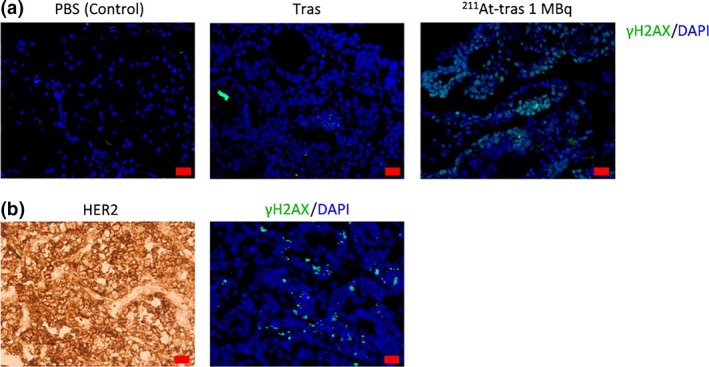
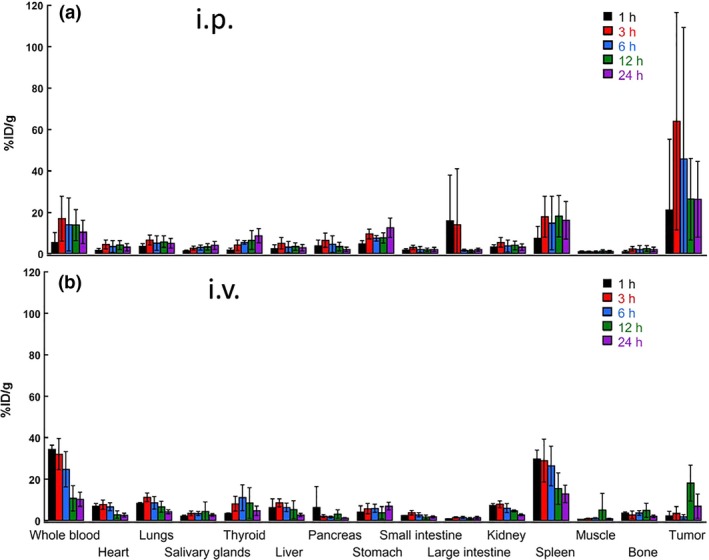
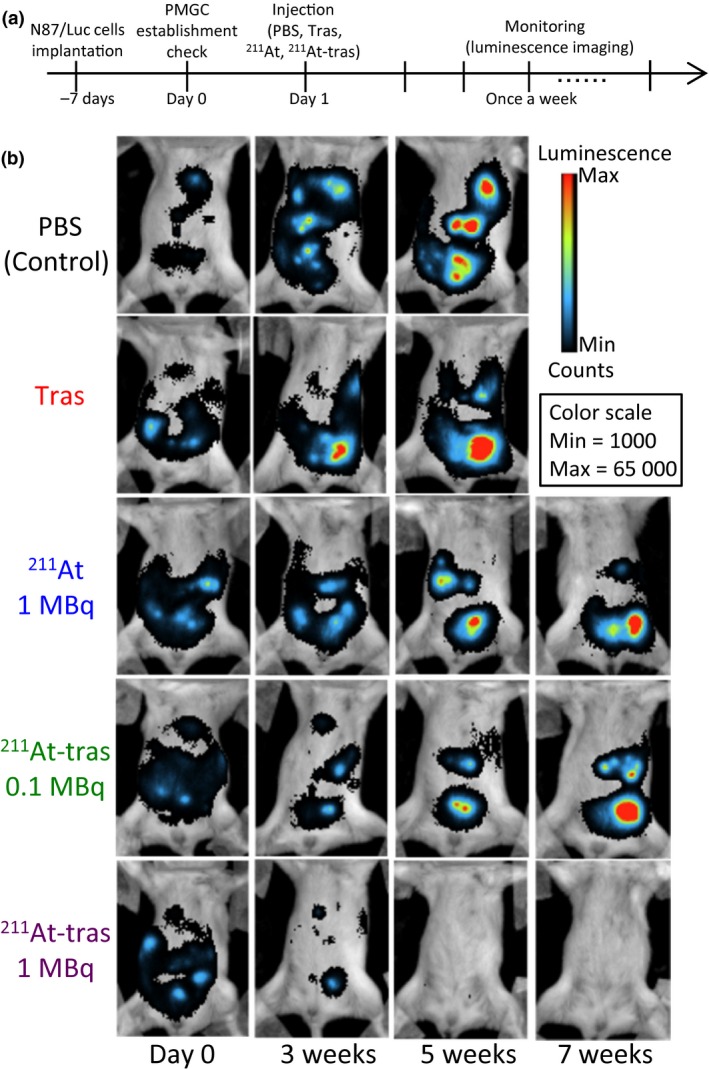
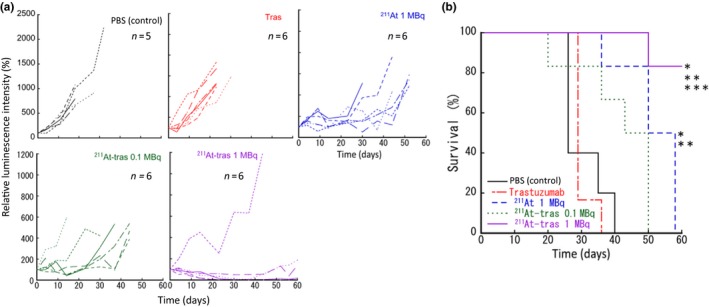
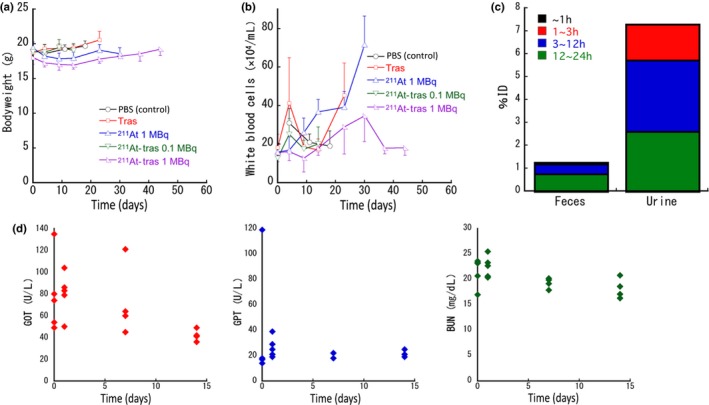
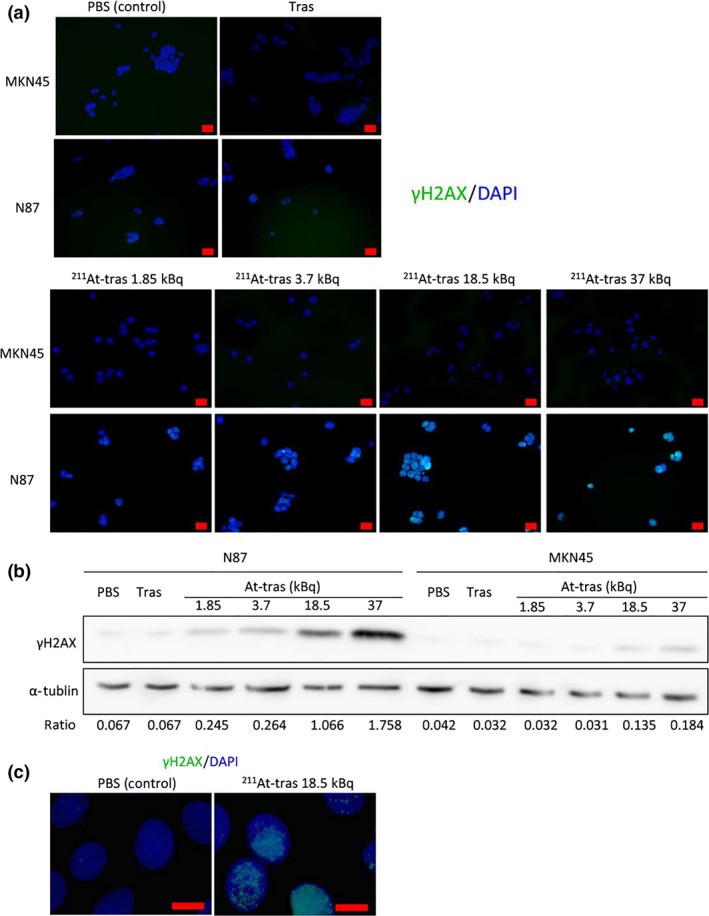
Peritoneal metastasis of gastric cancer (PMGC) is incurable and thus has an extremely poor prognosis. We have found, however, that locoregionally administered trastuzumab armed with astatine-211 ( At-trastuzumab) is effective against human epidermal growth factor receptor 2 (HER2)-positive PMGC in a xenograft mouse model. We first observed that At-trastuzumab can specifically bind and effectively kill NCI-N87 (N87) cells, which are HER2-positive human metastatic GC cells, both in vitro and in s.c. tumors. We established a PMGC mouse model using N87 xenografts stably expressing luciferase to test α-particle radioimmunotherapy with At-trastuzumab against PMGC. Biodistribution analysis in this PMGC mouse model revealed that the i.p. administration of At-trastuzumab (1 MBq) was a more efficient means of delivery of At into metastatic tumors than i.v. injection; the maximum tumor uptake with i.p. administration was over 60% injected dose per gram of tissue (%ID/g) compared to approximately 18%ID/g with i.v. injection. Surprisingly, a single i.p. injection of At-trastuzumab (1 MBq) was sufficient to completely eradicate intraperitoneally disseminated HER2-positive GC xenografts in two of six treated mice by inducing DNA double-strand breaks, and to drastically reduce the tumor burden in another three mice. No bodyweight loss, leukocytopenia, or significant biochemical changes in liver or kidney function were observed in the treatment group. Accordingly, locoregionally administered At-trastuzumab significantly prolonged the survival time of HER2-positive PMGC mice compared with control treatments. Our results provide a proof-of-concept demonstration that locoregional therapy with At-trastuzumab may offer a new treatment option for HER2-positive PMGC.
胃癌腹膜转移(PMGC)无法治愈,因此预后极差。然而,我们发现,在异种移植小鼠模型中,局部给予携带211砹的曲妥珠单抗(At-曲妥珠单抗)对人表皮生长因子受体2(HER2)阳性的PMGC有效。我们首先观察到,At-曲妥珠单抗在体外和皮下肿瘤中都能特异性结合并有效杀死NCI-N87(N87)细胞,这是HER2阳性的人转移性胃癌细胞。我们使用稳定表达荧光素酶的N87异种移植建立了PMGC小鼠模型,以测试At-曲妥珠单抗对PMGC的α粒子放射免疫疗法。该PMGC小鼠模型中的生物分布分析表明,腹腔注射At-曲妥珠单抗(1 MBq)比静脉注射更有效地将砹输送到转移性肿瘤中;腹腔注射时每克组织的最大肿瘤摄取量超过注射剂量的60%(%ID/g),而静脉注射约为18%ID/g。令人惊讶的是,单次腹腔注射At-曲妥珠单抗(1 MBq)足以通过诱导DNA双链断裂在六只接受治疗的小鼠中的两只中完全根除腹膜内播散的HER2阳性胃癌异种移植,并在另外三只小鼠中大幅减轻肿瘤负担。治疗组未观察到体重减轻、白细胞减少或肝功能或肾功能的显著生化变化。因此,与对照治疗相比,局部给予At-曲妥珠单抗显著延长了HER2阳性PMGC小鼠的生存时间。我们的结果提供了一个概念验证证明表明,At-曲妥珠单抗局部治疗可能为HER2阳性PMGC提供一种新的治疗选择。