Wang Chao, Wang Lingfei, Yu Xiaojie, Zhang Yajun, Meng Yanchun, Wang Huajing, Yang Yang, Gao Jie, Wei Huafeng, Zhao Jian, Lu Cuihua, Chen Han, Sun Yanping, Li Bohua
International Joint Cancer Institute and Department of Pharmaceutical Sciences, The Second Military Medical University, Shanghai, People's Republic of China.
Department of Medical Oncology, Fudan University Shanghai Cancer Center, Department of Oncology, Shanghai Medical College, Fudan University, Shanghai, People's Republic of China.
Oncotarget. 2017 Jun 27;8(26):42742-42751. doi: 10.18632/oncotarget.17451.
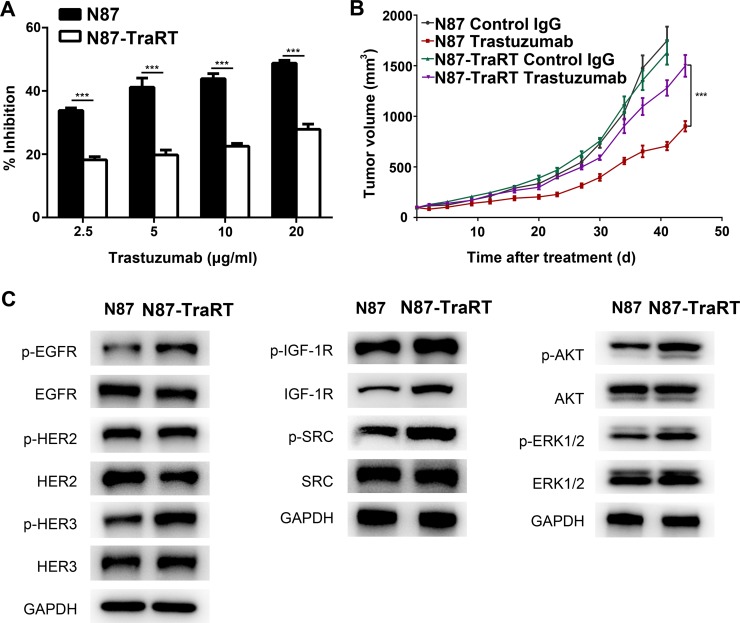
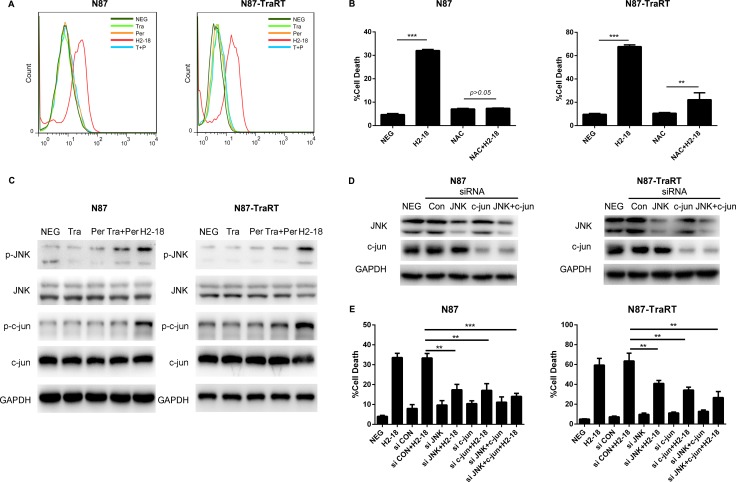
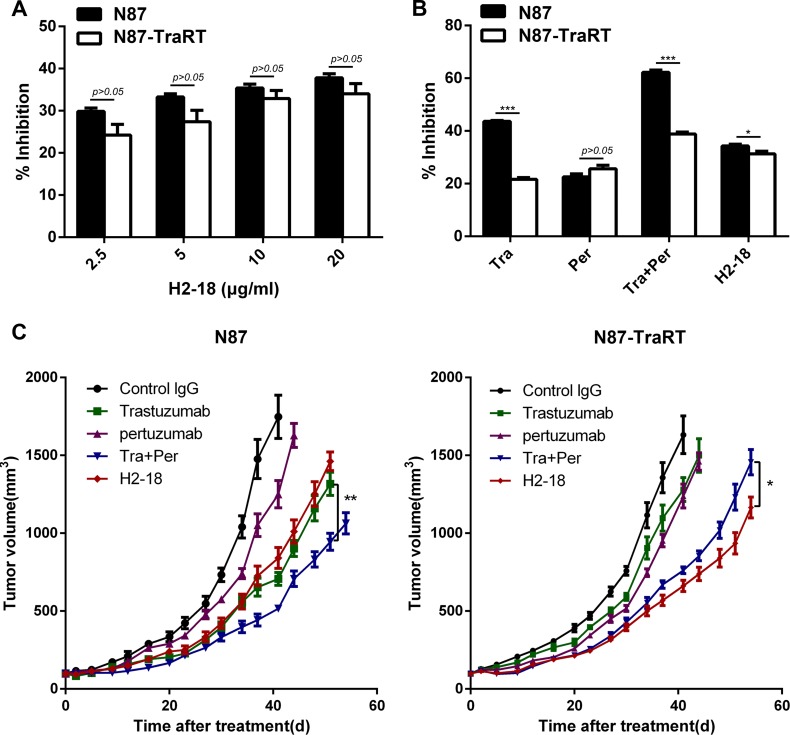
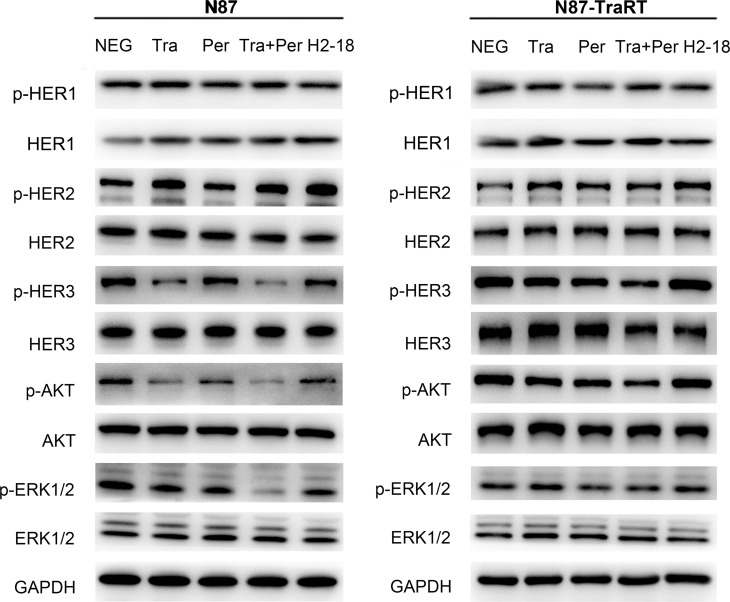
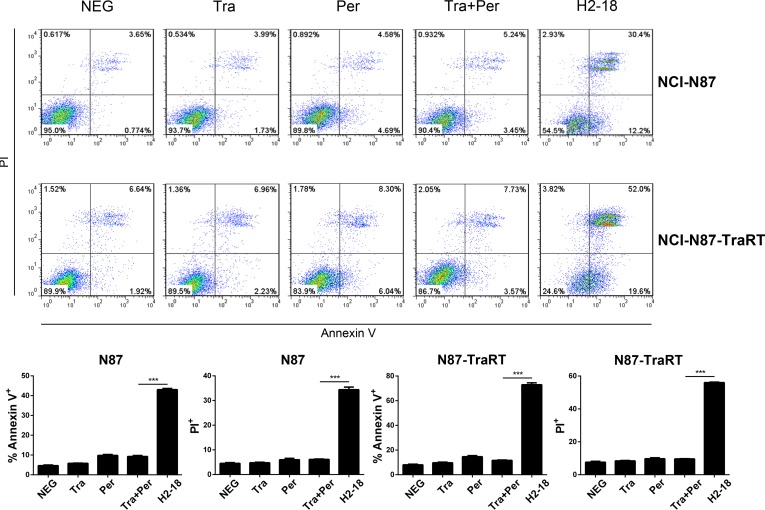
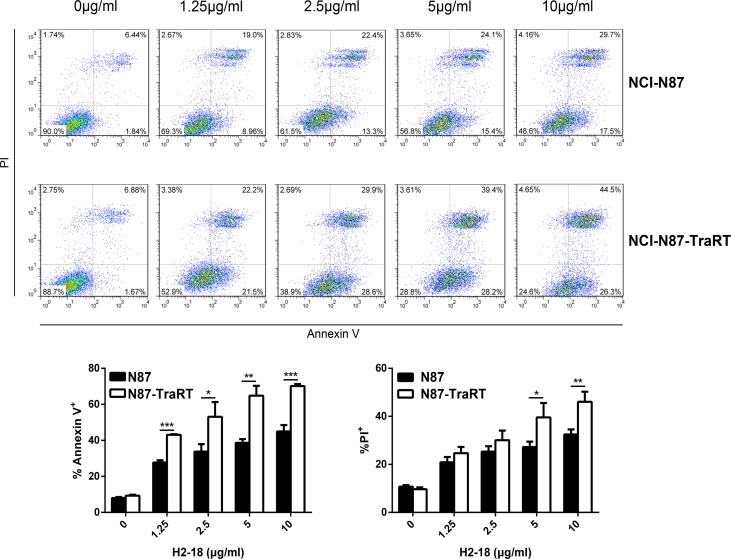
Trastuzumab resistance is a common problem that impedes the effectiveness of trastuzumab in ErbB2-amplified cancers. About 70% of ErbB2-amplified breast cancers do not respond to trastuzumab (de novo resistance), and the majority of the trastuzumab-responsive cancers progress within 1 year (acquired resistance). Different mechanisms exist between de novo and acquired resistance. Innate resistance mechanisms are mainly independent of ErbB2 receptor activity, and acquired resistance involves with alterations depending on ErbB2 activity. We previously reported H2-18, an ErbB2 domain I-specific antibody, which could circumvent de novo resistance to trastuzumab. Here, we modeled the development of acquired resistance by treating human gastric cancer cell line NCI-N87 with trastuzumab to obtain the trastuzumab-resistant subline, NCI-N87-TraRT. Next, we investigated the antitumor efficacy of H2-18 in NCI-N87-TraRT cell line. H2-18 exhibited a significantly greater antitumor activity in NCI-N87-TraRT tumor-bearing nude mice than pertuzumab and trastuzumab, either alone or in combination. The unique ability of H2-18 to overcome acquired resistance may be attributable to its potent programmed cell death-inducing activity, which was probably mediated by RIP1-ROS-JNK-c-Jun pathway. In conclusion, H2-18 may have the potential as an effective agent to circumvent acquired resistance to trastuzumab in ErbB2-overexpressing cancers.
曲妥珠单抗耐药是一个常见问题,它阻碍了曲妥珠单抗在erbB2扩增型癌症中的疗效。约70%的erbB2扩增型乳腺癌对曲妥珠单抗无反应(原发性耐药),而大多数对曲妥珠单抗有反应的癌症在1年内进展(获得性耐药)。原发性耐药和获得性耐药之间存在不同机制。原发性耐药机制主要独立于erbB2受体活性,而获得性耐药涉及依赖于erbB2活性的改变。我们之前报道了H2-18,一种erbB2结构域I特异性抗体,它可以规避对曲妥珠单抗的原发性耐药。在此,我们通过用曲妥珠单抗处理人胃癌细胞系NCI-N87来模拟获得性耐药的发展,以获得曲妥珠单抗耐药亚系NCI-N87-TraRT。接下来,我们研究了H2-18在NCI-N87-TraRT细胞系中的抗肿瘤疗效。H2-18在携带NCI-N87-TraRT肿瘤的裸鼠中单独或联合使用时,均表现出比帕妥珠单抗和曲妥珠单抗显著更强的抗肿瘤活性。H2-18克服获得性耐药的独特能力可能归因于其强大的诱导程序性细胞死亡的活性,这可能是由RIP1-ROS-JNK-c-Jun通路介导的。总之,H2-18可能有潜力作为一种有效药物,在erbB2过表达的癌症中规避对曲妥珠单抗的获得性耐药。