Pereira Carina F, Read Eliot K C, Wise Helen M, Amorim Maria J, Digard Paul
Division of Virology, Department of Pathology, University of Cambridge, Tennis Court Road, Cambridge, United Kingdom.
The Roslin Institute, University of Edinburgh, Easter Bush, United Kingdom.
J Virol. 2017 Jul 12;91(15). doi: 10.1128/JVI.00528-17. Print 2017 Aug 1.
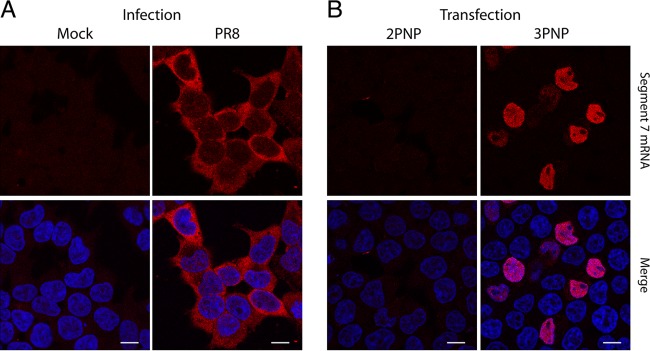
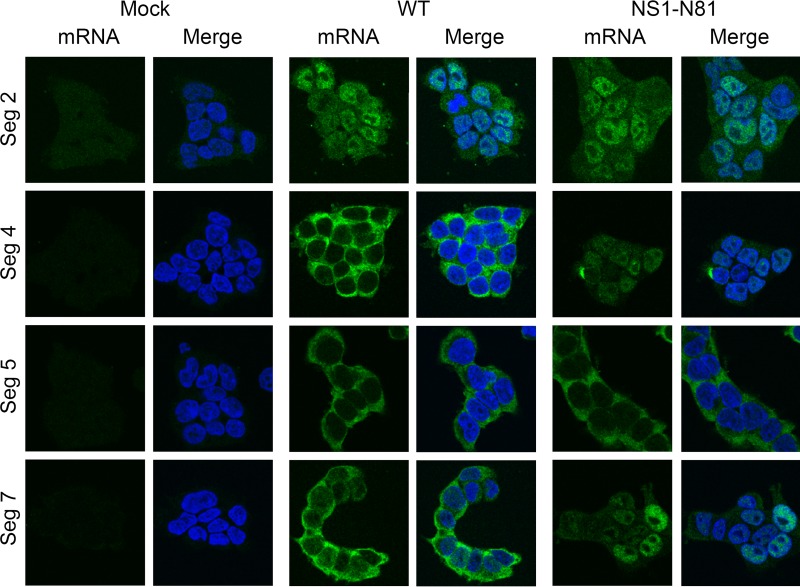
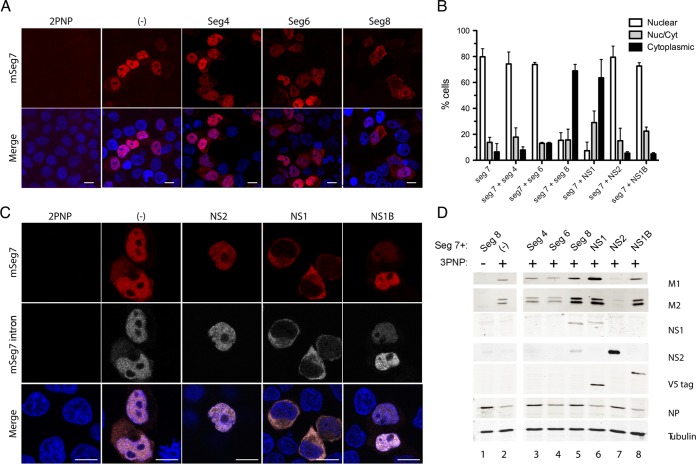
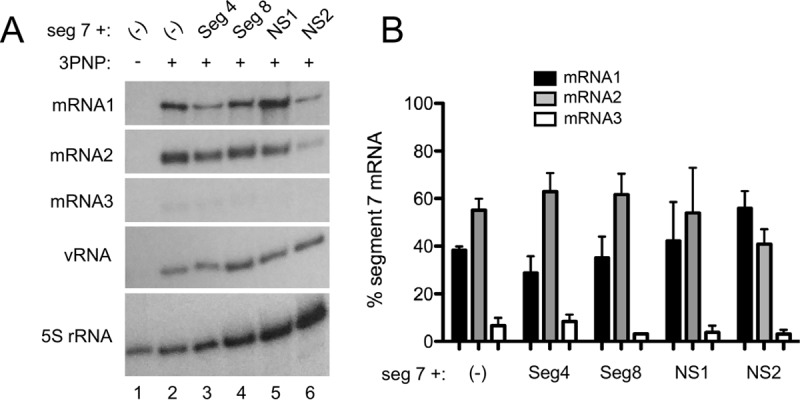
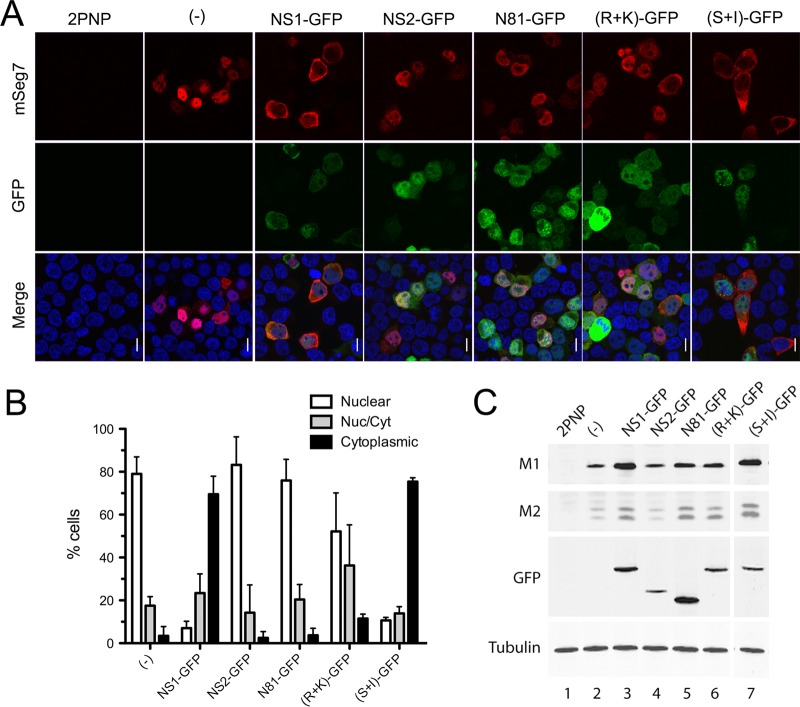
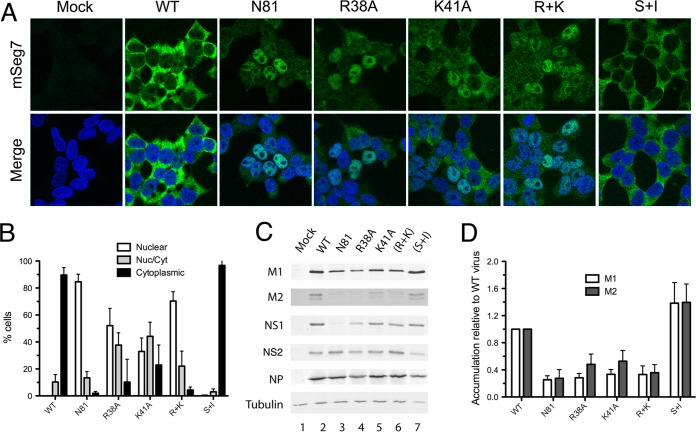
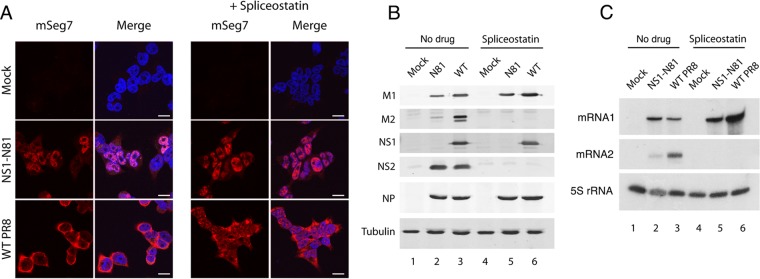
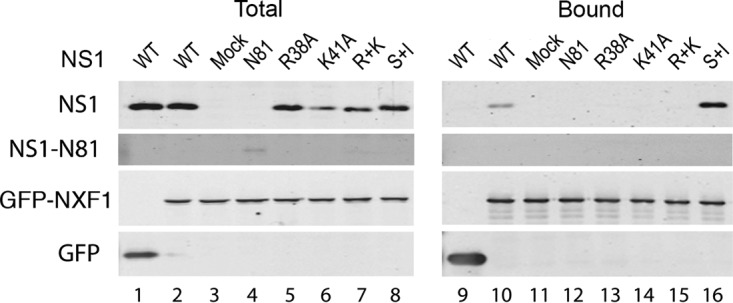
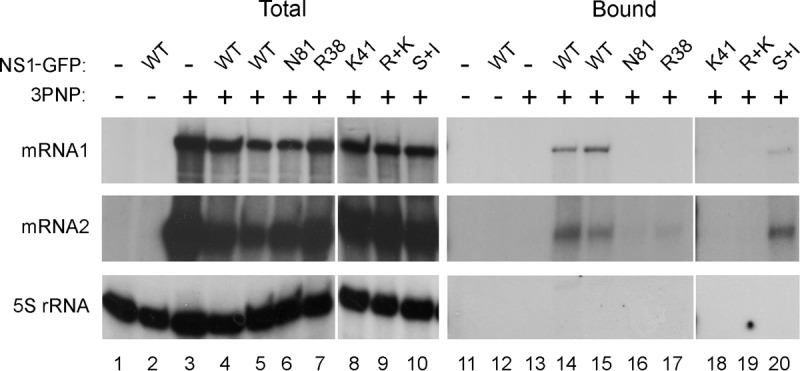
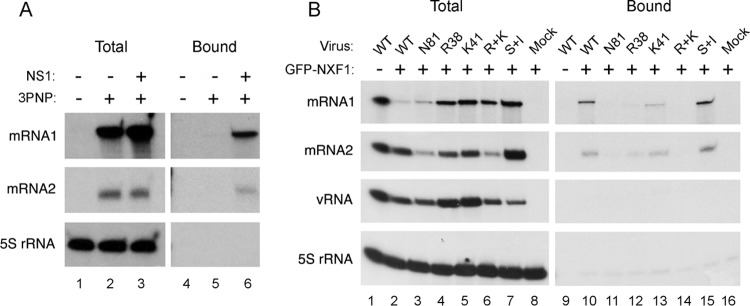
Influenza A virus mRNAs are transcribed by the viral RNA-dependent RNA polymerase in the cell nucleus before being exported to the cytoplasm for translation. Segment 7 produces two major transcripts: an unspliced mRNA that encodes the M1 matrix protein and a spliced transcript that encodes the M2 ion channel. Export of both mRNAs is dependent on the cellular NXF1/TAP pathway, but it is unclear how they are recruited to the export machinery or how the intron-containing but unspliced M1 mRNA bypasses the normal quality-control checkpoints. Using fluorescent hybridization to monitor segment 7 mRNA localization, we found that cytoplasmic accumulation of unspliced M1 mRNA was inefficient in the absence of NS1, both in the context of segment 7 RNPs reconstituted by plasmid transfection and in mutant virus-infected cells. This effect was independent of any major effect on steady-state levels of segment 7 mRNA or splicing but corresponded to a ∼5-fold reduction in the accumulation of M1. A similar defect in intronless hemagglutinin (HA) mRNA nuclear export was seen with an NS1 mutant virus. Efficient export of M1 mRNA required both an intact NS1 RNA-binding domain and effector domain. Furthermore, while wild-type NS1 interacted with cellular NXF1 and also increased the interaction of segment 7 mRNA with NXF1, mutant NS1 polypeptides unable to promote mRNA export did neither. Thus, we propose that NS1 facilitates late viral gene expression by acting as an adaptor between viral mRNAs and the cellular nuclear export machinery to promote their nuclear export. Influenza A virus is a major pathogen of a wide variety of mammalian and avian species that threatens public health and food security. A fuller understanding of the virus life cycle is important to aid control strategies. The virus has a small genome that encodes relatively few proteins that are often multifunctional. Here, we characterize a new function for the NS1 protein, showing that, as well as previously identified roles in antagonizing the innate immune defenses of the cell and directly upregulating translation of viral mRNAs, it also promotes the nuclear export of the viral late gene mRNAs by acting as an adaptor between the viral mRNAs and the cellular mRNA nuclear export machinery.
甲型流感病毒的信使核糖核酸(mRNA)在细胞核内由病毒依赖RNA的RNA聚合酶转录,然后输出到细胞质中进行翻译。第7节段产生两种主要转录本:一种未剪接的mRNA,编码M1基质蛋白;一种剪接转录本,编码M2离子通道。这两种mRNA的输出都依赖于细胞的NXF1/TAP途径,但目前尚不清楚它们是如何被招募到输出机制中的,也不清楚含有内含子但未剪接的M1 mRNA是如何绕过正常的质量控制检查点的。我们使用荧光杂交技术来监测第7节段mRNA的定位,发现无论是在通过质粒转染重建的第7节段核糖核蛋白(RNP)的情况下,还是在突变病毒感染的细胞中,在没有NS1的情况下,未剪接的M1 mRNA在细胞质中的积累效率都很低。这种效应与对第7节段mRNA的稳态水平或剪接的任何主要影响无关,但与M1积累减少约5倍相对应。在一种NS1突变病毒中,也观察到无内含子的血凝素(HA)mRNA核输出存在类似缺陷。M1 mRNA的有效输出需要完整的NS1 RNA结合结构域和效应结构域。此外,虽然野生型NS1与细胞NXF1相互作用,也增加了第7节段mRNA与NXF1的相互作用,但无法促进mRNA输出的突变NS1多肽则没有这种作用。因此,我们提出NS1通过充当病毒mRNA与细胞内核输出机制之间的衔接子来促进病毒晚期基因表达,从而促进它们的核输出。甲型流感病毒是多种哺乳动物和禽类的主要病原体,威胁着公共卫生和食品安全。更全面地了解病毒生命周期对于辅助控制策略很重要。该病毒基因组较小,编码的蛋白质相对较少,且这些蛋白质通常具有多种功能。在这里,我们描述了NS1蛋白的一种新功能,表明它除了在对抗细胞的先天免疫防御以及直接上调病毒mRNA翻译方面具有先前确定的作用外,还通过充当病毒mRNA与细胞mRNA核输出机制之间的衔接子来促进病毒晚期基因mRNA的核输出。