Ghosh Sujoy, Forney Laura A, Wanders Desiree, Stone Kirsten P, Gettys Thomas W
Laboratory of Computational Biology, Pennington Biomedical Research Center, Baton Rouge, LA, United States of America.
Laboratory of Nutrient Sensing and Adipocyte Signaling, Pennington Biomedical Research Center, Baton Rouge, LA, United States of America.
PLoS One. 2017 May 16;12(5):e0177513. doi: 10.1371/journal.pone.0177513. eCollection 2017.
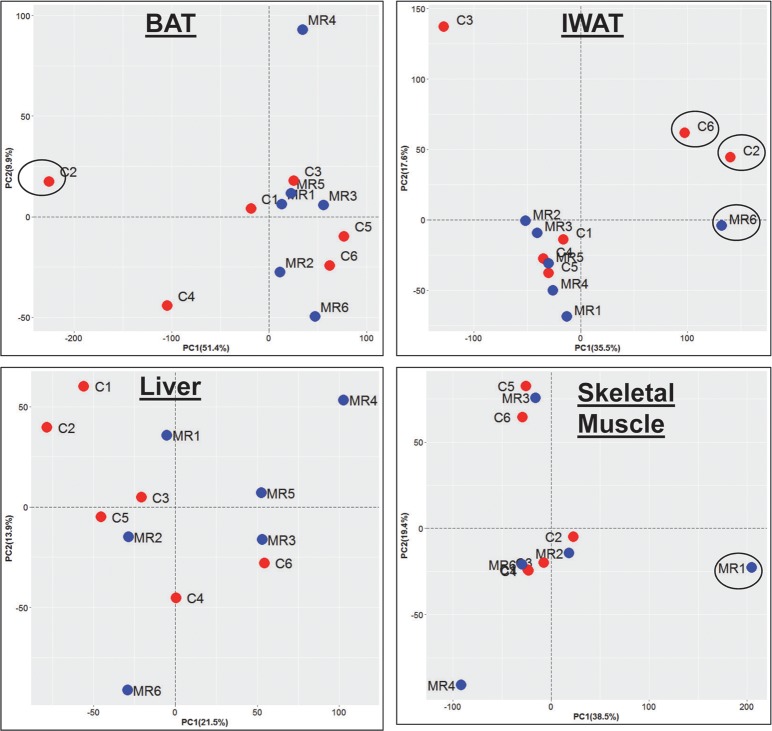
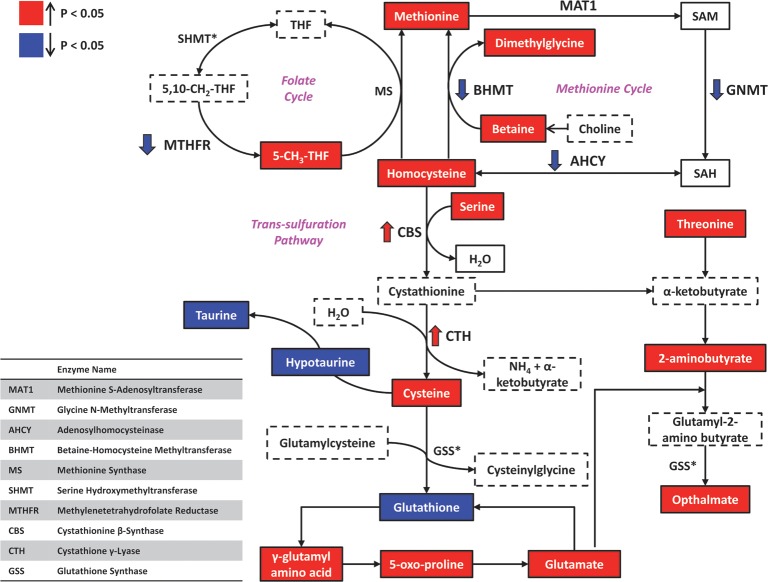
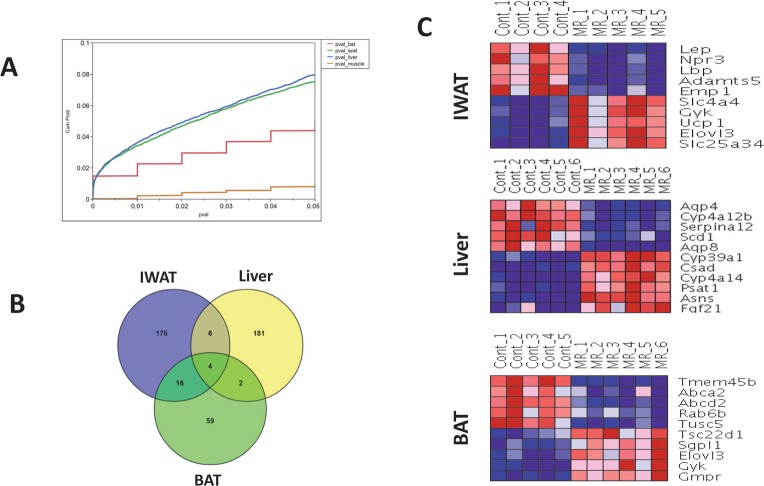
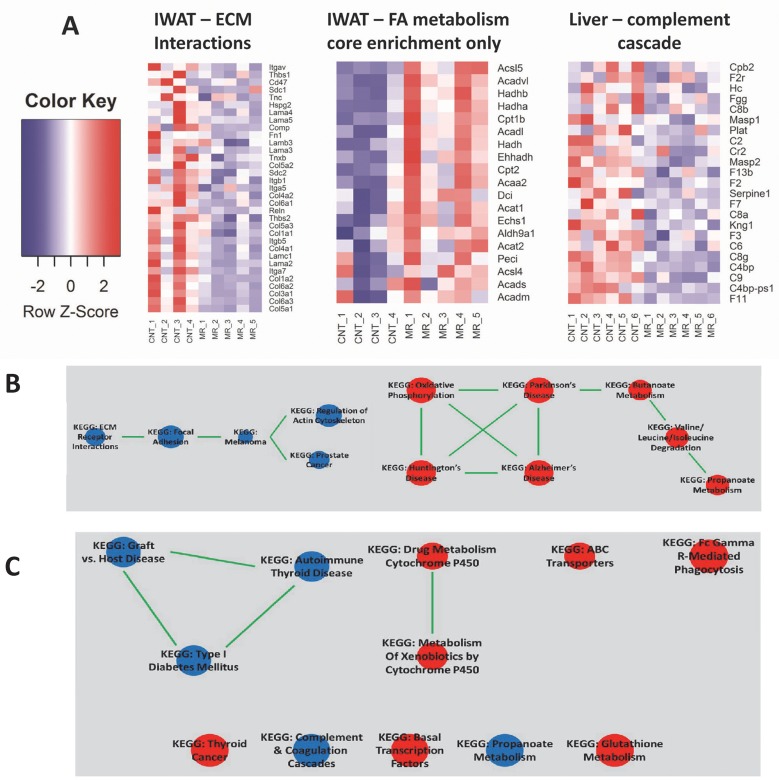
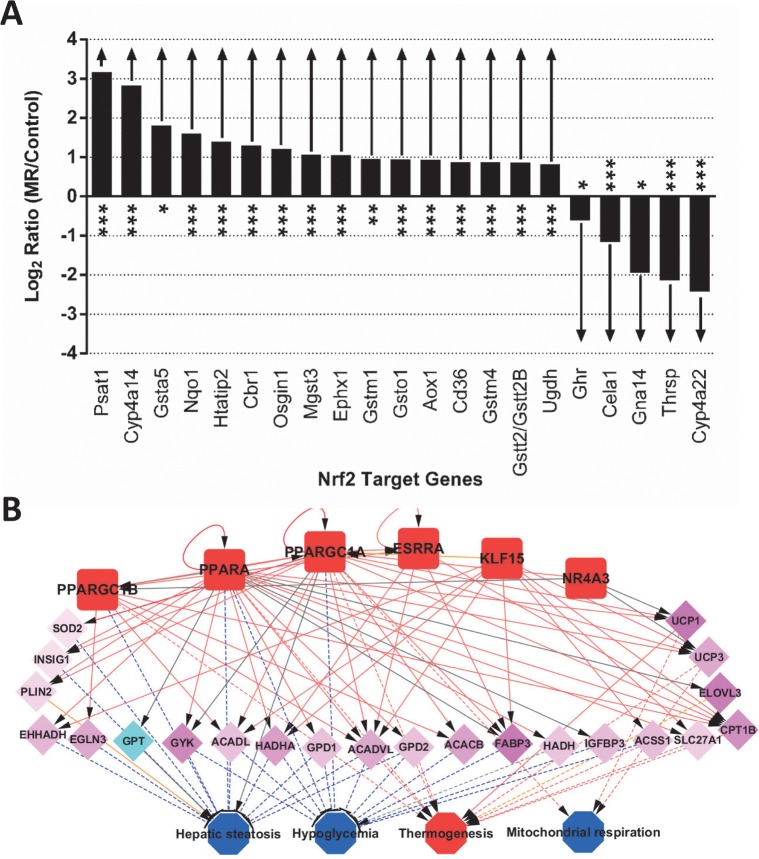
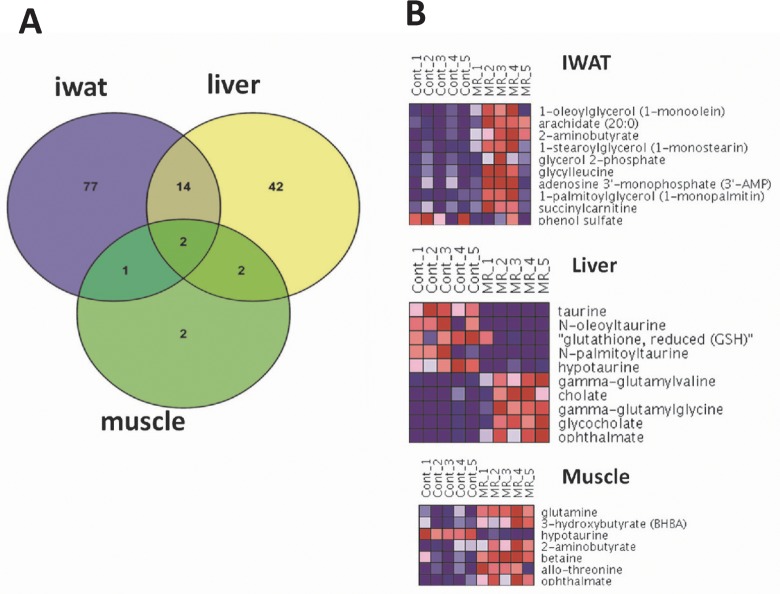
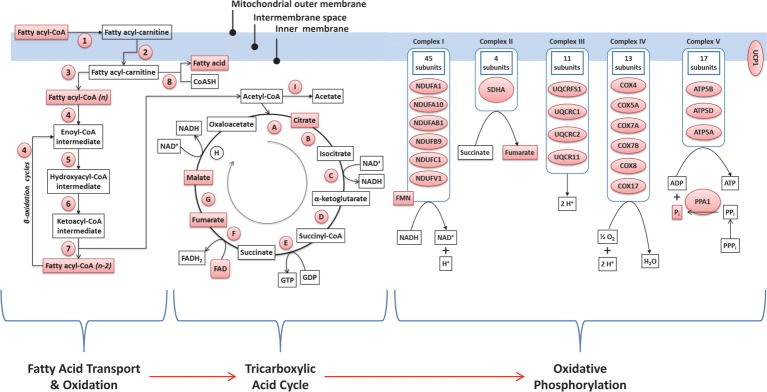
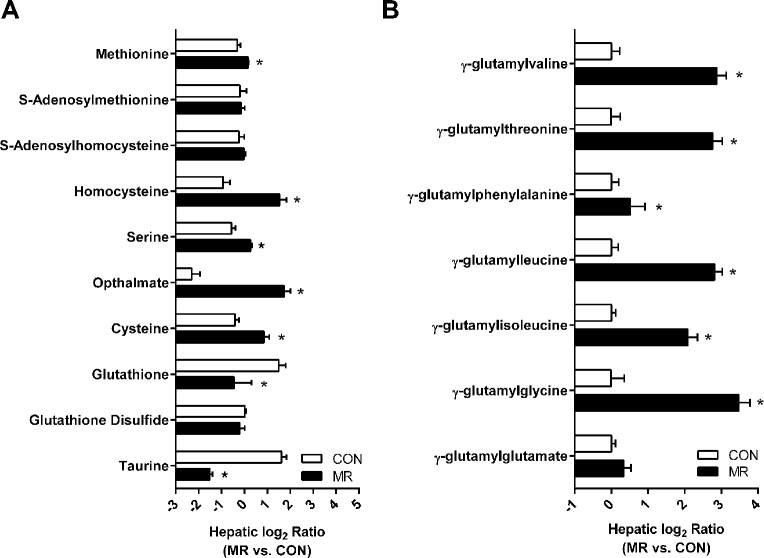
Dietary methionine restriction (MR) produces a coordinated series of transcriptional responses in peripheral tissues that limit fat accretion, remodel lipid metabolism in liver and adipose tissue, and improve overall insulin sensitivity. Hepatic sensing of reduced methionine leads to induction and release of fibroblast growth factor 21 (FGF21), which acts centrally to increase sympathetic tone and activate thermogenesis in adipose tissue. FGF21 also has direct effects in adipose to enhance glucose uptake and oxidation. However, an understanding of how the liver senses and translates reduced dietary methionine into these transcriptional programs remains elusive. A comprehensive systems biology approach integrating transcriptomic and metabolomic readouts in MR-treated mice confirmed that three interconnected mechanisms (fatty acid transport and oxidation, tricarboxylic acid cycle, and oxidative phosphorylation) were activated in MR-treated inguinal adipose tissue. In contrast, the effects of MR in liver involved up-regulation of anti-oxidant responses driven by the nuclear factor, erythroid 2 like 2 transcription factor, NFE2L2. Metabolomic analysis provided evidence for redox imbalance, stemming from large reductions in the master anti-oxidant molecule glutathione coupled with disproportionate increases in ophthalmate and its precursors, glutamate and 2-aminobutyrate. Thus, cysteine and its downstream product, glutathione, emerge as key early hepatic signaling molecules linking dietary MR to its metabolic phenotype.
饮食中蛋氨酸限制(MR)在外周组织中产生一系列协调的转录反应,这些反应限制脂肪堆积、重塑肝脏和脂肪组织中的脂质代谢并改善整体胰岛素敏感性。肝脏对蛋氨酸减少的感知导致成纤维细胞生长因子21(FGF21)的诱导和释放,FGF21在中枢发挥作用以增加交感神经张力并激活脂肪组织中的产热作用。FGF21在脂肪组织中也有直接作用,可增强葡萄糖摄取和氧化。然而,肝脏如何感知并将饮食中减少的蛋氨酸转化为这些转录程序仍不清楚。一种综合的系统生物学方法,将转录组学和代谢组学读数整合到经MR处理的小鼠中,证实了在经MR处理的腹股沟脂肪组织中三种相互关联的机制(脂肪酸转运和氧化、三羧酸循环和氧化磷酸化)被激活。相比之下,MR对肝脏的影响涉及由核因子红细胞2样2转录因子NFE2L2驱动的抗氧化反应上调。代谢组学分析提供了氧化还原失衡的证据,这源于主要抗氧化分子谷胱甘肽的大幅减少,以及眼氨酸及其前体谷氨酸和2-氨基丁酸的不成比例增加。因此,半胱氨酸及其下游产物谷胱甘肽成为将饮食中的MR与其代谢表型联系起来的关键早期肝脏信号分子。