McGill Group for Suicide Studies, Douglas Mental Health University Institute, McGill University, Verdun, Quebec, Canada (Drs Fiori, Lopez, Richard-Devantoy, Berlim, Chachamovich, Jollant, and Turecki); Department of Psychiatry, University Health Network, University of Toronto, Toronto, Ontario, Canada (Drs Foster, Rotzinger, and Kennedy).
Int J Neuropsychopharmacol. 2017 Aug 1;20(8):619-623. doi: 10.1093/ijnp/pyx034.
Major depressive disorder is a debilitating illness, which is most commonly treated with antidepressant drugs. As the majority of patients do not respond on their first trial, there is great interest in identifying biological factors that indicate the most appropriate treatment for each patient. Studies suggest that microRNA represent excellent biomarkers to predict antidepressant response.
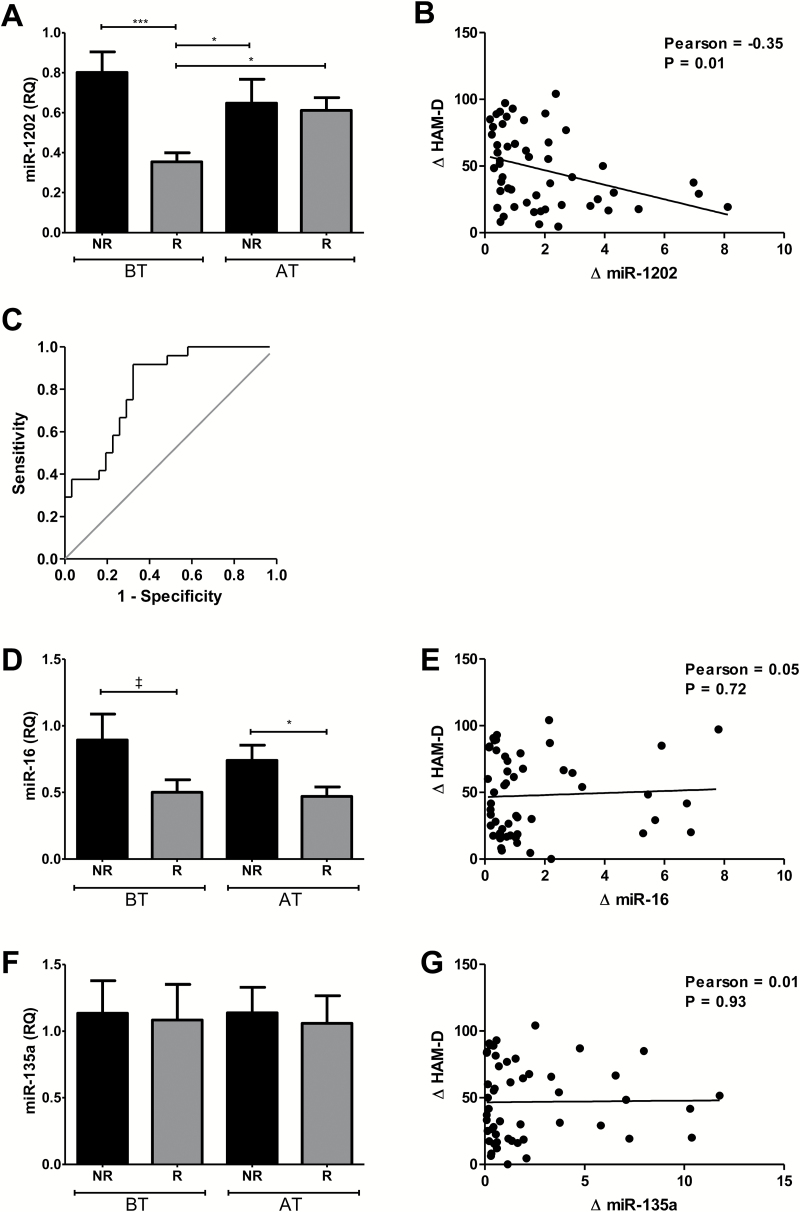
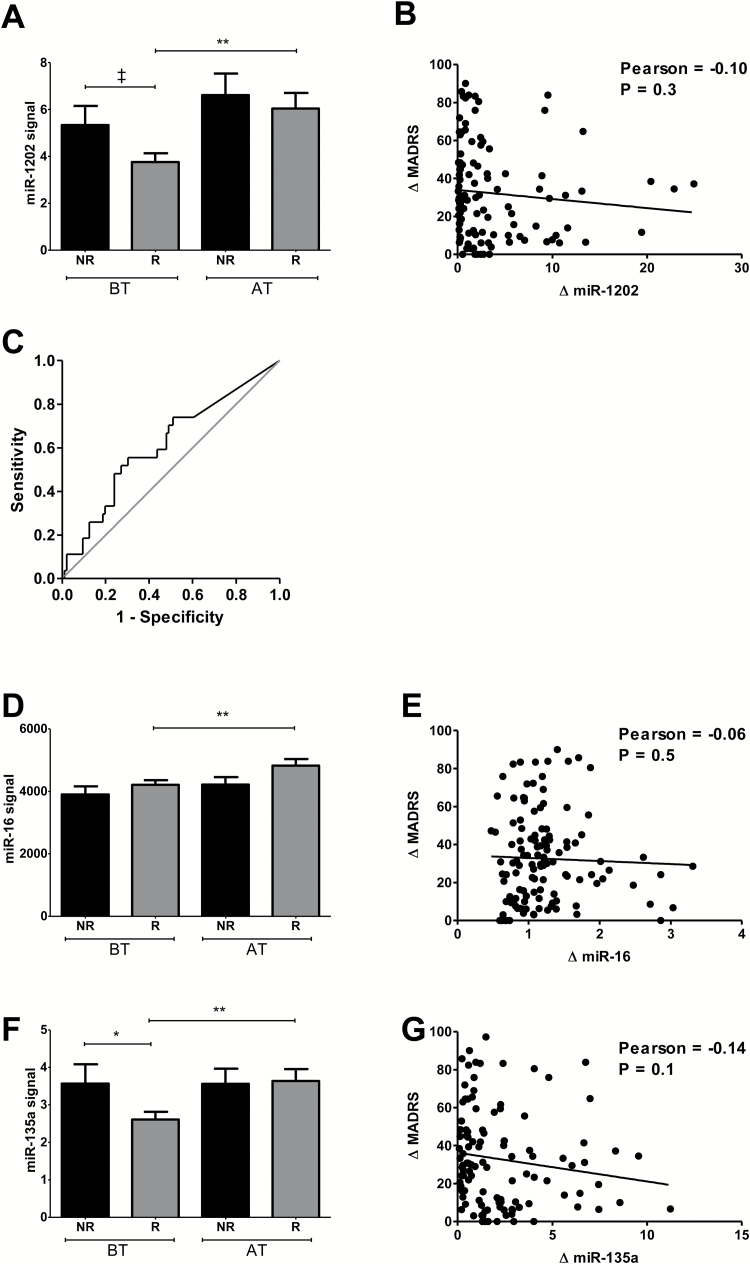
We investigated the expression of miR-1202, miR-135a, and miR-16 in peripheral blood from 2 cohorts of depressed patients who received 8 weeks of antidepressant therapy. Expression was quantified at baseline and after treatment, and its relationship to treatment response and depressive symptoms was assessed.
In both cohorts, responders displayed lower baseline miR-1202 levels compared with nonresponders, which increased following treatment.
Ultimately, our results support the involvement of microRNA in antidepressant response and suggest that quantification of their levels in peripheral samples represents a valid approach to informing treatment decisions.
重度抑郁症是一种使人虚弱的疾病,最常采用抗抑郁药物进行治疗。由于大多数患者在首次尝试时没有反应,因此人们非常关注识别生物因素,以指示为每位患者提供最合适的治疗方法。研究表明,microRNA 是预测抗抑郁反应的极佳生物标志物。
我们调查了接受 8 周抗抑郁治疗的两批抑郁症患者外周血中 miR-1202、miR-135a 和 miR-16 的表达。在基线和治疗后定量表达,并评估其与治疗反应和抑郁症状的关系。
在两个队列中,与无反应者相比,反应者的基线 miR-1202 水平较低,治疗后增加。
最终,我们的结果支持 microRNA 参与抗抑郁反应,并表明外周样本中其水平的定量分析是一种有效的治疗决策方法。