The New York Stem Cell Foundation Research Institute, New York, NY 10019, USA.
The New York Stem Cell Foundation Research Institute, New York, NY 10019, USA.
Stem Cell Reports. 2017 Jun 6;8(6):1516-1524. doi: 10.1016/j.stemcr.2017.04.023. Epub 2017 May 18.
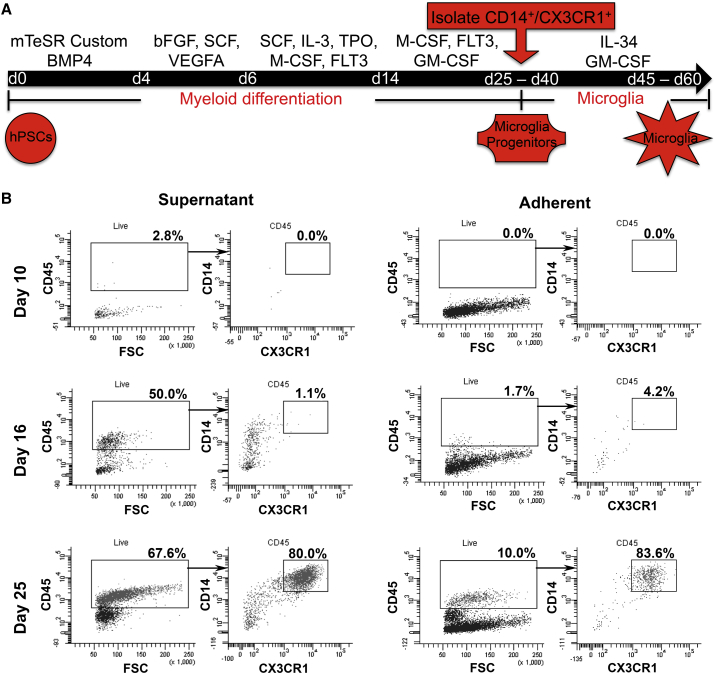
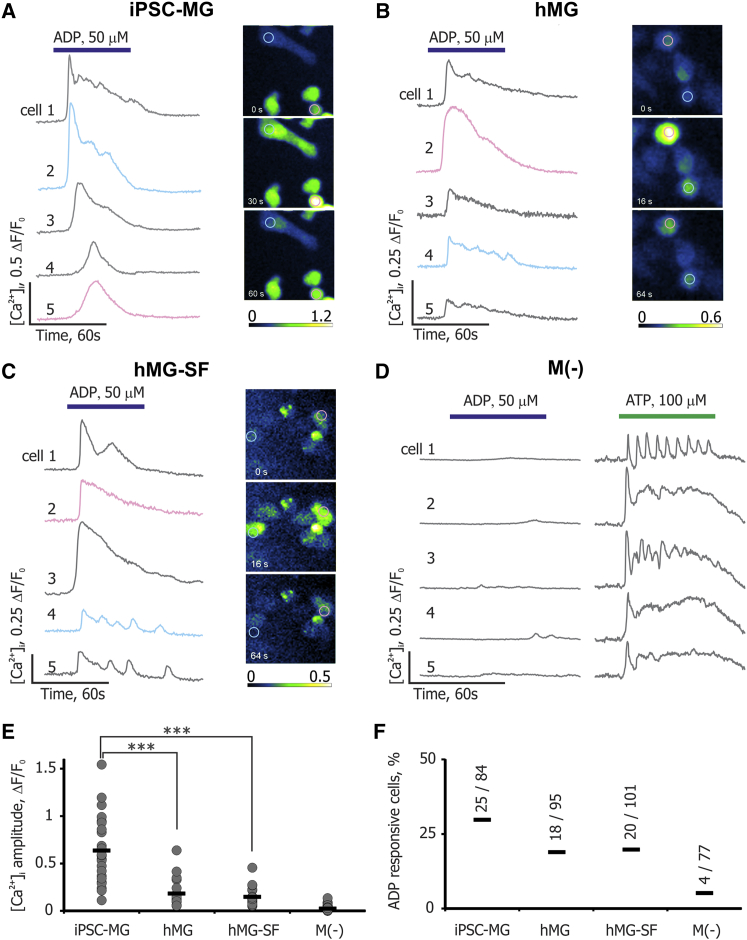
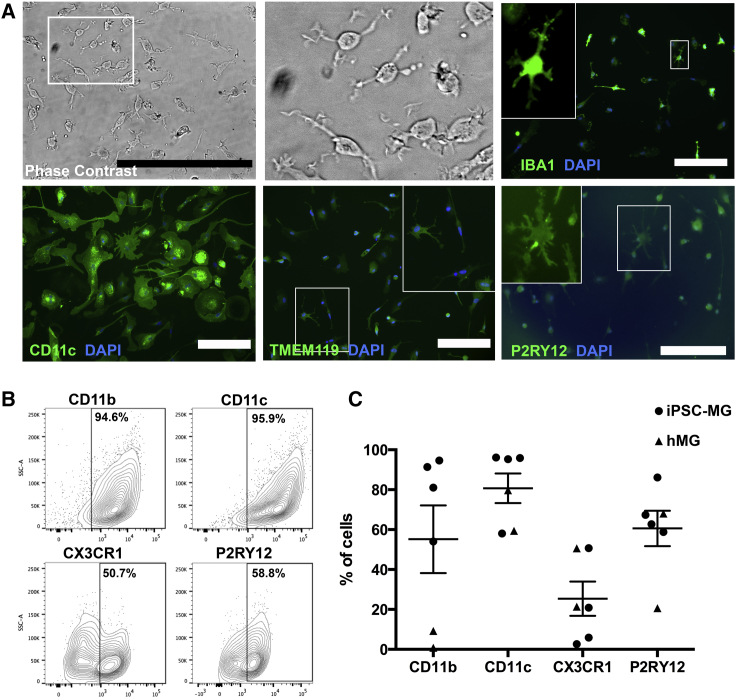
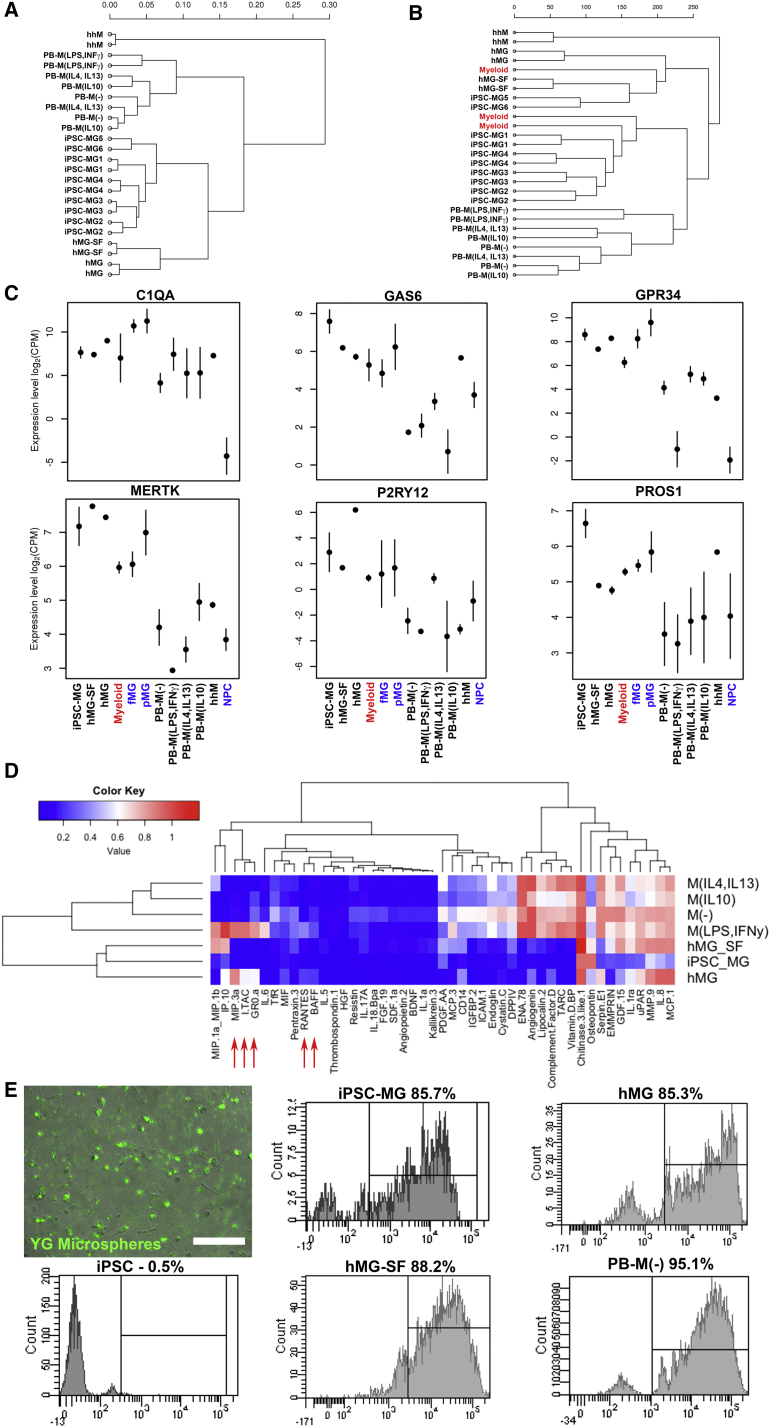
Microglia, the immune cells of the brain, are crucial to proper development and maintenance of the CNS, and their involvement in numerous neurological disorders is increasingly being recognized. To improve our understanding of human microglial biology, we devised a chemically defined protocol to generate human microglia from pluripotent stem cells. Myeloid progenitors expressing CD14/CX3CR1 were generated within 30 days of differentiation from both embryonic and induced pluripotent stem cells (iPSCs). Further differentiation of the progenitors resulted in ramified microglia with highly motile processes, expressing typical microglial markers. Analyses of gene expression and cytokine release showed close similarities between iPSC-derived (iPSC-MG) and human primary microglia as well as clear distinctions from macrophages. iPSC-MG were able to phagocytose and responded to ADP by producing intracellular Ca transients, whereas macrophages lacked such response. The differentiation protocol was highly reproducible across several pluripotent stem cell lines.
小胶质细胞是大脑中的免疫细胞,对于中枢神经系统的正常发育和维持至关重要,其在许多神经疾病中的作用正日益受到人们的认可。为了增进我们对人类小胶质细胞生物学的了解,我们设计了一种化学定义的方案,从小鼠多能干细胞中生成人类小胶质细胞。在胚胎和诱导多能干细胞 (iPSC) 分化 30 天后,表达 CD14/CX3CR1 的髓样祖细胞生成。祖细胞的进一步分化导致具有高度迁移性的分支状小胶质细胞,表达典型的小胶质细胞标志物。基因表达和细胞因子释放分析表明,iPSC 衍生的小胶质细胞 (iPSC-MG) 与人原代小胶质细胞之间具有密切的相似性,与巨噬细胞有明显的区别。iPSC-MG 能够吞噬并通过产生细胞内钙瞬变来响应 ADP,而巨噬细胞则没有这种反应。该分化方案在几个多能干细胞系中具有高度可重复性。