Brondani Mario A, Alan Rana, Donnelly Leeann
Faculty of Dentistry, University of British Columbia, Vancouver, British Columbia, Canada.
Henry M. Goldman School of Dental Medicine, Boston University, Boston, Massachusetts, United States of America.
PLoS One. 2017 May 22;12(5):e0177388. doi: 10.1371/journal.pone.0177388. eCollection 2017.
To explore the ways in which stigma is experienced in healthcare and dental settings by patients with a history of addiction and mental illness.
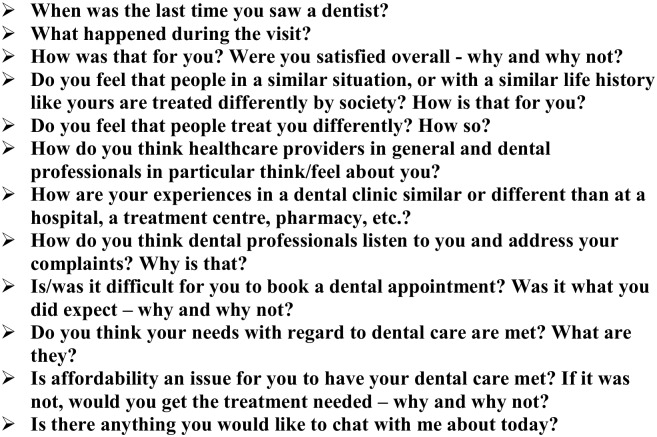
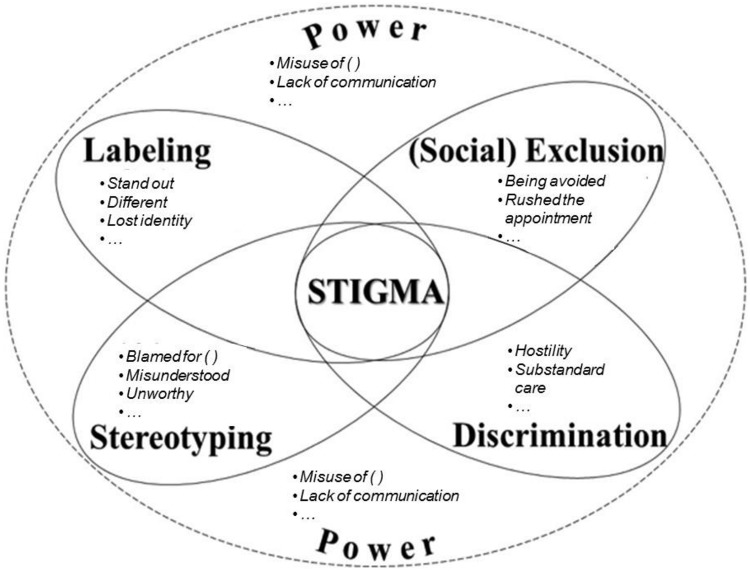
Audio-recorded, semi-structured interviews with a purposefully selected convenience sample of residents from two community treatment centres in Vancouver, Canada were conducted. The interview guide contained questions about experiences while seeking health and dental care and was based on an existing framework of labeling, stereotyping, exclusion, discrimination, and power imbalance. Interviews were transcribed verbatim for coding and thematic analysis.
Twenty-five participants between 23 and 67 years of age were interviewed; 17 were males. Most had a self-reported history of depression combined with use of alcohol and crack-cocaine; most of them only sought dental care for emergency purposes. Textual analysis of more than 300 pages of transcribed interviews revealed that participants perceived stigma when they were negatively stereotyped as 'unworthy', labeled as 'different', excluded from the decision-making process, discriminated against, 'treated unfairly', and felt powerless when interacting in the heath and dental care systems. Conversely, positive experiences were characterized by empathy, reassurance and good communication, which were empowering for patients.
When associated with stigma, mental illness and addictions have negative implications for accessing health and dental care. From our participants' perspectives, it seems that the lack of understanding about their life conditions by the healthcare professionals was the origin of stigma. We suggest that an increased social awareness of these health issues be enhanced among current and future health and dental care professionals to help improve care experiences for this marginalized population.
探讨有药物成瘾和精神疾病史的患者在医疗和牙科环境中所经历的污名化情况。
对加拿大温哥华两个社区治疗中心的居民进行了有目的选择的便利样本的录音半结构化访谈。访谈指南包含有关寻求医疗和牙科护理时的经历的问题,并基于现有的标签化、刻板印象、排斥、歧视和权力不平衡框架。访谈逐字转录以进行编码和主题分析。
对25名年龄在23至67岁之间的参与者进行了访谈;其中17名是男性。大多数人自我报告有抑郁症病史,同时伴有酒精和快克可卡因使用;他们中的大多数人仅因紧急情况寻求牙科护理。对超过300页转录访谈的文本分析显示,参与者在被负面刻板化为“不值得”、被贴上“不同”的标签、被排除在决策过程之外、受到歧视、“受到不公平对待”以及在医疗和牙科护理系统中互动时感到无力时,会察觉到污名。相反,积极的经历以同理心、安慰和良好沟通为特征,这对患者有增强力量的作用。
当与污名相关联时,精神疾病和药物成瘾对获得医疗和牙科护理有负面影响。从我们参与者的角度来看,医疗专业人员对他们生活状况的缺乏理解似乎是污名的根源。我们建议在当前和未来的医疗和牙科护理专业人员中提高对这些健康问题的社会认识,以帮助改善这一边缘化人群的护理体验。