He Rong, Han Wei, Song Xiaojie, Tang Xiaoju, Cheng Li, Jiang Li
Department of Emergency, Children's Hospital of Chongqing Medical University, Chongqing 400014, P.R. China.
Ministry of Education Key Laboratory of Child Development and Disorders, Chongqing Key Laboratory of Pediatrics, Chongqing International Science and Technology Cooperation Center for Child Development and Disorders, Chongqing 400014, P.R. China.
Mol Med Rep. 2017 Jul;16(1):119-126. doi: 10.3892/mmr.2017.6615. Epub 2017 May 19.
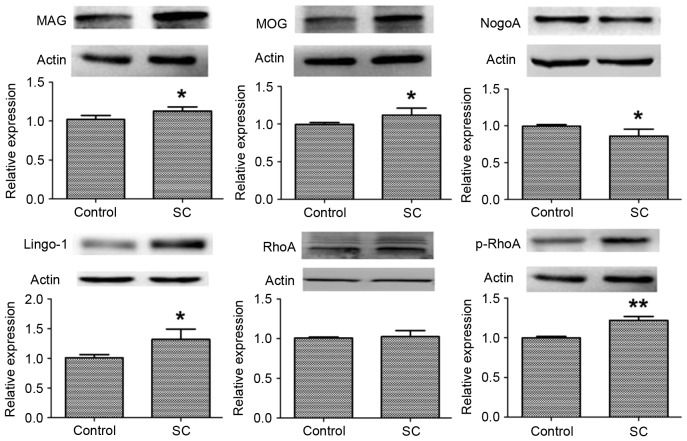
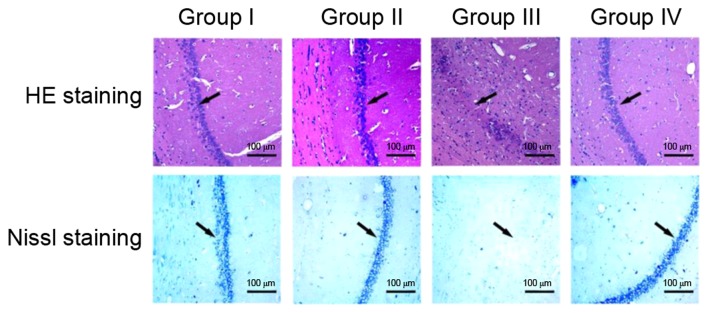
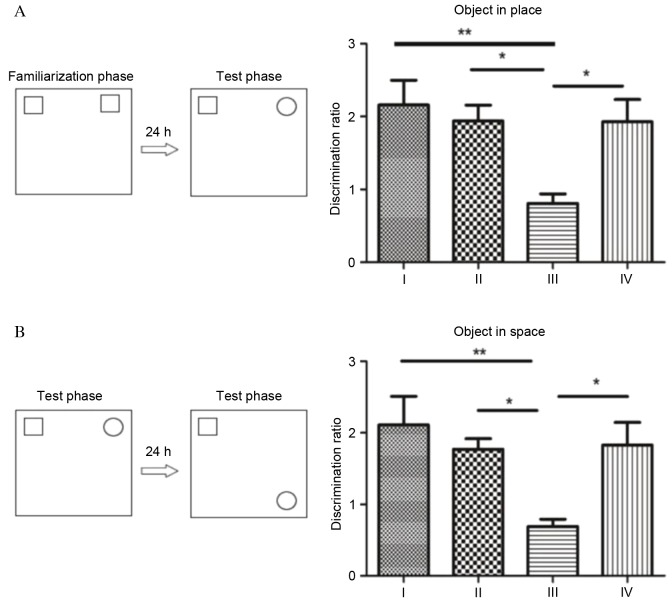
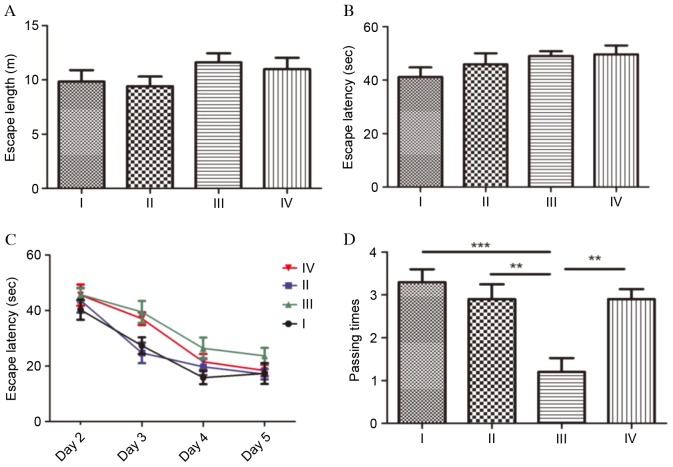
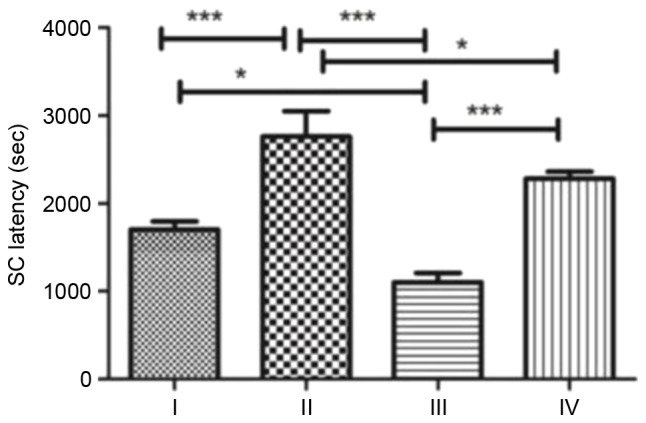
Fasudil has been demonstrated to possess a protective effect in neural injury; however, its protective effect on convulsive brain injury remains to be assessed. The aim of the present study was to investigate the latent mechanism and effect of fasudil on cognitive function following status convulsion (SC) in rats. Initially, to determine the effects of SC, the expression levels of Ras homolog gene family, member A (RhoA)/Rho‑associated protein kinase (ROCK) signaling pathway‑associated proteins were measured by western blot analysis in 16 rats. To investigate the effects of fasudil on cognitive function in SC rats, a further 40 rats were assigned to four groups: Group I (healthy untreated rats), group II (healthy rats treated with fasudil), group III (SC rats) and group IV (SC rats treated with fasudil). An object‑in‑place memory task and the Morris Water Maze test were subsequently performed. Histopathological alterations in brain tissue and SC latency were additionally analyzed. Following SC, protein expression levels of myelin‑associated glycoprotein, myelin oligodendrocyte glycoprotein and leucine rich repeat and immunoglobulin‑like domain‑containing protein 1 were significantly increased (P<0.05) and levels of neurite outgrowth inhibitor protein A were significantly decreased (P<0.01). SC had no effect on RhoA level (P=0.921); however, it significantly increased the levels of phosphorylated RhoA (P<0.01). Cognitive function was significantly decreased following SC and significantly increased following fasudil intervention. Fasudil intervention improved CA1 structure, which was lost following SC. SC severely impaired cognitive function and affected the expression of neurite growth inhibitory factors. Fasudil treatment improved cognitive function and central nervous system (CNS) injury, and decreased SC susceptibility in rats. Fasudil and SC may regulate the CNS by affecting the expression of neurite growth inhibitory factors in the RhoA/ROCK signaling pathway.
法舒地尔已被证明对神经损伤具有保护作用;然而,其对惊厥性脑损伤的保护作用仍有待评估。本研究的目的是探讨法舒地尔对大鼠惊厥持续状态(SC)后认知功能的潜在机制和影响。最初,为了确定SC的影响,通过蛋白质印迹分析测量了16只大鼠中Ras同源基因家族成员A(RhoA)/Rho相关蛋白激酶(ROCK)信号通路相关蛋白的表达水平。为了研究法舒地尔对SC大鼠认知功能的影响,另外40只大鼠被分为四组:第一组(未处理的健康大鼠)、第二组(用 法舒地尔处理的健康大鼠)、第三组(SC大鼠)和第四组(用法舒地尔处理的SC大鼠)。随后进行了位置物体记忆任务和莫里斯水迷宫试验。此外还分析了脑组织的组织病理学改变和SC潜伏期。SC后,髓鞘相关糖蛋白、髓鞘少突胶质细胞糖蛋白和富含亮氨酸重复序列和免疫球蛋白样结构域蛋白1的蛋白表达水平显著升高(P<0.05),而神经突生长抑制蛋白A的水平显著降低(P<0.01)。SC对RhoA水平无影响(P=0.921);然而,它显著增加了磷酸化RhoA的水平(P<0.01)。SC后认知功能显著下降,法舒地尔干预后显著增加。法舒地尔干预改善了SC后受损的CA1结构。SC严重损害认知功能并影响神经突生长抑制因子的表达。法舒地尔治疗改善了大鼠的认知功能和中枢神经系统(CNS)损伤,并降低了SC易感性。法舒地尔和SC可能通过影响RhoA/ROCK信号通路中神经突生长抑制因子的表达来调节中枢神经系统。