Subburaj Saminathan, Zhu Dong, Li Xiaohui, Hu Yingkao, Yan Yueming
College of Life Science, Capital Normal UniversityBeijing, China.
Front Plant Sci. 2017 May 9;8:743. doi: 10.3389/fpls.2017.00743. eCollection 2017.
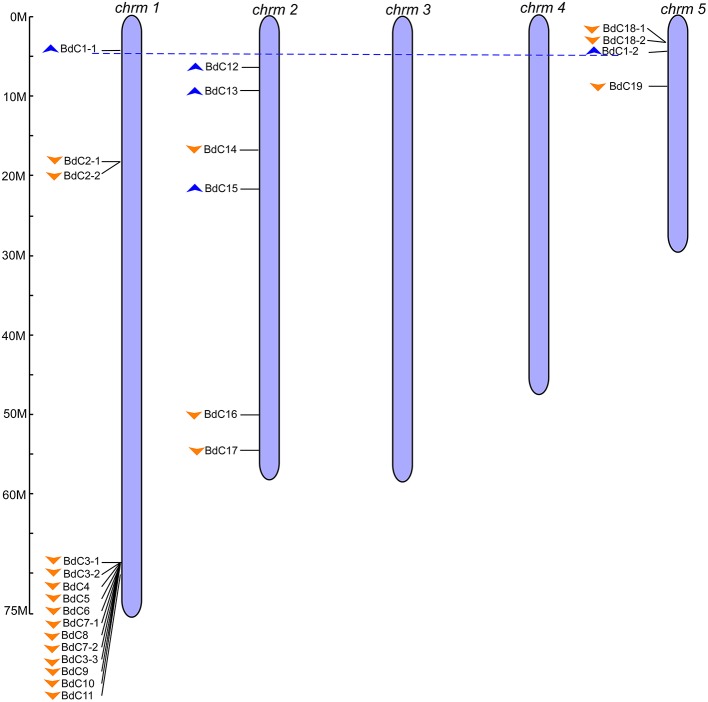
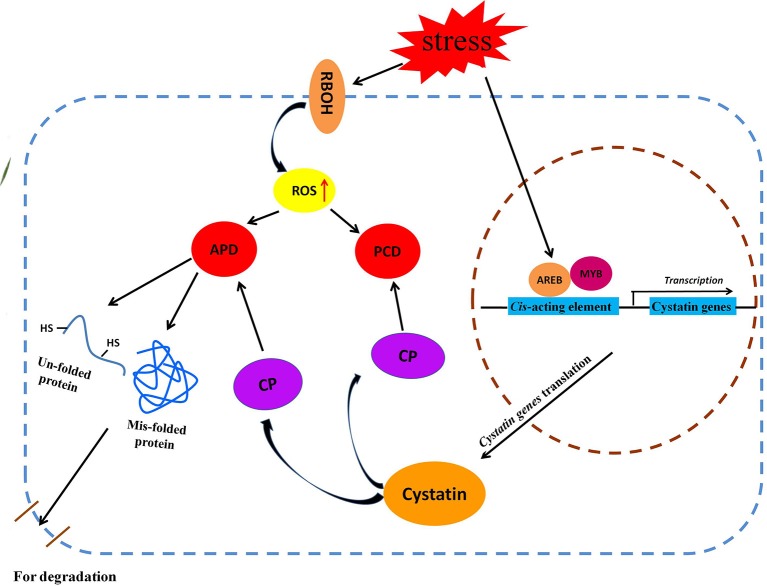
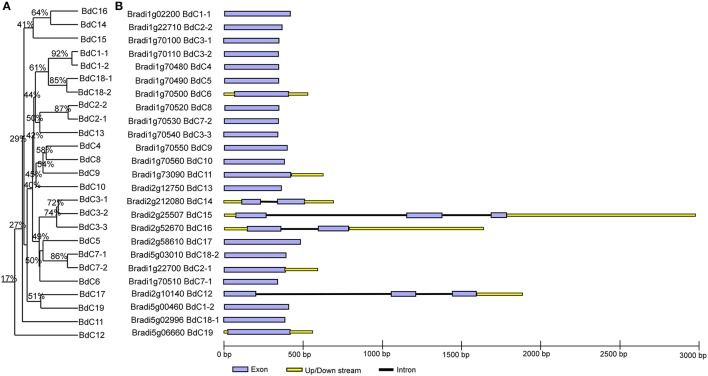
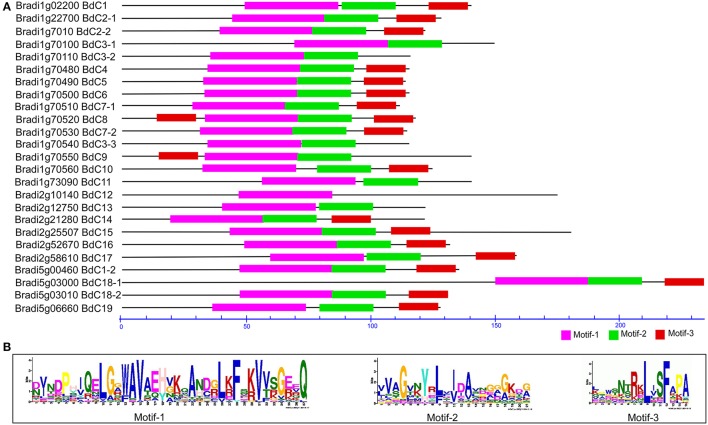
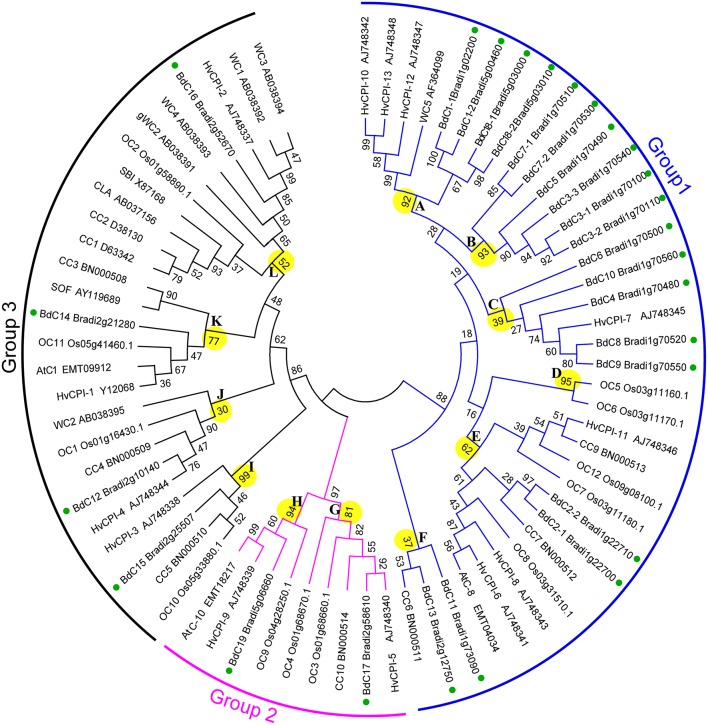
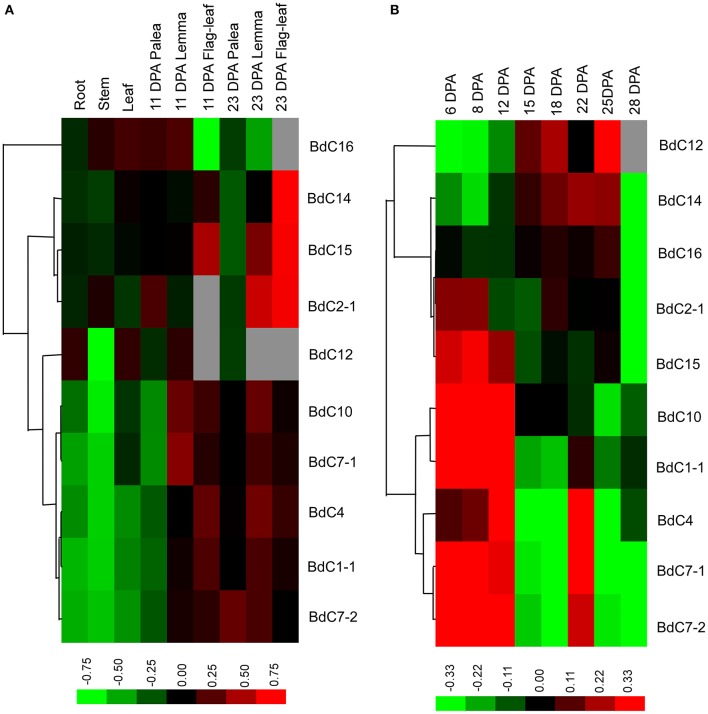
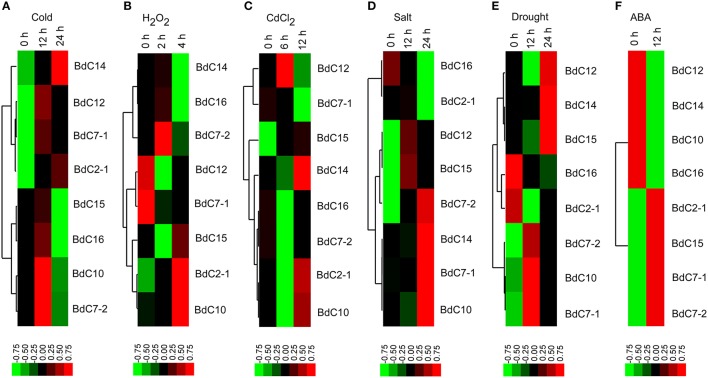
Cystatin is a class of proteins mainly involved in cysteine protease inhibition and plant growth and development, as well as tolerance under various abiotic stresses. In this study, we performed the first comprehensive analysis of the molecular characterization and expression profiling in response to various abiotic stresses of the cystatin gene family in , a novel model plant for species with huge genomes. Comprehensive searches of the genome database identified 25 () genes that are distributed unevenly on chromosomes; of these, nine and two were involved in tandem and segmental duplication events, respectively. All genes had similar exon/intron structural organization, with three conserved motifs similar to those from other plant species, indicating their high evolutionary conservation. Expression profiling of 10 typical genes revealed ubiquitous expression in different organs at varying expression levels. gene expression in seedling leaves was particularly highly induced by various abiotic stresses, including the plant hormone abscisic acid and various environmental cues (cold, HO, CdCl, salt, and drought). Interestingly, most genes were significantly upregulated under multiple abiotic stresses, including under all stresses, and under five stresses, and , and under four stresses. The putative metabolic pathways of cytastin genes in response to various abiotic stresses mainly involve the aberrant protein degradation pathway and reactive oxygen species (ROS)-triggered programmed cell death signaling pathways. These observations provide a better understanding of the structural and functional characteristics of the plant cystatin gene family.
半胱氨酸蛋白酶抑制剂是一类主要参与半胱氨酸蛋白酶抑制以及植物生长发育,以及在各种非生物胁迫下耐受性的蛋白质。在本研究中,我们对一种具有巨大基因组的新型模式植物中的半胱氨酸蛋白酶抑制剂基因家族在各种非生物胁迫下的分子特征和表达谱进行了首次全面分析。对该植物基因组数据库的全面搜索鉴定出25个半胱氨酸蛋白酶抑制剂基因,它们在染色体上分布不均;其中,分别有9个和2个参与串联和片段重复事件。所有半胱氨酸蛋白酶抑制剂基因都具有相似的外显子/内含子结构组织,带有三个与其他植物物种相似的保守基序,表明它们具有高度的进化保守性。对10个典型半胱氨酸蛋白酶抑制剂基因的表达谱分析显示,它们在不同器官中普遍表达,但表达水平各异。幼苗叶片中的半胱氨酸蛋白酶抑制剂基因表达尤其受到各种非生物胁迫的高度诱导,包括植物激素脱落酸和各种环境信号(低温、过氧化氢、氯化镉、盐和干旱)。有趣的是,大多数半胱氨酸蛋白酶抑制剂基因在多种非生物胁迫下显著上调,包括在所有胁迫下的某个基因,在五种胁迫下的某些基因,以及在四种胁迫下的某些基因。半胱氨酸蛋白酶抑制剂基因响应各种非生物胁迫的假定代谢途径主要涉及异常蛋白质降解途径和活性氧(ROS)触发的程序性细胞死亡信号通路。这些观察结果有助于更好地理解植物半胱氨酸蛋白酶抑制剂基因家族的结构和功能特征。