Fantin João Paulo Pretti, de Carvalho Neiva Ronaldo, Gatti Marcio, de Arruda Pedro Ferraz, de Arruda José Germano Ferraz, Antoniassi Thiago, Spessoto Luís Cesar Fava, Mesquita José Carlos, Castiglioni Lilian, Fácio-Júnior Fernando-Nestor
Resident in Urology, Hospital de Base of the Medicine School in Sao Jose do Rio Preto (FAMERP), São Paulo, Brazil.
Department of Urology, Hospital de Base of the Medicine School in Sao Jose do Rio Preto (FAMERP), São Paulo, Brazil.
Transl Androl Urol. 2017 Apr;6(2):277-281. doi: 10.21037/tau.2017.03.39.
New surgical techniques for nephrectomy mainly related to early diagnosis made possible by advances in imaging studies have been developed in recent decades. However, postoperative renal dysfunction is a constant concern because of the major problems faced by healthcare services and by the patients themselves. To assess risk factors for developing acute renal failure (ARF) in patients submitted to nephrectomy in a university hospital.
Seventy-seven patients submitted to nephrectomy for benign and malignant diseases in a university hospital were evaluated in respect to preoperative and postoperative creatinine clearance. Demographic (gender, age), clinical (cancer, diabetes, high blood pressure, chronic kidney disease) and surgical (anesthesia time, open or laparoscopic surgery) variables were also analyzed.
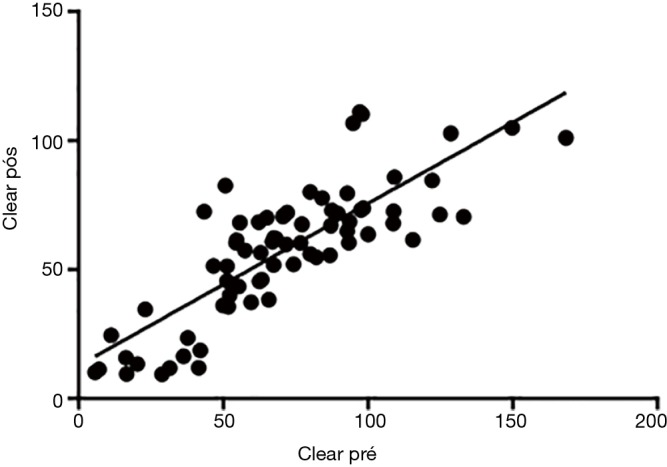
Of the 77 patients, 72 met the inclusion criteria. Of these, ten (13.8%) had a diagnosis of chronic renal failure (CRF), 30 (48%) had stage I ARF and one (16.1%) had stage II ARF. The anesthesia time, type of surgery (open or laparoscopy), total or partial nephrectomy, the side of the procedure, hypertension, diabetes, CRF, renal cancer, preoperative and postoperative creatinine concentrations were analyzed. Only the difference between preoperative and postoperative creatinine clearance was clinically significant (P<0.001).
An altered preoperative renal function is a risk factor for the development of ARF in nephrectomized patients.
近几十年来,随着影像学研究进展使得早期诊断成为可能,已经开发出了与肾切除术相关的新手术技术。然而,由于医疗服务机构和患者自身面临的重大问题,术后肾功能障碍一直令人担忧。为了评估在一家大学医院接受肾切除术的患者发生急性肾衰竭(ARF)的危险因素。
对一家大学医院中因良性和恶性疾病接受肾切除术的77例患者进行术前和术后肌酐清除率评估。还分析了人口统计学(性别、年龄)、临床(癌症、糖尿病、高血压、慢性肾脏病)和手术(麻醉时间、开放或腹腔镜手术)变量。
77例患者中,72例符合纳入标准。其中,10例(13.8%)诊断为慢性肾衰竭(CRF),30例(48%)为I期ARF,1例(1.6%)为II期ARF。分析了麻醉时间、手术类型(开放或腹腔镜)、全肾或部分肾切除术、手术侧别、高血压、糖尿病、CRF、肾癌、术前和术后肌酐浓度。只有术前和术后肌酐清除率的差异具有临床意义(P<0.001)。
术前肾功能改变是肾切除患者发生ARF的危险因素。