Park Hoon, Park Kwang Won, Park Kun Bo, Kim Hyun Woo, Eom Nam Kyu, Lee Dong Hoon
Department of Orthopedic Surgery, Gangnam Severance Hospital, Yonsei University College of Medicine, Seoul, Korea.
Institute for Rare Diseases and Department of Orthopedic Surgery, Korea University Medical Center, Guro Hospital, Seoul, Korea.
Yonsei Med J. 2017 Jul;58(4):829-836. doi: 10.3349/ymj.2017.58.4.829.
The aims of this study were to review our cases of missed Monteggia fracture treated by open reduction of the radial head with or without ulnar osteotomy and to investigate the indications for open reduction alone in surgical treatment of missed Monteggia fracture.
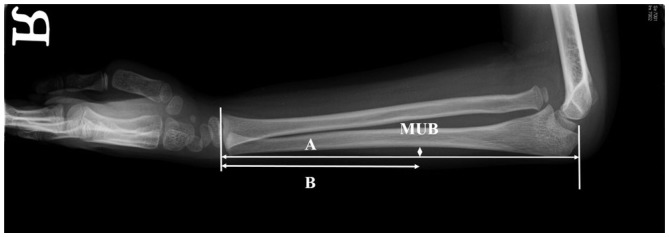
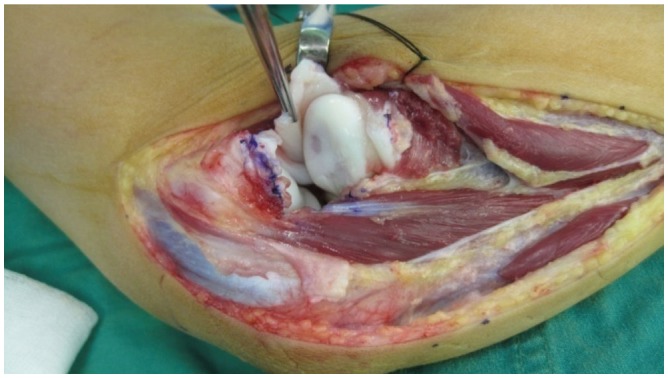
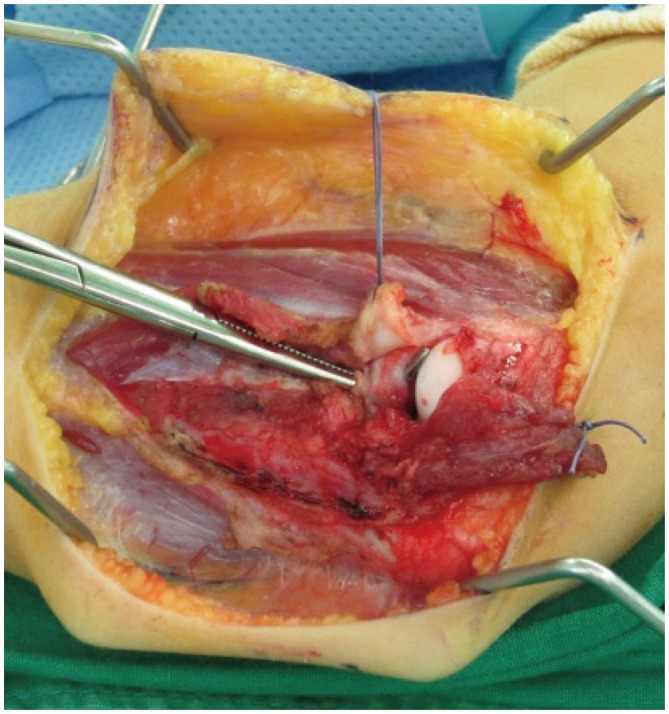
We retrospectively reviewed 22 patients who presented with missed Monteggia fracture. The patients' mean age at the time of surgery was 7.6 years. The mean interval from injury to surgery was 16.1 months. The surgical procedure consisted of open reduction of the radiocapitellar joint followed by ulnar osteotomy without reconstruction of the annular ligament. The mean period of follow-up was 3.8 years. Radiographic assessment was performed for the maximum ulnar bow (MUB) and the location of the MUB. Clinical results were evaluated with the Mayo Elbow Performance Index and Kim's scores.
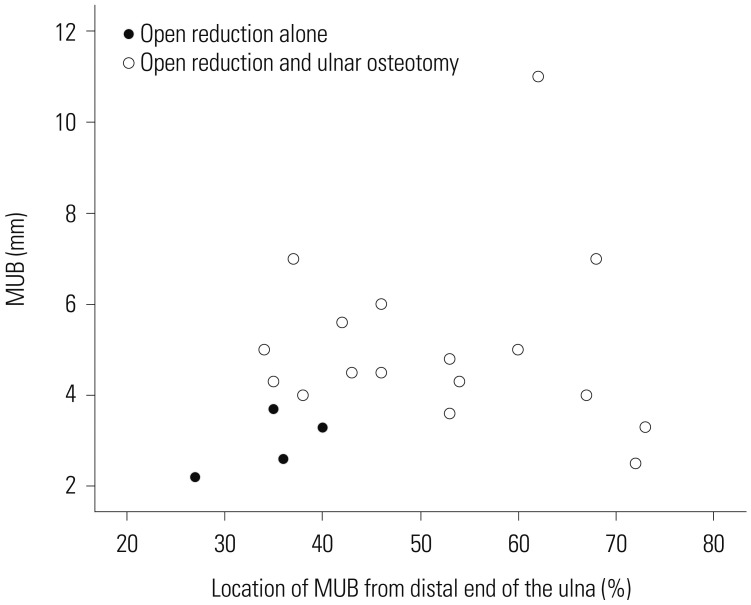
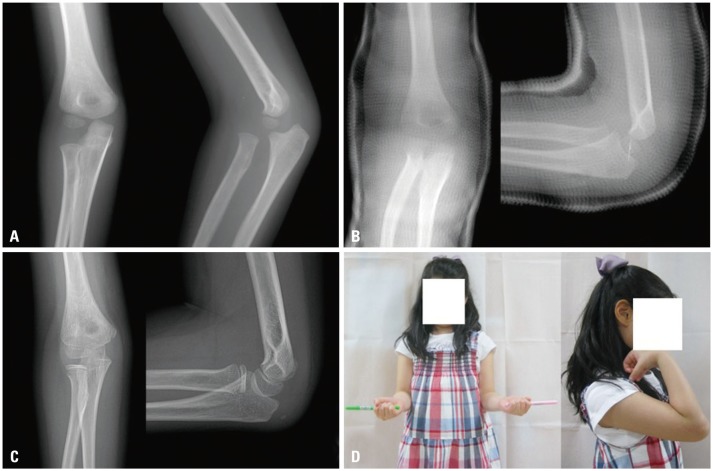
Five patients underwent open reduction alone, and 17 patients underwent open reduction and ulnar osteotomy. When the MUB was less than 4 mm and the location of the MUB was in the distal 40% of the ulna, we could achieve reduction of the radial head without ulnar osteotomy. The radial head was maintained in a completely reduced position in 21 patients and was dislocated in one patient at final follow-up.
Open reduction alone can be an attractive surgical option in select patients with missed Monteggia fracture with minimal bowing of the distal ulna. However, ulnar osteotomy should be considered in patients with a definite ulnar deformity.
本研究旨在回顾我们采用或不采用尺骨截骨术切开复位桡骨头治疗孟氏骨折漏诊病例,并探讨单纯切开复位在孟氏骨折漏诊手术治疗中的适应证。
我们回顾性分析了22例孟氏骨折漏诊患者。患者手术时的平均年龄为7.6岁。受伤至手术的平均间隔时间为16.1个月。手术步骤包括桡骨头关节切开复位,随后行尺骨截骨术,不重建环状韧带。平均随访时间为3.8年。对最大尺骨弓(MUB)及MUB的位置进行影像学评估。临床结果采用Mayo肘关节功能指数和Kim评分进行评估。
5例患者仅接受切开复位,17例患者接受切开复位及尺骨截骨术。当MUB小于4mm且MUB位于尺骨远端40%时,我们可以在不行尺骨截骨术的情况下实现桡骨头复位。在末次随访时,21例患者的桡骨头保持完全复位,1例患者桡骨头脱位。
对于部分孟氏骨折漏诊且尺骨远端轻度成角的患者,单纯切开复位可能是一种有吸引力的手术选择。然而,对于有明确尺骨畸形的患者,应考虑行尺骨截骨术。