Rudolf Virchow Center for Experimental Biomedicine, University of Würzburg, Josef-Schneider-Str.2, Würzburg, 97080, Germany.
Department of Toxicology, University of Würzburg, Versbacher Str. 9, Würzburg, 97078, Germany.
Cytometry A. 2018 Mar;93(3):305-313. doi: 10.1002/cyto.a.23123. Epub 2017 May 24.
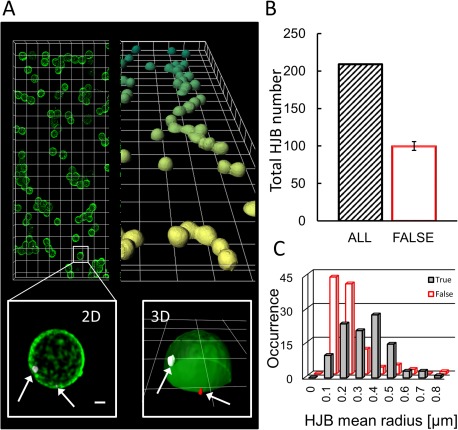
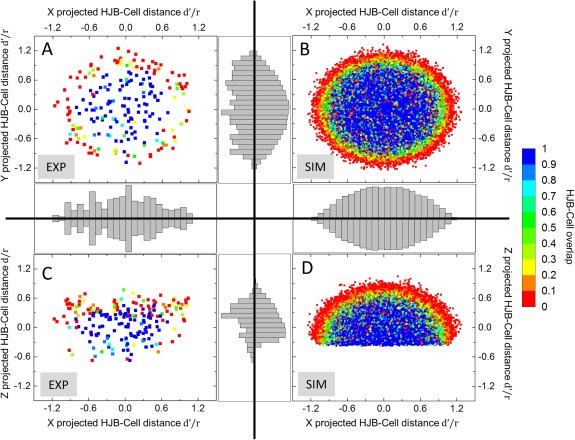
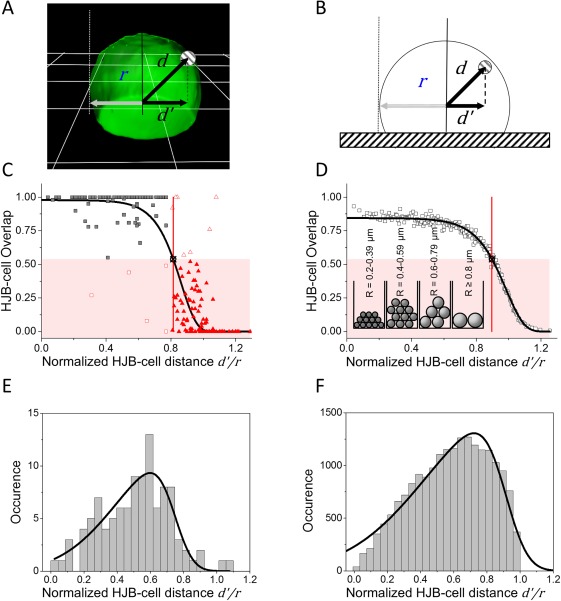
The spleen selectively removes cells with intracellular inclusions, for example, detached nuclear fragments in circulating erythrocytes, called Howell-Jolly Bodies (HJBs). With absent or deficient splenic function HJBs appear in the peripheral blood and can be used as a simple and non-invasive risk-indicator for fulminant potentially life-threatening infection after spleenectomy. However, it is still under debate whether counting of the rare HJBs is a reliable measure of splenic function. Investigating HJBs in premature erythrocytes from patients during radioiodine therapy gives about 10 thousand times higher HJB counts than in blood smears. However, we show that there is still the risk of false-positive results by unspecific nuclear remnants in the prepared samples that do not originate from HJBs, but from cell debris residing above or below the cell. Therefore, we present a method to improve accuracy of image-based tests that can be performed even in non-specialized medical institutions. We show how to selectively label HJB-like clusters in human blood samples and how to only count those that are undoubtedly inside the cell. We found a "critical distance" d referring to a relative HJB-Cell distance that true HJBs do not exceed. To rule out false-positive counts we present a simple inside-outside-rule based on d -a robust threshold that can be easily assessed by combining conventional 2D imaging and straight-forward image analysis. Besides data based on fluorescence imaging, simulations of randomly distributed HJB-like objects on realistically modelled cell objects demonstrate the risk and impact of biased counting in conventional analysis. © 2017 The Authors. Cytometry Part A published by Wiley Periodicals, Inc. on behalf of ISAC.
脾脏选择性地清除具有细胞内包含物的细胞,例如循环红细胞中的脱落核碎片,称为豪-乔利氏体(HJB)。脾功能缺失或不足时,HJB 会出现在外周血中,可作为脾切除术后发生暴发性、潜在危及生命感染的简单、非侵入性风险指标。然而,计数罕见的 HJB 是否可作为脾功能的可靠指标仍存在争议。在放射性碘治疗期间,对来自患者的早期红细胞中的 HJB 进行研究,其 HJB 计数比血涂片高约 10000 倍。然而,我们发现,在制备样本中,仍存在非特异性核残留在细胞内的假阳性结果的风险,这些核残留在细胞内,而不是来源于 HJB。因此,我们提出了一种可以提高基于图像的测试准确性的方法,即使在非专业医疗机构也可进行该测试。我们展示了如何选择性地标记人血样中的 HJB 样簇,以及如何仅计数那些无疑位于细胞内的簇。我们发现了一个“临界距离”d,它是指相对于 HJB-细胞距离,真正的 HJB 不会超过这个距离。为了排除假阳性计数,我们提出了一种基于 d 的简单内外规则——一个简单的鲁棒阈值,可以通过结合传统的 2D 成像和简单的图像分析来轻松评估。除了基于荧光成像的数据外,还对实际建模的细胞对象上随机分布的 HJB 样对象进行了模拟,这些模拟证明了在传统分析中存在偏向计数的风险和影响。