Piccolo Pasquale, Brunetti-Pierri Nicola
Telethon Institute of Genetics and Medicine, Naples 80131, Italy.
Department of Translational Medicine, Federico II University of Naples, Naples 80131, Italy.
Biomedicines. 2014 Apr 2;2(2):132-148. doi: 10.3390/biomedicines2020132.
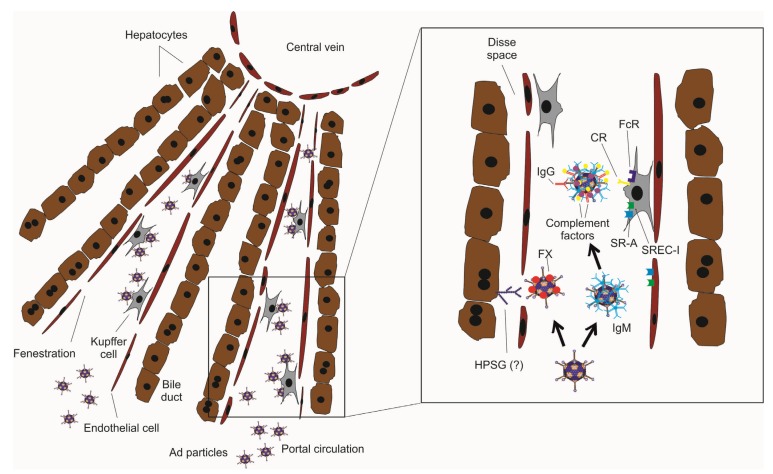
Helper-dependent adenoviral (HDAd) vectors that are devoid of all viral coding sequences are promising non-integrating vectors for gene therapy because they efficiently transduce a variety of cell types , have a large cloning capacity, and drive long-term transgene expression without chronic toxicity. The main obstacle preventing clinical applications of HDAd vectors is the host innate inflammatory response against the vector capsid proteins that occurs shortly after intravascular vector administration and result in acute toxicity, the severity of which is dose dependent. Intense efforts have been focused on elucidating adenoviral vector-host interactions and the factors involved in the acute toxicity. This review focuses on the recent acquisition of data on such interactions and on strategies investigated to improve the therapeutic index of HDAd vectors.
依赖辅助病毒的腺病毒(HDAd)载体不含所有病毒编码序列,是基因治疗中很有前景的非整合载体,因为它们能有效转导多种细胞类型,具有较大的克隆能力,且能驱动转基因长期表达而无慢性毒性。阻碍HDAd载体临床应用的主要障碍是血管内给予载体后不久宿主对载体衣壳蛋白产生的先天性炎症反应,这会导致急性毒性,其严重程度与剂量相关。人们一直致力于阐明腺病毒载体与宿主的相互作用以及急性毒性所涉及的因素。本综述重点关注此类相互作用的最新数据以及为提高HDAd载体治疗指数而研究的策略。