van der Vorm S, Hansen T, Overkleeft H S, van der Marel G A, Codée J D C
Leiden Institute of Chemistry , Leiden University , Einsteinweg 55 , 2333 CC Leiden , The Netherlands . Email:
Chem Sci. 2017 Mar 1;8(3):1867-1875. doi: 10.1039/c6sc04638j. Epub 2016 Nov 9.
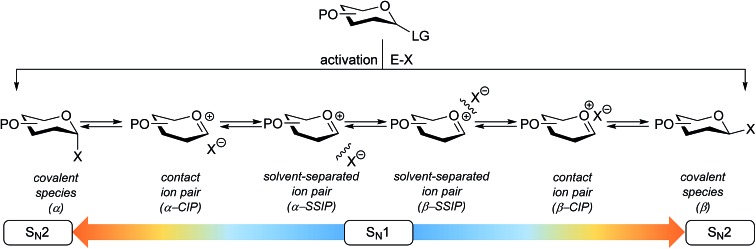
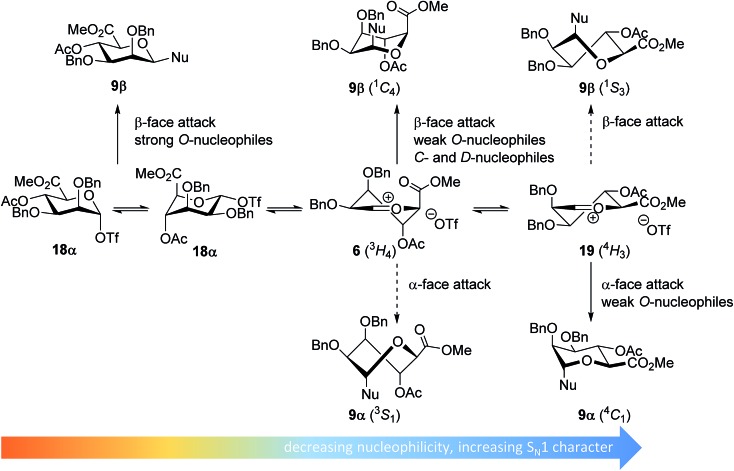
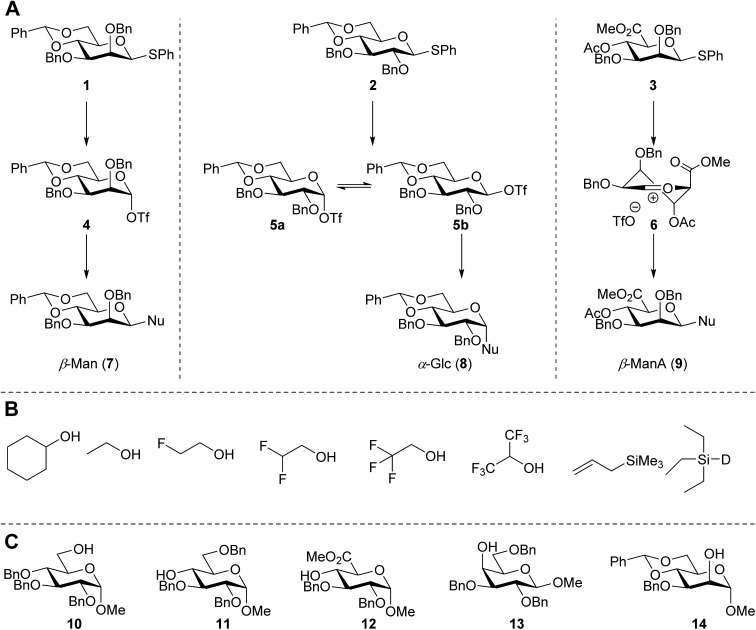
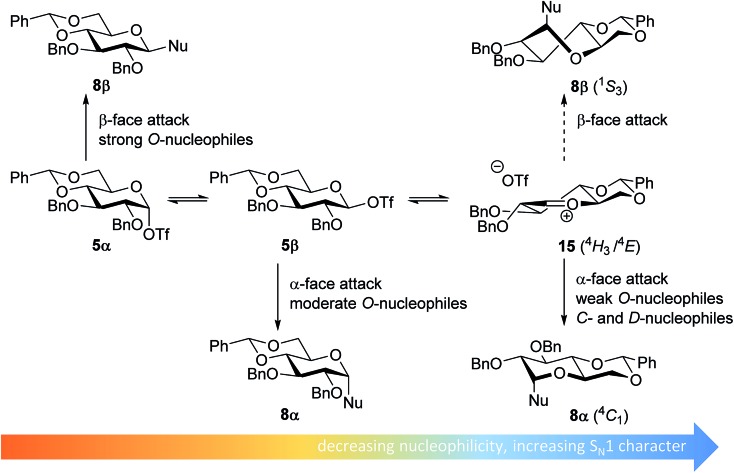
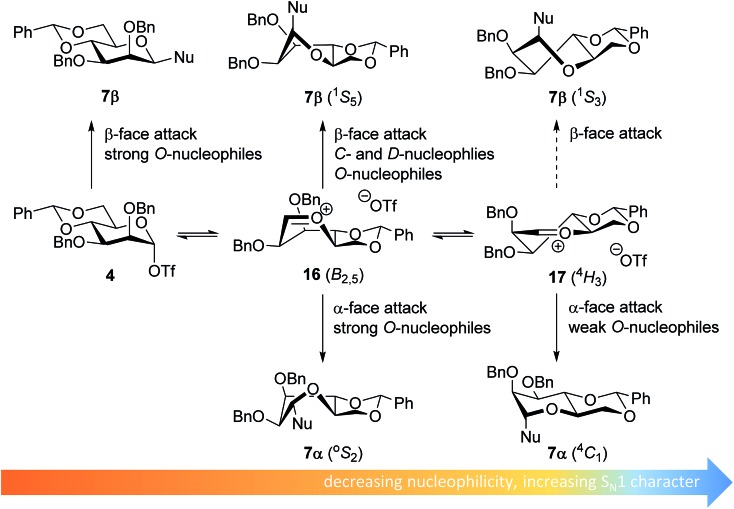
A set of model nucleophiles of gradually changing nucleophilicity is used to probe the glycosylation reaction mechanism. Glycosylations of ethanol-based acceptors, bearing varying amounts of fluorine atoms, report on the dependency of the stereochemistry in condensation reactions on the nucleophilicity of the acceptor. Three different glycosylation systems were scrutinized, that differ in the reaction mechanism, that - putatively - prevails during the coupling reaction. It is revealed that the stereoselectivity in glycosylations of benzylidene protected glucose donors are very susceptible to acceptor nucleophilicity whereas condensations of benzylidene mannose and mannuronic acid donors represent more robust glycosylation systems in terms of diastereoselectivity. The change in stereoselectivity with decreasing acceptor nucleophilicity is related to a change in reaction mechanism shifting from the S2 side to the S1 side of the reactivity spectrum. Carbohydrate acceptors are examined and the reactivity-selectivity profile of these nucleophiles mirrored those of the model acceptors studied. The set of model ethanol acceptors thus provides a simple and effective "toolbox" to investigate glycosylation reaction mechanisms and report on the robustness of glycosylation protocols.
使用一组亲核性逐渐变化的模型亲核试剂来探究糖基化反应机制。对含有不同数量氟原子的乙醇基受体进行糖基化反应,结果表明缩合反应中的立体化学依赖于受体的亲核性。研究了三种不同的糖基化体系,它们在偶联反应过程中可能占主导的反应机制有所不同。结果表明,亚苄基保护的葡萄糖供体的糖基化反应中的立体选择性对受体亲核性非常敏感,而亚苄基甘露糖和甘露糖醛酸供体的缩合反应在非对映选择性方面代表了更稳健的糖基化体系。随着受体亲核性降低,立体选择性的变化与反应机制从反应活性谱的S2侧转变到S1侧有关。对碳水化合物受体进行了研究,这些亲核试剂的反应性-选择性概况反映了所研究的模型受体的情况。因此,这组模型乙醇受体提供了一个简单有效的“工具箱”,用于研究糖基化反应机制并报告糖基化方案的稳健性。