Chiu Hua-Sheng, Martínez María Rodríguez, Bansal Mukesh, Subramanian Aravind, Golub Todd R, Yang Xuerui, Sumazin Pavel, Califano Andrea
Texas Children's Cancer Center and Department of Pediatrics, Baylor College of Medicine, Houston, TX, USA.
IBM Research-Zurich, 8803 Rüschlikon, Zurich, Switzerland.
BMC Genomics. 2017 May 30;18(1):418. doi: 10.1186/s12864-017-3790-7.
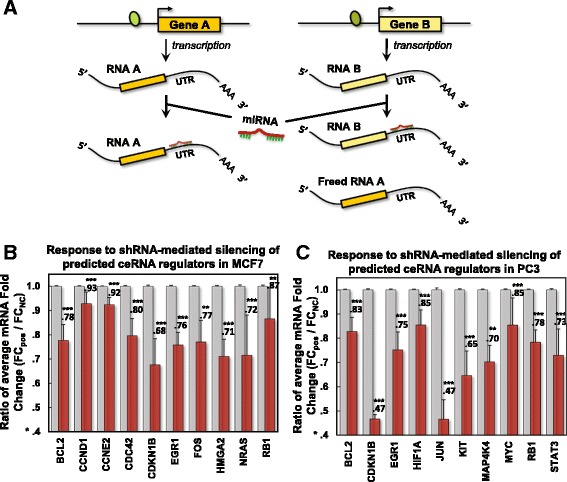
MicroRNAs (miRNAs) play multiple roles in tumor biology. Interestingly, reports from multiple groups suggest that miRNA targets may be coupled through competitive stoichiometric sequestration. Specifically, computational models predicted and experimental assays confirmed that miRNA activity is dependent on miRNA target abundance, and consequently, changes in the abundance of some miRNA targets lead to changes to the regulation and abundance of their other targets. The resulting indirect regulatory influence between miRNA targets resembles competition and has been dubbed competitive endogenous RNA (ceRNA). Recent studies have questioned the physiological relevance of ceRNA interactions, our ability to accurately predict these interactions, and the number of genes that are impacted by ceRNA interactions in specific cellular contexts.
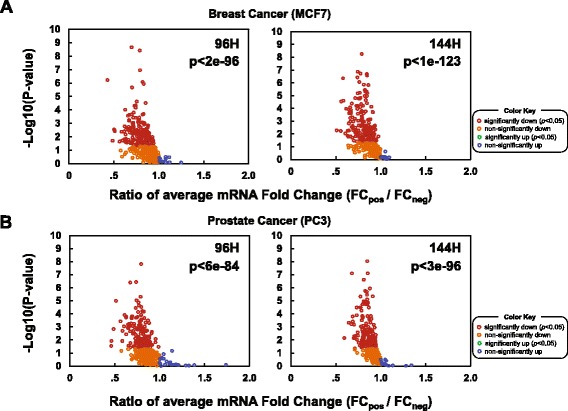
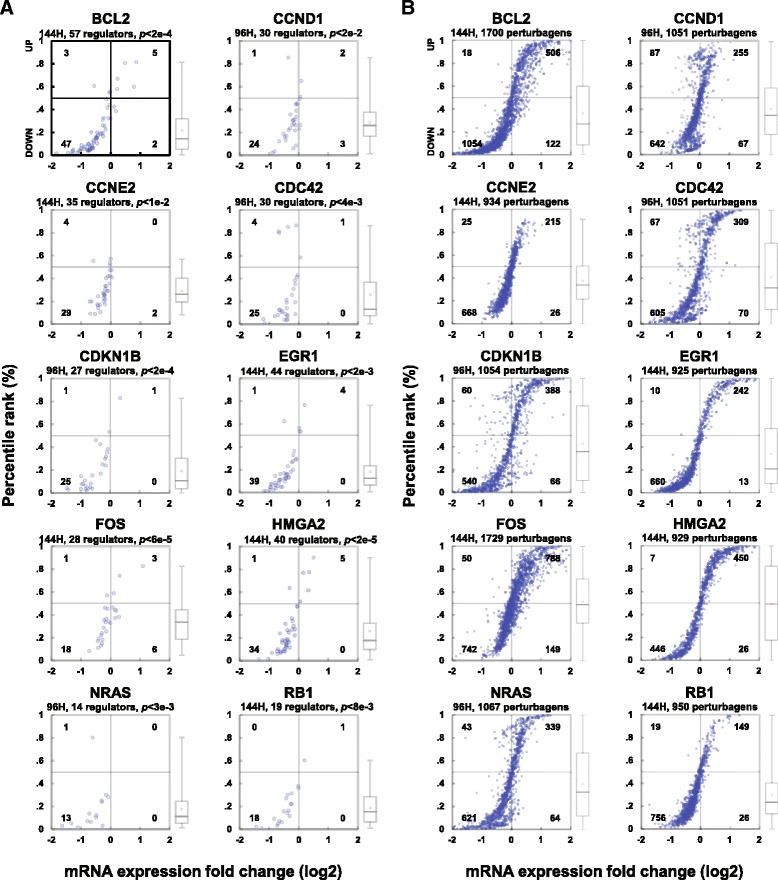
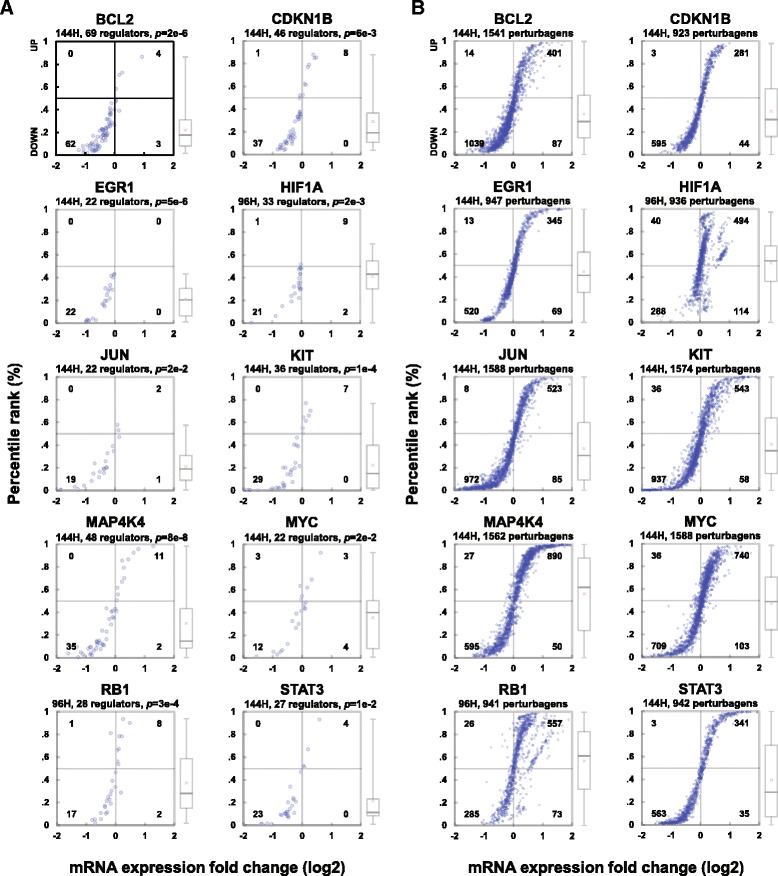
To address these concerns, we reverse engineered ceRNA networks (ceRNETs) in breast and prostate adenocarcinomas using context-specific TCGA profiles, and tested whether ceRNA interactions can predict the effects of RNAi-mediated gene silencing perturbations in PC3 and MCF7 cells._ENREF_22 Our results, based on tests of thousands of inferred ceRNA interactions that are predicted to alter hundreds of cancer genes in each of the two tumor contexts, confirmed statistically significant effects for half of the predicted targets.
Our results suggest that the expression of a significant fraction of cancer genes may be regulated by ceRNA interactions in each of the two tumor contexts.
微小RNA(miRNA)在肿瘤生物学中发挥多种作用。有趣的是,多个研究小组的报告表明,miRNA靶标可能通过竞争性化学计量螯合作用相互关联。具体而言,计算模型预测并经实验分析证实,miRNA活性取决于miRNA靶标的丰度,因此,某些miRNA靶标丰度的变化会导致其其他靶标的调控和丰度发生改变。miRNA靶标之间产生的间接调控影响类似于竞争,被称为竞争性内源RNA(ceRNA)。最近的研究对ceRNA相互作用的生理相关性、我们准确预测这些相互作用的能力以及在特定细胞环境中受ceRNA相互作用影响的基因数量提出了质疑。
为了解决这些问题,我们利用特定背景的TCGA数据反向构建了乳腺癌和前列腺癌中的ceRNA网络(ceRNET),并测试了ceRNA相互作用是否能够预测RNA干扰介导的基因沉默扰动对PC3和MCF7细胞的影响。我们的结果基于对数千种推断的ceRNA相互作用的测试,预计这些相互作用会在两种肿瘤环境中分别改变数百个癌症基因,结果证实了一半预测靶标的统计学显著效应。
我们的结果表明,在这两种肿瘤环境中,相当一部分癌症基因的表达可能受ceRNA相互作用的调控。