Qi Ting, Chen Yanming, Li Honggui, Pei Ya, Woo Shih-Lung, Guo Xin, Zhao Jiajia, Qian Xiaoxian, Awika Joseph, Huo Yuqing, Wu Chaodong
Department of Nutrition and Food ScienceTexas A&M University, College Station, USA.
Department of Endocrinologythe Third Affiliated Hospital of Sun Yat-sen University, Guangzhou, Guangdong, China.
J Mol Endocrinol. 2017 Jul;59(1):49-59. doi: 10.1530/JME-17-0066.
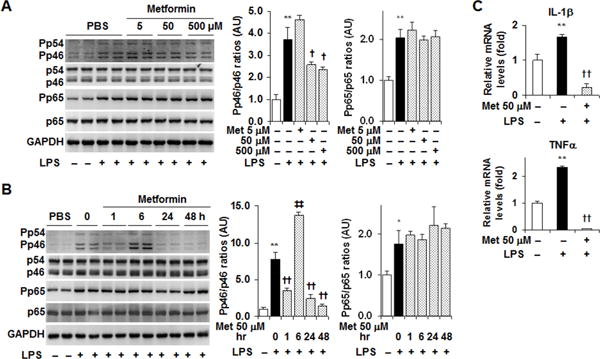
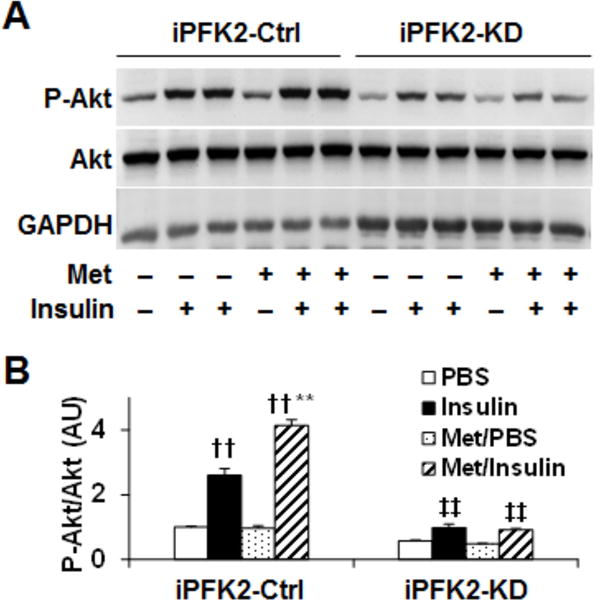
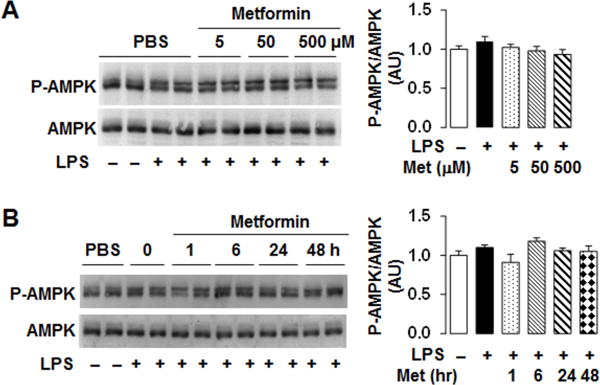
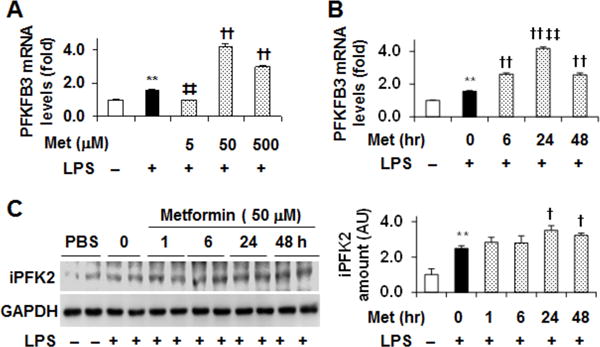
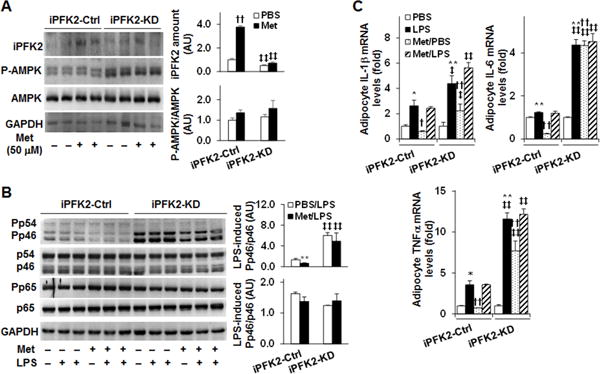
Metformin improves obesity-associated metabolic dysregulation, but has controversial effects on adipose tissue inflammation. The objective of the study is to examine the direct effect of metformin on adipocyte inflammatory responses and elucidate the underlying mechanisms. Adipocytes were differentiated from 3T3-L1 cells and treated with metformin at various doses and for different time periods. The treated cells were examined for the proinflammatory responses, as well as the phosphorylation states of AMPK and the expression of /iPFK2. In addition, /iPFK2-knockdown adipocytes were treated with metformin and examined for changes in the proinflammatory responses. The following results were obtained from the study. Treatment of adipocytes with metformin decreased the effects of lipopolysaccharide on inducing the phosphorylation states of JNK p46 and on increasing the mRNA levels of IL-1β and TNFα. In addition, treatment with metformin increased the expression of /iPFK2, but failed to significantly alter the phosphorylation states of AMPK. In /iPFK2-knockdown adipocytes, treatment with metformin did not suppress the proinflammatory responses as did it in control adipocytes. In conclusion, metformin has a direct effect on suppressing adipocyte proinflammatory responses in an AMPK-independent manner. Also, metformin increases adipocyte expression of /iPFK2, which is involved in the anti-inflammatory effect of metformin.
二甲双胍可改善肥胖相关的代谢失调,但对脂肪组织炎症的影响存在争议。本研究的目的是检测二甲双胍对脂肪细胞炎症反应的直接作用,并阐明其潜在机制。脂肪细胞由3T3-L1细胞分化而来,用不同剂量的二甲双胍处理不同时间段。检测处理后的细胞的促炎反应,以及AMPK的磷酸化状态和/iPFK2的表达。此外,用二甲双胍处理/iPFK2基因敲低的脂肪细胞,并检测促炎反应的变化。本研究获得了以下结果。用二甲双胍处理脂肪细胞可降低脂多糖对诱导JNK p46磷酸化状态以及增加IL-1β和TNFα mRNA水平的作用。此外,用二甲双胍处理可增加/iPFK2的表达,但未能显著改变AMPK的磷酸化状态。在/iPFK2基因敲低的脂肪细胞中,用二甲双胍处理不能像在对照脂肪细胞中那样抑制促炎反应。总之,二甲双胍以不依赖AMPK的方式对抑制脂肪细胞促炎反应有直接作用。此外,二甲双胍可增加脂肪细胞/iPFK2的表达,这与二甲双胍的抗炎作用有关。