Chang Huan, Li Xin, Cai Qian, Li Chunyun, Tian Lang, Chen Jia, Xing Xiaowei, Gan Yu, Ouyang Wen, Yang Zuocheng
Department of Pediatrics, The Third Xiangya Hospital, Central South University, Changsha, Hunan 410013, P.R. China.
Center for Medical Experiments, The Third Xiangya Hospital, Central South University, Changsha, Hunan 410013, P.R. China.
Int J Mol Med. 2017 Jul;40(1):182-192. doi: 10.3892/ijmm.2017.3008. Epub 2017 May 31.
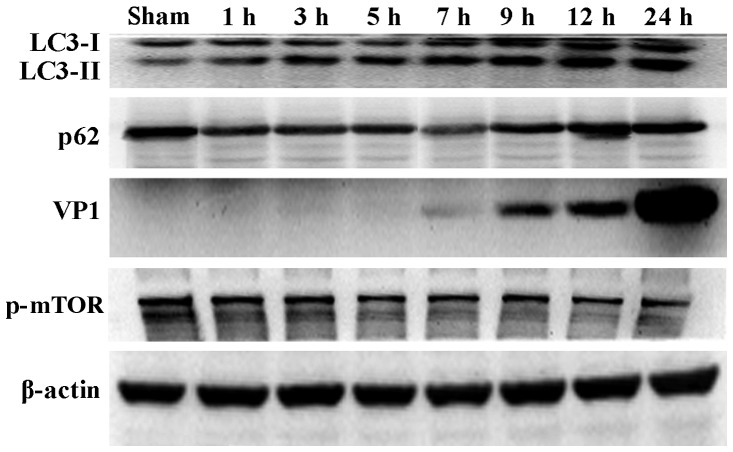
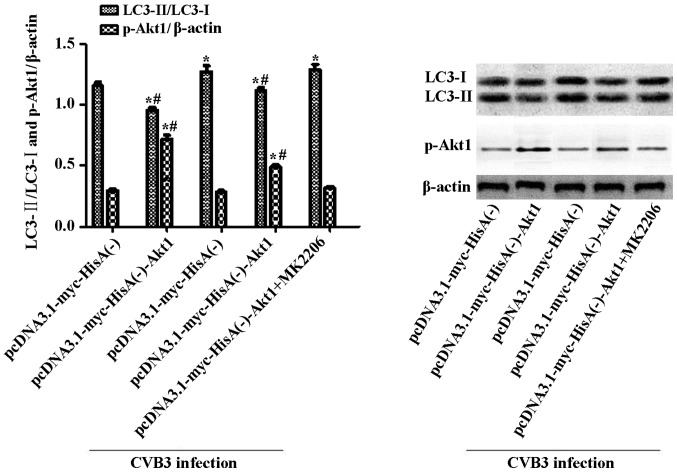
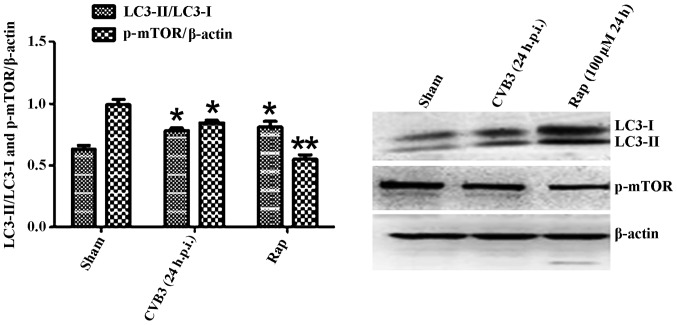
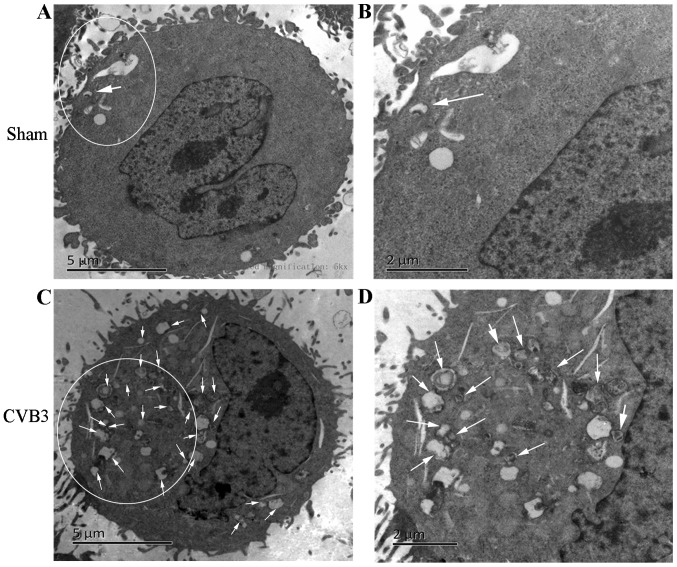
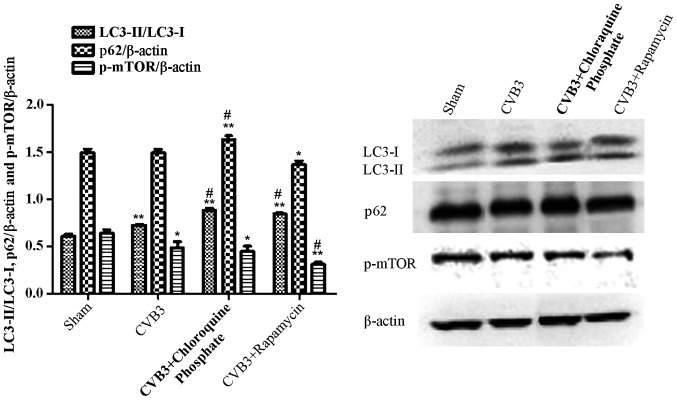
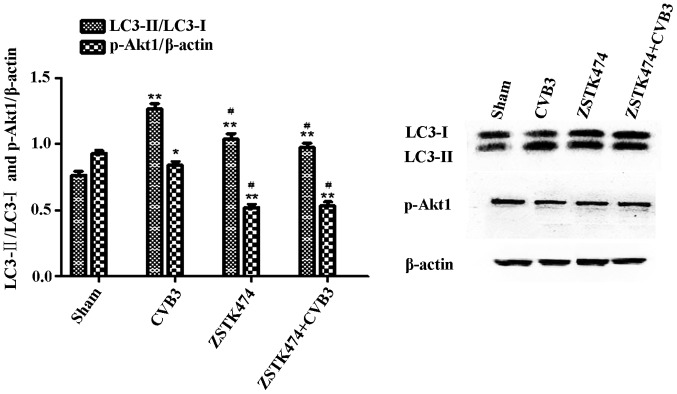
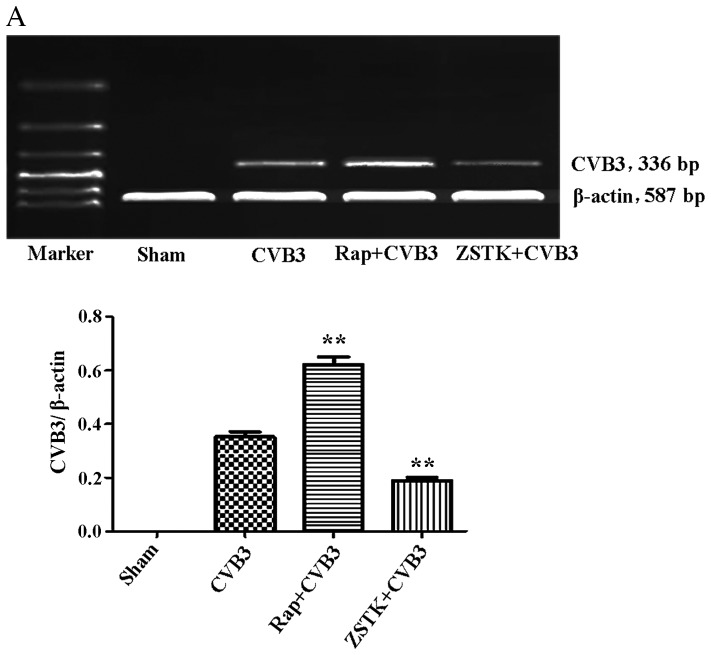
Recent studies have found that viral myocarditis (VMC) associated with coxsackievirus B3 (CVB3) causes autophagy activation after infection, but the specific mechanism is not clear. The present study demonstrated that the phosphatidylinositol 3-kinase (PI3K)/protein kinase B (PKB)/mammalian target of rapamycin (mTOR) signaling pathway participates in CVB3‑induced autophagy. We found that the light chain 3 (LC3)‑Ⅱ/LC3‑I ratio was increased and p62 and p‑mTOR were altered at different times during CVB3 infection. To further assess the effects of this signaling pathway on CVB3 infection and viral replication, we selected 24 h post‑inoculation (h.p.i.) as our research time point to conduct our next study. We inhibited the function of PI3K, Akt1 and mTOR. The outcome showed that inhibition of PI3K with ZSTK474 alleviated autophagy and decreased CVB3 mRNA replication and VP1 expression. Inhibition of mTOR with rapamycin promoted autophagy and viral mRNA replication but did not impact VP1 expression. Inhibition of Akt with MK2206 aggravated autophagy induced by viral infection. In our research, p62 exhibited a decrease at the beginning of infection but then increased as infection time increased. This finding may serve as a clue to elucidate the function of autophagy at different times of infection. However, the details merit further study. In conclusion, our findings suggest that the PI3K/Akt/mTOR signaling pathway participates in the process of autophagy induced by CVB3 infection. This finding may provide a new perspective of CVB3-induced autophagy.
近期研究发现,柯萨奇病毒B3(CVB3)所致病毒性心肌炎(VMC)在感染后会引起自噬激活,但其具体机制尚不清楚。本研究表明,磷脂酰肌醇3激酶(PI3K)/蛋白激酶B(PKB)/哺乳动物雷帕霉素靶蛋白(mTOR)信号通路参与CVB3诱导的自噬。我们发现,在CVB3感染过程中的不同时间点,轻链3(LC3)-Ⅱ/LC3-I比值升高,且p62和磷酸化mTOR发生改变。为进一步评估该信号通路对CVB3感染和病毒复制的影响,我们选择接种后24小时(h.p.i.)作为研究时间点进行下一步研究。我们抑制了PI3K、Akt1和mTOR的功能。结果显示,用ZSTK474抑制PI3K可减轻自噬,并降低CVB3 mRNA复制和VP1表达。用雷帕霉素抑制mTOR可促进自噬和病毒mRNA复制,但不影响VP1表达。用MK2206抑制Akt会加重病毒感染诱导的自噬。在我们的研究中,p62在感染开始时表现出下降,但随后随着感染时间的增加而升高。这一发现可能为阐明感染不同时间点自噬的功能提供线索。然而,具体细节值得进一步研究。总之,我们的研究结果表明,PI3K/Akt/mTOR信号通路参与CVB3感染诱导的自噬过程。这一发现可能为CVB3诱导的自噬提供新的视角。