Department of Molecular Biology & Biochemistry, University of California Irvine, Irvine, California.
Department of Laboratory Medicine, University of California San Francisco, San Francisco, California.
Mol Cancer Ther. 2017 Sep;16(9):1942-1953. doi: 10.1158/1535-7163.MCT-17-0024. Epub 2017 May 31.
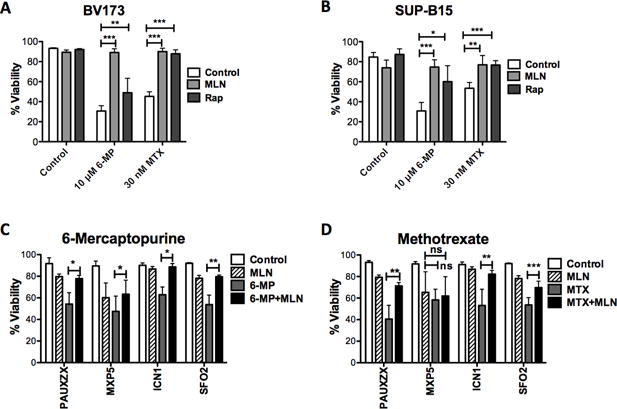
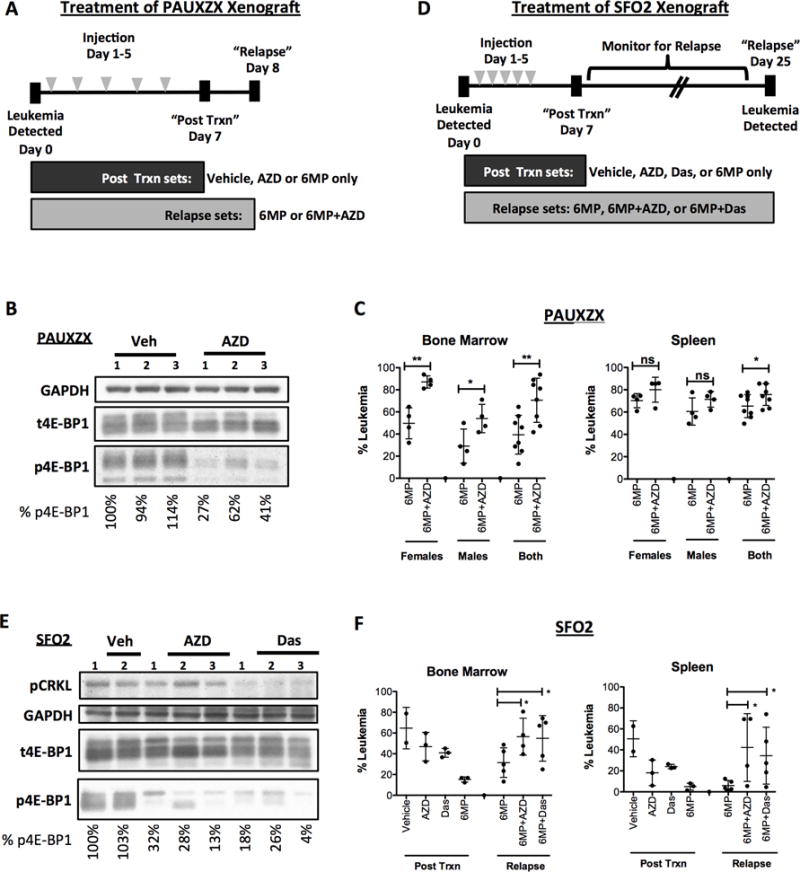
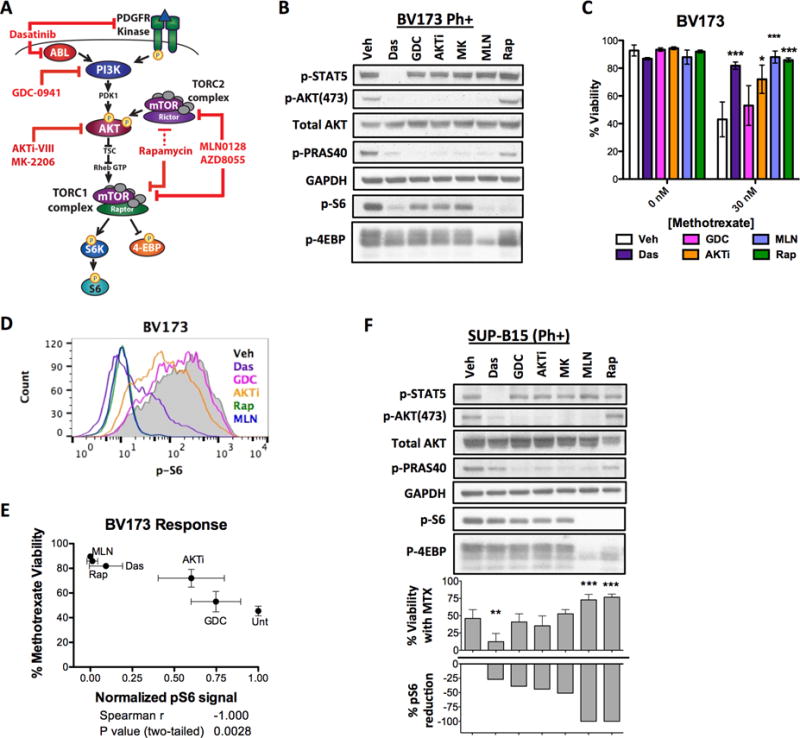
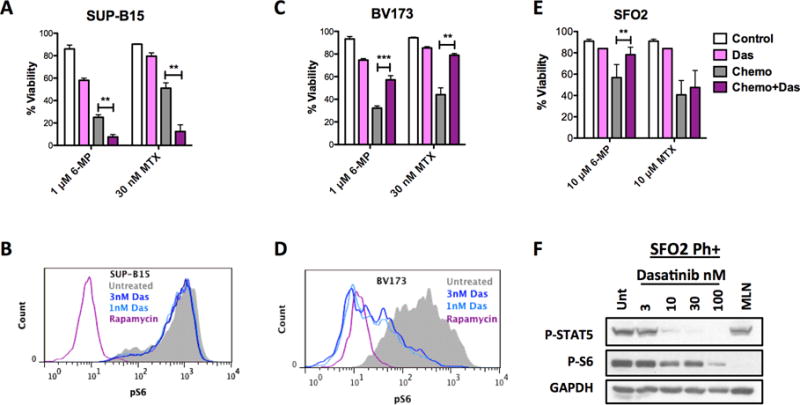
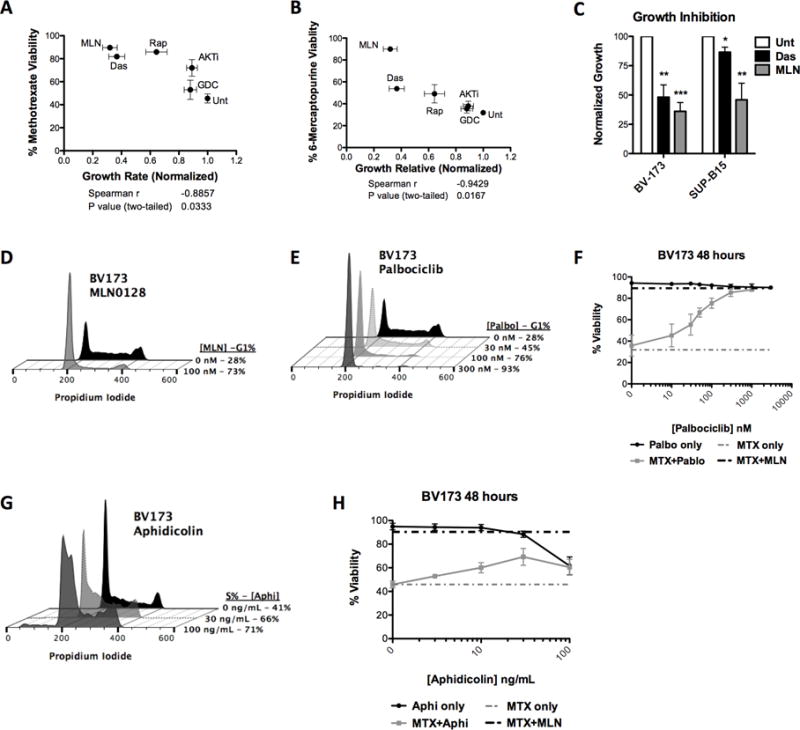
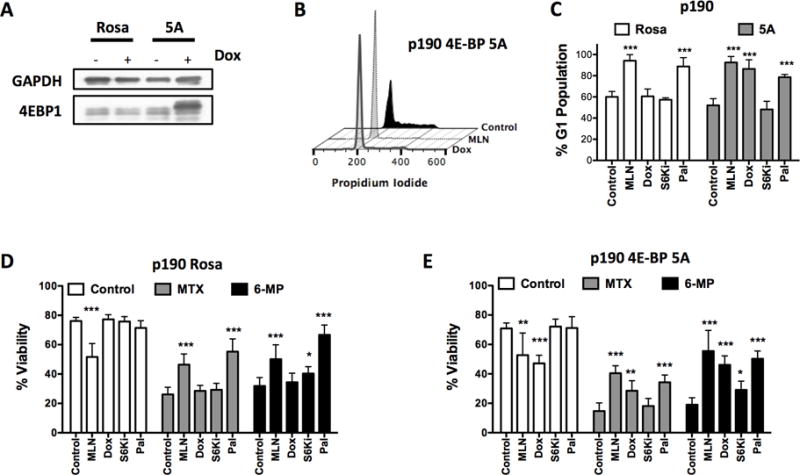
Elevated activity of mTOR is associated with poor prognosis and higher incidence of relapse in B-cell acute lymphoblastic leukemia (B-ALL). Thus, ongoing clinical trials are testing mTOR inhibitors in combination with chemotherapy in B-ALL. However, the combination of mTOR inhibitors with standard of care chemotherapy drugs has not been studied extensively in high-risk B-ALL subtypes. Therefore, we tested whether mTOR inhibition can augment the efficacy of current chemotherapy agents in Ph and Ph-like B-ALL models. Surprisingly, inhibiting mTOR complex 1 (mTORC1) protected B-ALL cells from killing by methotrexate and 6-mercaptopurine, two antimetabolite drugs used in maintenance chemotherapy. The cytoprotective effects correlated with decreased cell-cycle progression and were recapitulated using cell-cycle inhibitors, palbociclib or aphidicolin. Dasatinib, a tyrosine kinase inhibitor currently used in Ph patients, inhibits ABL kinase upstream of mTOR. Dasatinib resistance is mainly caused by ABL kinase mutations, but is also observed in a subset of ABL unmutated cases. We identified dasatinib-resistant Ph+ cell lines and patient samples in which dasatinib can effectively reduce ABL kinase activity and mTORC1 signaling without causing cell death. In these cases, dasatinib protected leukemia cells from killing by 6-mercaptopurine. Using xenograft models, we observed that mTOR inhibition or dasatinib increased the numbers of leukemia cells that emerge after cessation of chemotherapy treatment. These results demonstrate that inhibitors targeting mTOR or upstream signaling nodes should be used with caution when combined with chemotherapeutic agents that rely on cell-cycle progression to kill B-ALL cells. .
mTOR 活性升高与 B 细胞急性淋巴细胞白血病(B-ALL)预后不良和复发率较高相关。因此,目前正在进行临床试验,以评估 mTOR 抑制剂联合化疗在 B-ALL 中的应用。然而,mTOR 抑制剂与标准化疗药物联合应用尚未在高危 B-ALL 亚型中进行广泛研究。因此,我们测试了 mTOR 抑制是否可以增强 Ph 和 Ph 样 B-ALL 模型中当前化疗药物的疗效。令人惊讶的是,抑制 mTOR 复合物 1(mTORC1)可保护 B-ALL 细胞免受甲氨蝶呤和 6-巯基嘌呤(两种用于维持化疗的抗代谢药物)的杀伤。细胞保护作用与细胞周期进程减少相关,并且可以使用细胞周期抑制剂 palbociclib 或 aphidicolin 进行重现。达沙替尼是一种目前用于 Ph 患者的酪氨酸激酶抑制剂,可抑制 mTOR 上游的 ABL 激酶。达沙替尼耐药主要是由于 ABL 激酶突变引起的,但在一部分 ABL 未突变的病例中也观察到。我们鉴定了达沙替尼耐药的 Ph+细胞系和患者样本,在这些细胞系和患者样本中,达沙替尼可以有效地降低 ABL 激酶活性和 mTORC1 信号传导,而不会导致细胞死亡。在这些情况下,达沙替尼可保护白血病细胞免受 6-巯基嘌呤的杀伤。通过异种移植模型,我们观察到 mTOR 抑制或达沙替尼增加了化疗停止后出现的白血病细胞数量。这些结果表明,当与依赖细胞周期进程杀死 B-ALL 细胞的化疗药物联合使用时,靶向 mTOR 或上游信号节点的抑制剂应谨慎使用。