Maiti Panchanan, Dunbar Gary L
Field Neurosciences Institute Laboratory for Restorative Neurology, Central Michigan University, Mt. Pleasant, MI 48859, USA.
Program in Neuroscience, Central Michigan University, Mt. Pleasant, MI 48859, USA.
Int J Alzheimers Dis. 2017;2017:4164872. doi: 10.1155/2017/4164872. Epub 2017 Apr 16.
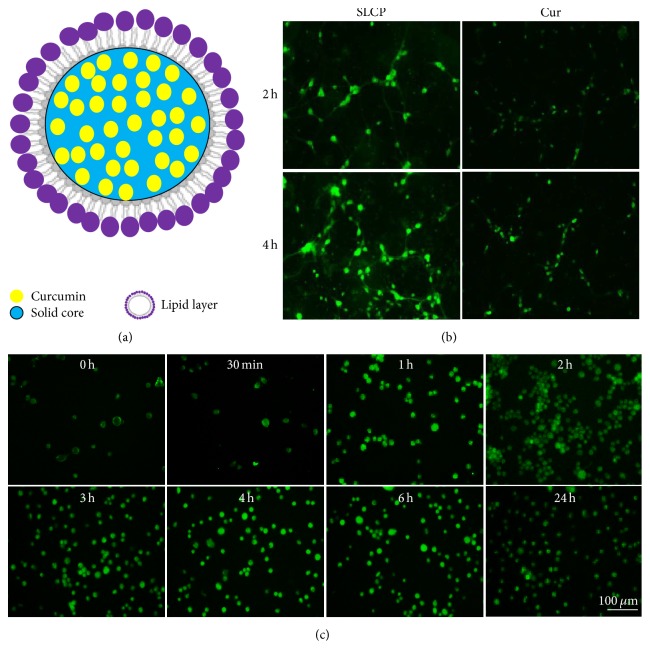
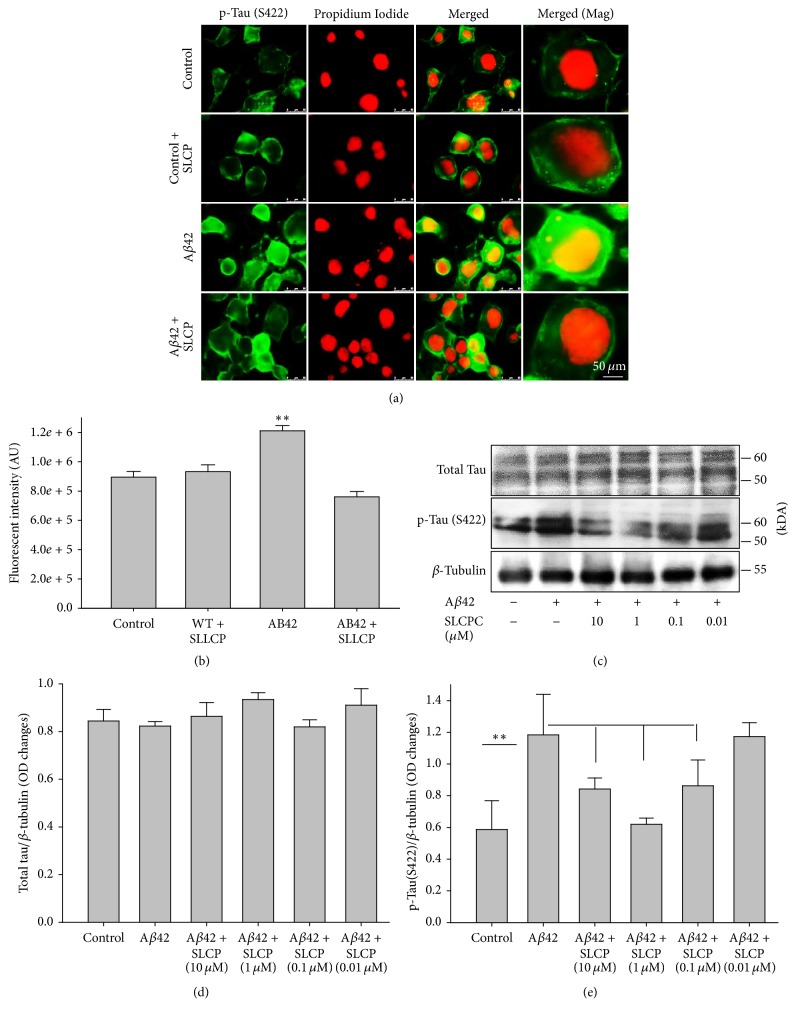
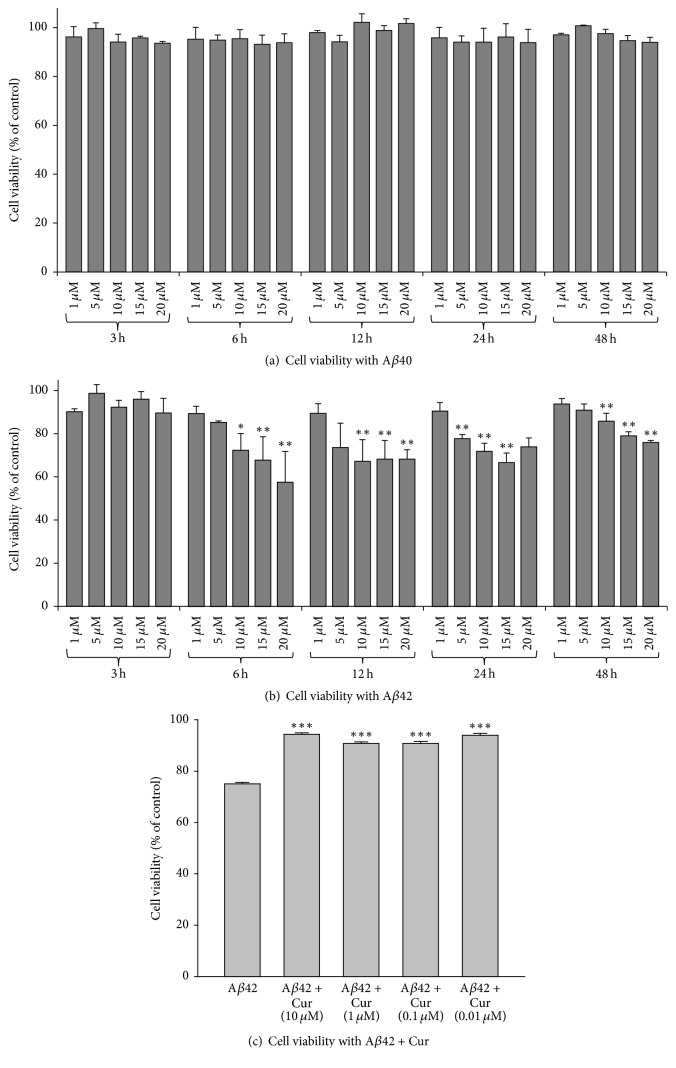
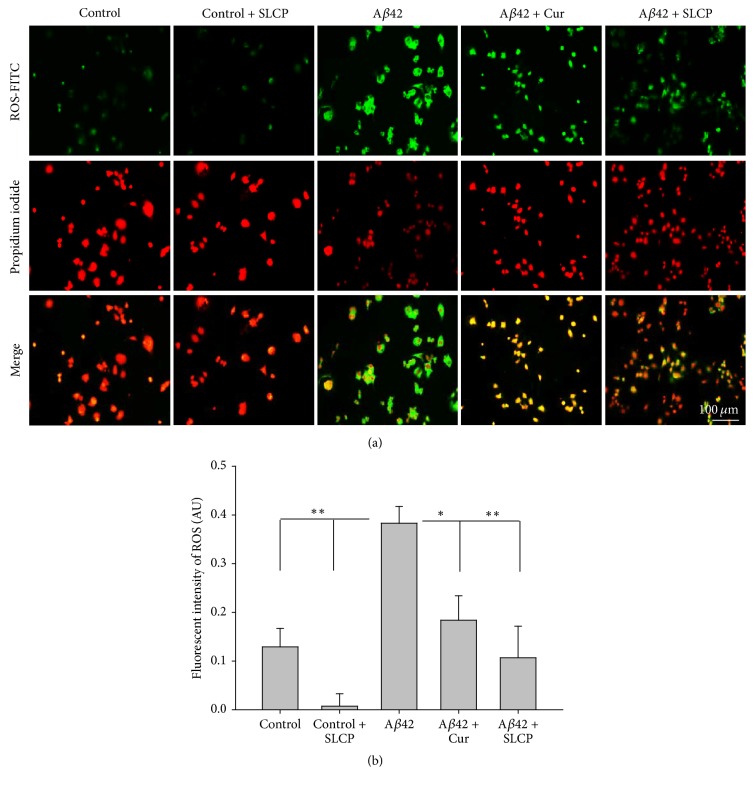
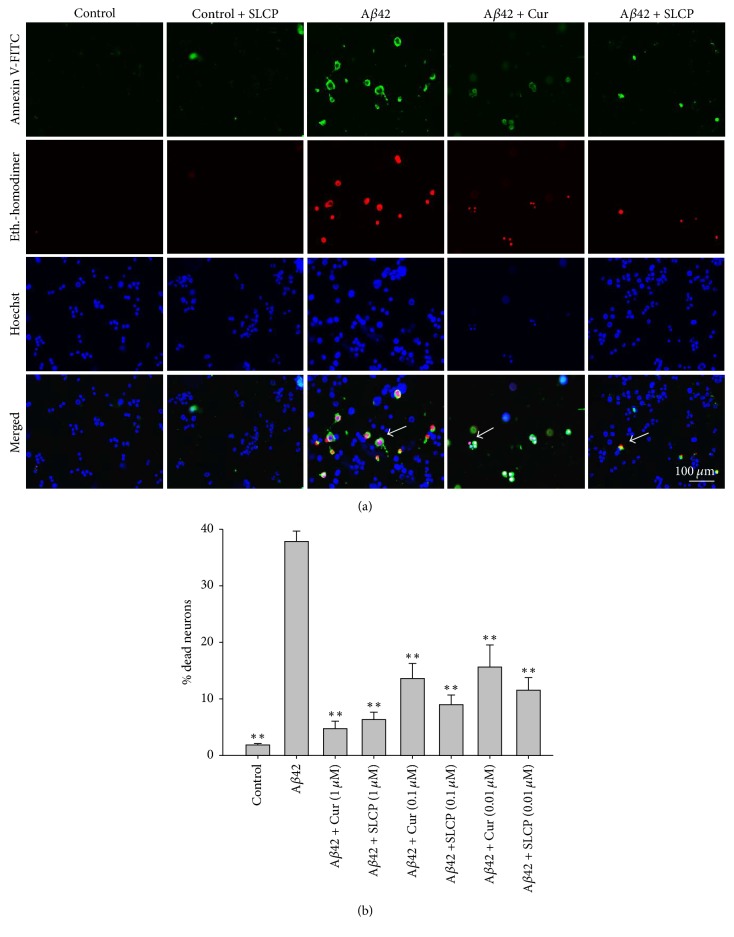
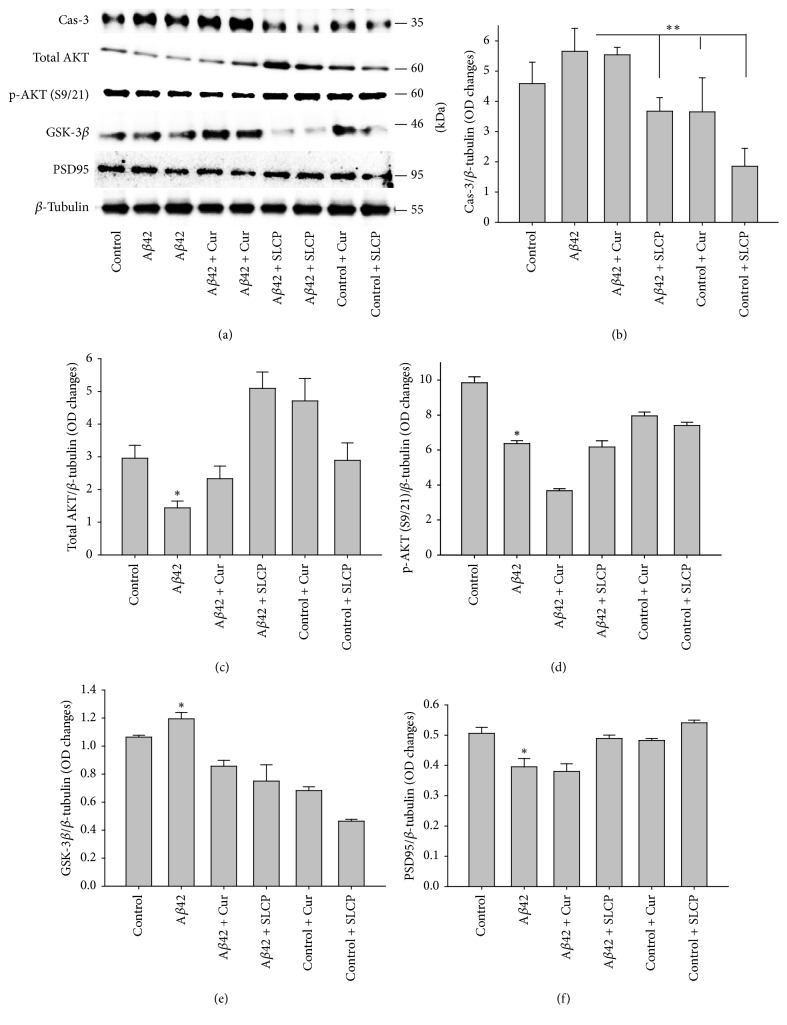
Aggregation of amyloid beta protein (A) and phosphorylated tau (p-Tau) plays critical roles in pathogenesis of Alzheimer's disease (AD). As an antiamyloid natural polyphenol, curcumin (Cur) has a potential role in prevention of neurodegeneration in AD. However, due to limited absorption of the dietary Cur, the solid lipid Cur particles (SLCP) have been suggested as being more effective for AD therapy. In the present study, we compared the role of dietary Cur and SLCP on oxidative stress, neuronal death, p-Tau level, and certain cell survival markers in vitro, after exposure to A42. Mouse neuroblastoma cells were exposed to A42 for 24 h and incubated with or without dietary Cur and/or SLCP. Reactive oxygen species (ROS), apoptotic cell death, p-Tau, and tau kinase (including GSK-3 and cell survival markers, such as total Akt, phosphorylated Akt, and PSD95 levels) were investigated. SLCP showed greater permeability than dietary Cur in vitro, decreased ROS production, and prevented apoptotic death. In addition, SLCP also inhibited p-Tau formation and significantly decreased GSK-3 levels. Further, the cell survival markers, such as total Akt, p-Akt, and PSD95 levels, were more effectively maintained by SLCP than dietary Cur in A42 exposed cells. Therefore, SLCP may provide greater neuroprotection than dietary Cur in Alzheimer's disease.
淀粉样β蛋白(A)和磷酸化tau蛋白(p-Tau)的聚集在阿尔茨海默病(AD)的发病机制中起关键作用。姜黄素(Cur)作为一种抗淀粉样变的天然多酚,在预防AD的神经退行性变方面具有潜在作用。然而,由于膳食姜黄素的吸收有限,固体脂质姜黄素颗粒(SLCP)被认为对AD治疗更有效。在本研究中,我们比较了膳食姜黄素和SLCP在体外暴露于A42后对氧化应激、神经元死亡、p-Tau水平和某些细胞存活标志物的作用。将小鼠神经母细胞瘤细胞暴露于A42 24小时,并在有或没有膳食姜黄素和/或SLCP的情况下孵育。研究了活性氧(ROS)、凋亡细胞死亡、p-Tau和tau激酶(包括GSK-3)以及细胞存活标志物,如总Akt、磷酸化Akt和PSD95水平。SLCP在体外显示出比膳食姜黄素更高的通透性,降低了ROS生成,并预防了凋亡性死亡。此外,SLCP还抑制了p-Tau的形成,并显著降低了GSK-3水平。此外,在暴露于A42的细胞中,SLCP比膳食姜黄素更有效地维持了细胞存活标志物,如总Akt、p-Akt和PSD95水平。因此,在阿尔茨海默病中,SLCP可能比膳食姜黄素提供更大的神经保护作用。