Ghazarian Magar, Revelo Xavier S, Nøhr Mark K, Luck Helen, Zeng Kejing, Lei Helena, Tsai Sue, Schroer Stephanie A, Park Yoo Jin, Chng Melissa Hui Yen, Shen Lei, D'Angelo June Ann, Horton Peter, Chapman William C, Brockmeier Diane, Woo Minna, Engleman Edgar G, Adeyi Oyedele, Hirano Naoto, Jin Tianru, Gehring Adam J, Winer Shawn, Winer Daniel A
Division of Cellular and Molecular Biology, Diabetes Research Group, Toronto General Research Institute, University Health Network, 101 College Street, Toronto, Ontario M5G 1L7, Canada.
Department of Immunology, University of Toronto, 1 King's College Circle, Toronto, Ontario M5S 3B3, Canada.
Sci Immunol. 2017 Apr 21;2(10). doi: 10.1126/sciimmunol.aai7616.
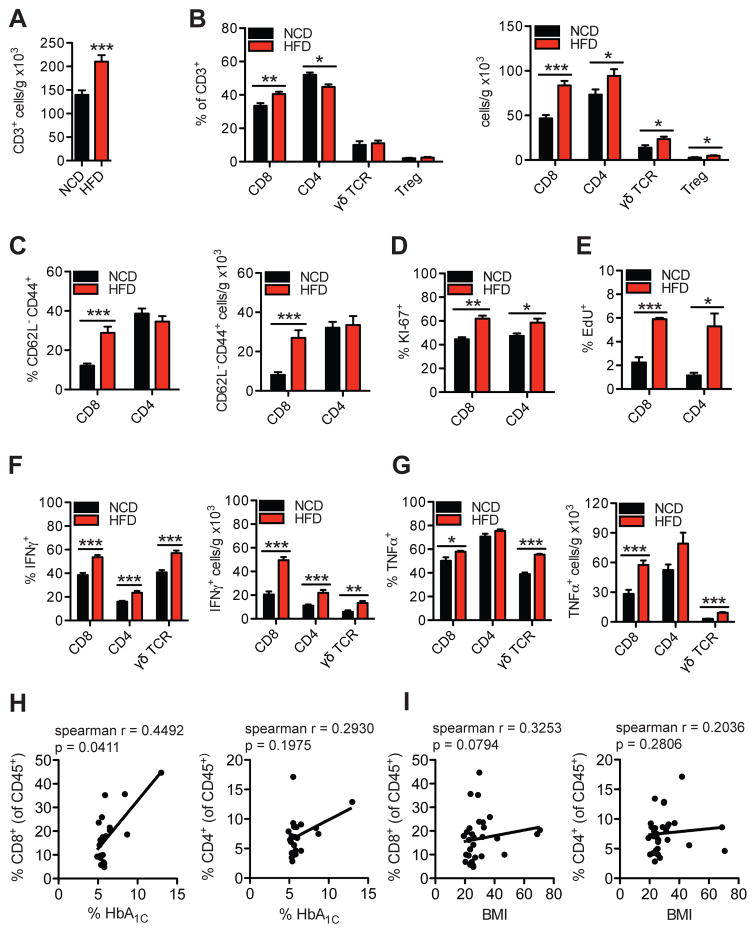
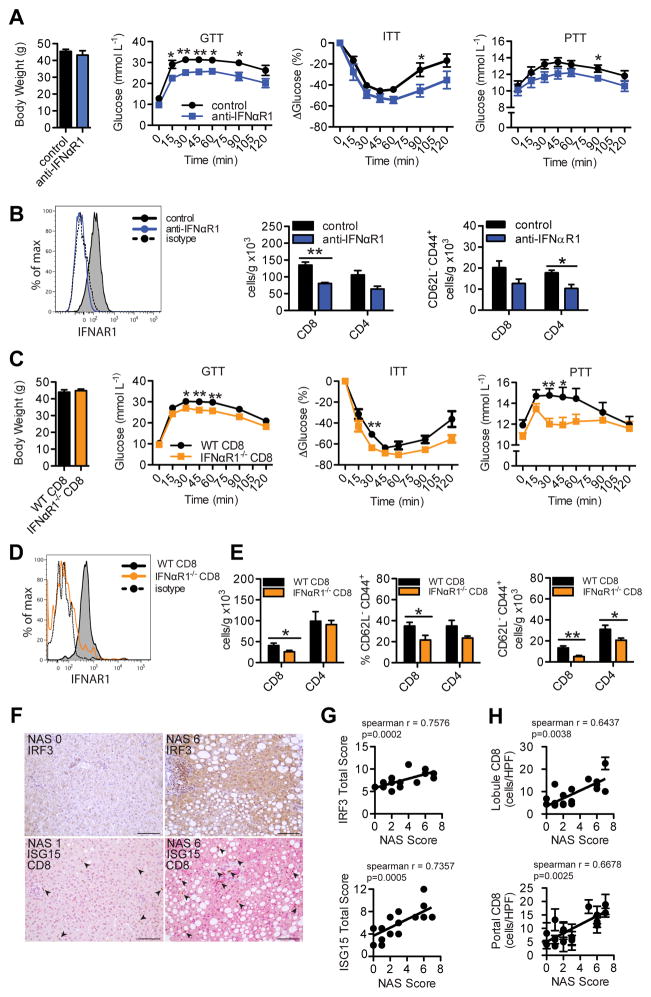
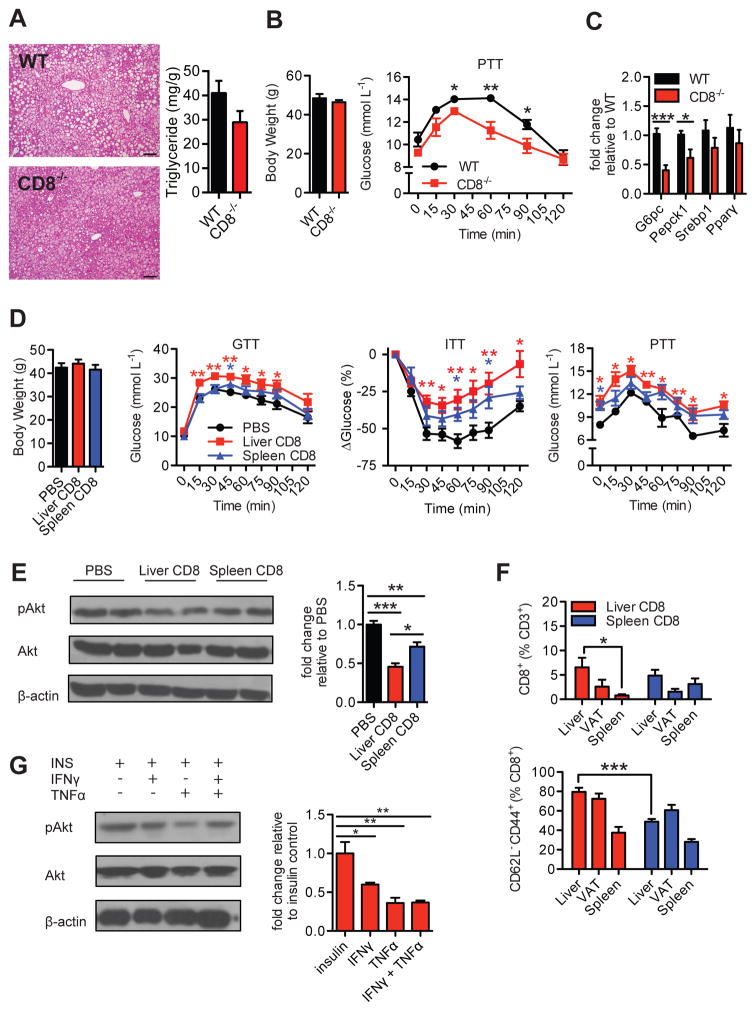
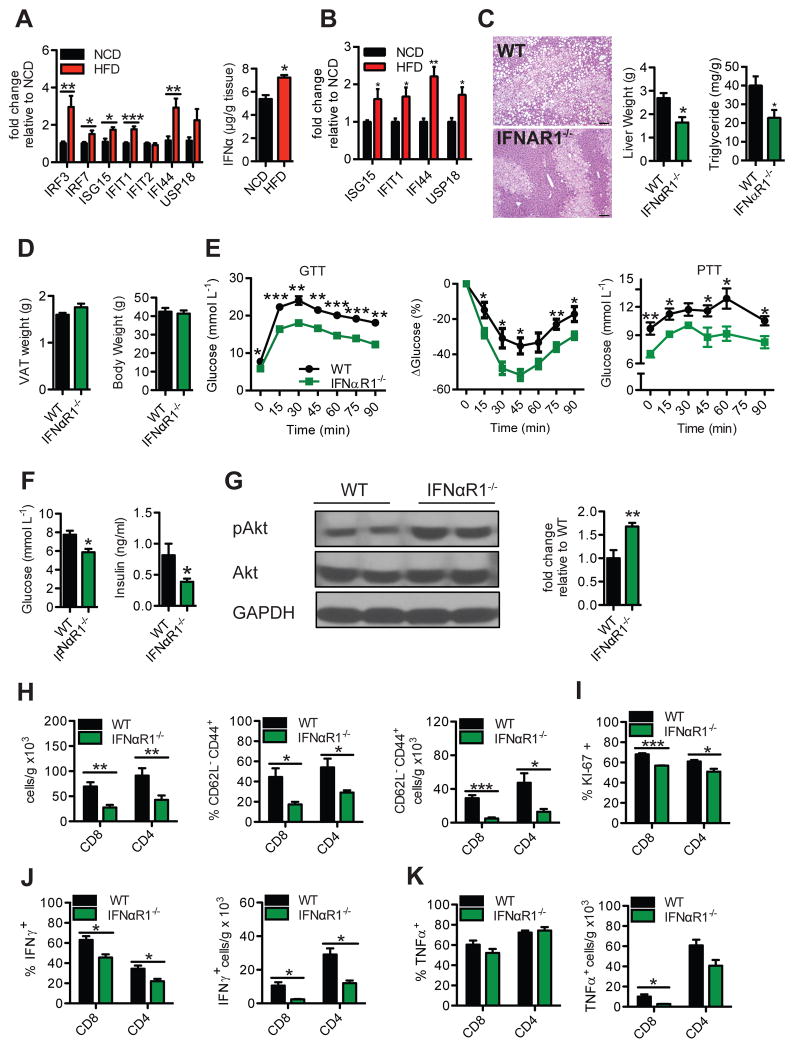
Obesity-related insulin resistance is driven by low-grade chronic inflammation of metabolic tissues. In the liver, non-alcoholic fatty liver disease (NAFLD) is associated with hepatic insulin resistance and systemic glucose dysregulation. However, the immunological factors supporting these processes are poorly understood. We found that the liver accumulates pathogenic CD8+ T cell subsets which control hepatic insulin sensitivity and gluconeogenesis during diet-induced obesity in mice. In a cohort of human patients, CD8+ T cells represent a dominant intrahepatic immune cell population which links to glucose dysregulation. Accumulation and activation of these cells are largely supported by type I interferon (IFN-I) responses in the liver. Livers from obese mice upregulate critical interferon regulatory factors (IRFs), interferon stimulatory genes (ISGs), and IFNα protein, while IFNαR1 mice, or CD8-specific IFNαR1 chimeric mice are protected from disease. IFNαR1 inhibitors improve metabolic parameters in mice, while CD8+ T cells and IFN-I responses correlate with NAFLD activity in human patients. Thus, IFN-I responses represent a central immunological axis that governs intrahepatic T cell pathogenicity during metabolic disease.
肥胖相关的胰岛素抵抗由代谢组织的低度慢性炎症驱动。在肝脏中,非酒精性脂肪性肝病(NAFLD)与肝脏胰岛素抵抗和全身葡萄糖调节异常有关。然而,支持这些过程的免疫因素却知之甚少。我们发现,在饮食诱导的小鼠肥胖过程中,肝脏会积累致病性CD8+T细胞亚群,这些亚群控制着肝脏胰岛素敏感性和糖异生。在一组人类患者中,CD8+T细胞是主要的肝内免疫细胞群体,与葡萄糖调节异常有关。这些细胞的积累和激活在很大程度上受到肝脏中I型干扰素(IFN-I)反应的支持。肥胖小鼠的肝脏上调关键的干扰素调节因子(IRFs)、干扰素刺激基因(ISGs)和IFNα蛋白,而IFNαR1小鼠或CD8特异性IFNαR1嵌合小鼠则可免受疾病影响。IFNαR1抑制剂可改善小鼠的代谢参数,而CD8+T细胞和IFN-I反应与人类患者的NAFLD活动相关。因此,IFN-I反应代表了一条核心免疫轴,在代谢性疾病期间控制肝内T细胞致病性。