Ganfon Habib, Ekanmian Giraud, Amoussou Louis, Daniel-Garcia Emilie, Allabi Aurel Constant
Unité de formation et de recherche en Pharmacie, Faculté des Sciences de la Santé (FSS), Université d'Abomey-Calavi, 01 BP 188, Cotonou, Benin.
Centre d'Information Pharmaco-thérapeutique du Bénin, 06 BP 2610, Cotonou, Benin.
Malar J. 2017 May 31;16(1):231. doi: 10.1186/s12936-017-1880-2.
The national strategy against malaria in an endemic country should involve all the health stakeholders. In Benin, the private sector is rarely present in the activities of the National Malaria Control Programme (NMCP), and its surveillance system does not cover private sector outlets that are a non-negligible part of the healthcare system.
The aim of this study was to describe the drug delivery practices within private pharmacies of Cotonou and Porto-Novo and the awareness of medicine providers concerning the national policy of malaria treatment.
A survey was performed among pharmacy staff members responsible for dispensing medicines and providing advice to patients within pharmacies of Cotonou and Porto-Novo. Dispensing/pharmacy assistants ('dispensators') from 82 pharmacies in Cotonou and 19 in Porto-Novo were surveyed. Data entry was performed using Epidata 3.1 software and data analysis was carried out using SPSS software version 21.1. Chi square test was used to compare proportions. A significance threshold of 0.05 was defined for the p value.
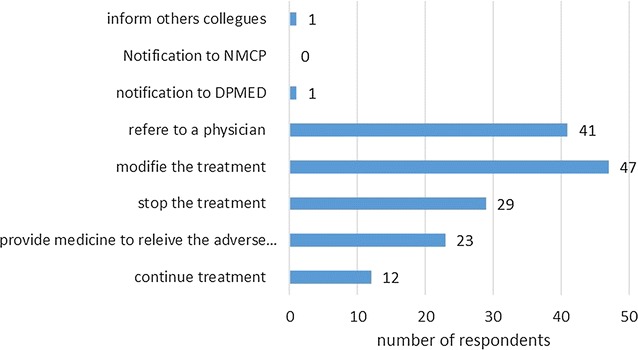
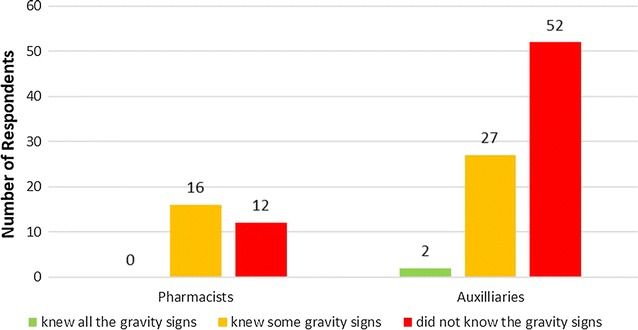
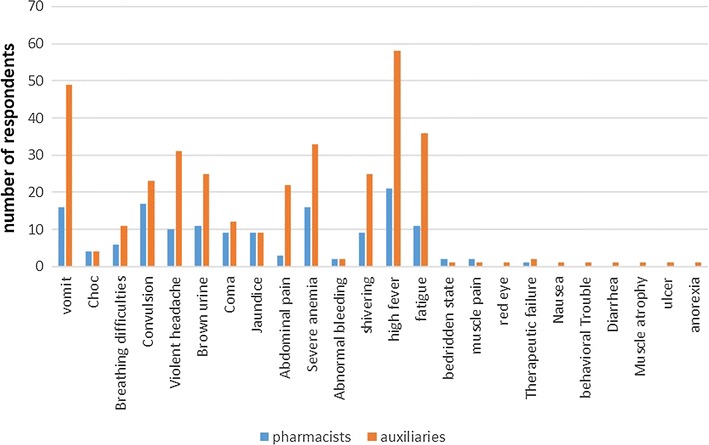
46% of providers did not know the artemisinin-based combination therapy recommended by the NMCP for treating uncomplicated malaria. 58.7% were not able to recognize the gravity signs of malaria. 89.8% of dispensators were used to deliver an anti-malarial upon patient request, without prior biological confirmation as requested by the NMCP policy.
Dispensing practices within the studied pharmacies from Cotonou and Porto-Novo were not in adequacy with the NMCP guidelines for uncomplicated malaria, which is a striking weakness in the training of drug providers on key elements of the guidelines for managing malaria. The NMCP needs to help dispensator from private pharmacies sector to standardize drug delivery practices according to its guidelines.
疟疾流行国家的全国疟疾防治战略应涵盖所有卫生利益相关者。在贝宁,私营部门很少参与国家疟疾控制规划(NMCP)的活动,其监测系统未覆盖作为医疗保健系统不可忽视一部分的私营部门机构。
本研究旨在描述科托努和波多诺伏私营药店的药品发放做法以及药品提供者对国家疟疾治疗政策的知晓情况。
对科托努和波多诺伏药店中负责药品调配并为患者提供建议的药店工作人员进行了一项调查。对科托努82家药店和波多诺伏19家药店的调配/药房助理(“配药员”)进行了调查。使用Epidata 3.1软件进行数据录入,使用SPSS软件21.1版进行数据分析。采用卡方检验比较比例。将p值的显著性阈值定义为0.05。
46%的提供者不知道NMCP推荐的用于治疗非复杂性疟疾的青蒿素联合疗法。58.7%的人无法识别疟疾的严重体征。89.8%的配药员习惯在患者要求时发放抗疟药,而未按照NMCP政策要求进行事先的生物学确认。
科托努和波多诺伏所研究药店的药品发放做法不符合NMCP关于非复杂性疟疾的指南,这是在对药品提供者进行疟疾管理指南关键要素培训方面的一个显著弱点。NMCP需要帮助私营药店部门的配药员按照其指南规范药品发放做法。