Wang Yun-Fan, Cen Xue-Jiang, Yu Jian-Wu, Qu Bai-Ming, Wang Li-Hong
Department of Cardiology, Zhejiang Provincial Peoples' Hospital, Shangtang Road 158#, Hangzhou, Zhejiang, China.
BMC Cardiovasc Disord. 2017 Jun 2;17(1):143. doi: 10.1186/s12872-017-0581-7.
Air embolus penetrating into heart chamber as a complication during percutaneous radiofrequency catheter ablation has been infrequently reported.
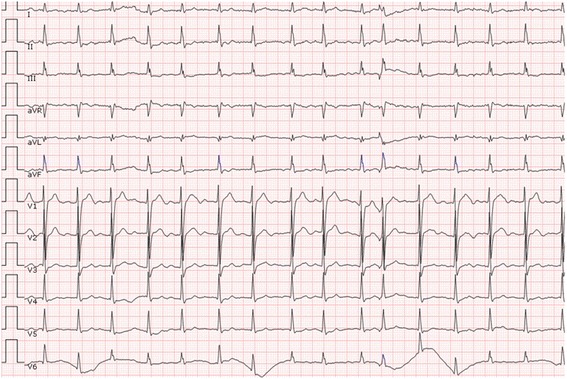
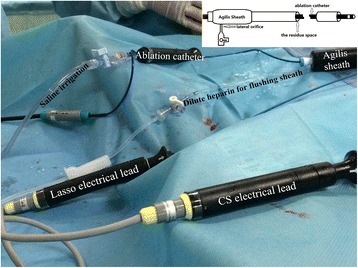
A 55-year-old man with dextrocardia who suffered from abdominal pain was suspected to have multiple arterial thromboembolisms, which might have originated from left atrium thrombosis since he had atrial fibrillation. He received oral anticoagulant therapy and catheter ablation of the arrhythmia. During the ablation procedure, an iatrogenic aeroembolism penetrated into the left atrium due to improper operation. Ultimately, the entire air embolus was extracted from the patient, who was free of any aeroembolism events thereafter.
It is essential for an operator to pay full attention to all details of the procedure to avoid an aeroembolism during catheter ablation. In case of aeroembolism, removal by aspiration is an optimal and effective treatment.
经皮射频导管消融术中空气栓子进入心腔作为一种并发症鲜有报道。
一名患有右位心的55岁男性因腹痛被怀疑有多处动脉血栓栓塞,可能源于他患有心房颤动导致的左心房血栓形成。他接受了口服抗凝治疗及心律失常的导管消融术。在消融过程中,因操作不当发生医源性空气栓塞进入左心房。最终,从患者体内取出了全部空气栓子,此后患者未再发生任何空气栓塞事件。
操作者必须充分关注手术的所有细节以避免导管消融术中发生空气栓塞。万一发生空气栓塞,通过抽吸取出是一种最佳且有效的治疗方法。