Kiran Kumar Y, Mehta S B, Ramachandra M
Philips Research, Research Scholar, Manipal University, India.
Manipal University, India.
J Biomed Phys Eng. 2017 Jun 1;7(2):143-154. eCollection 2017 Jun.
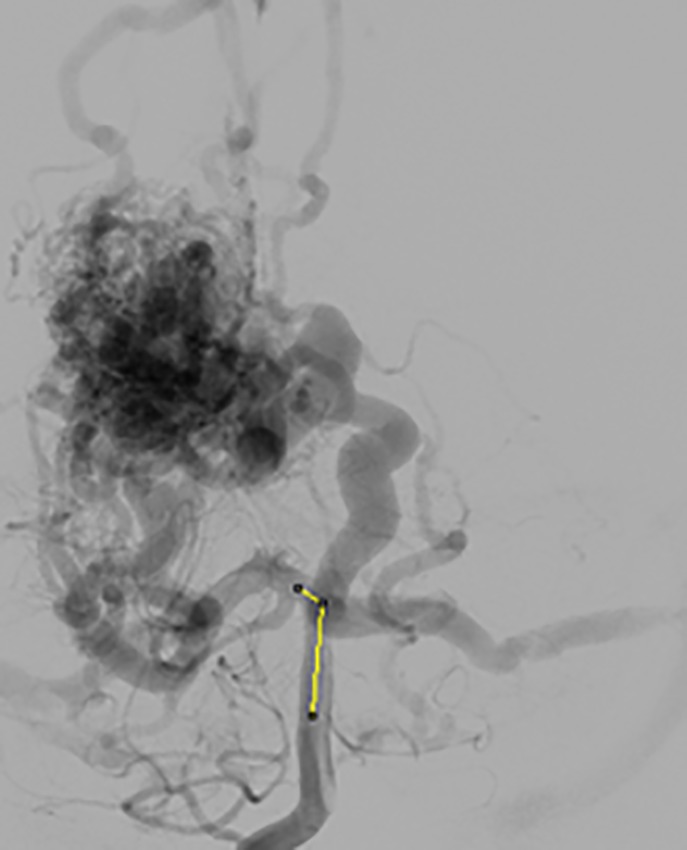
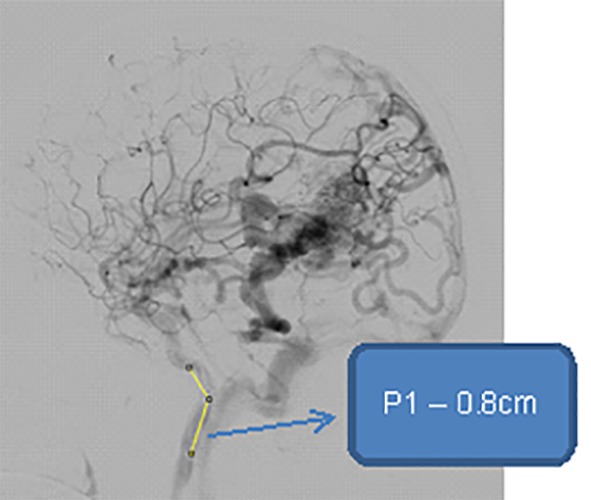
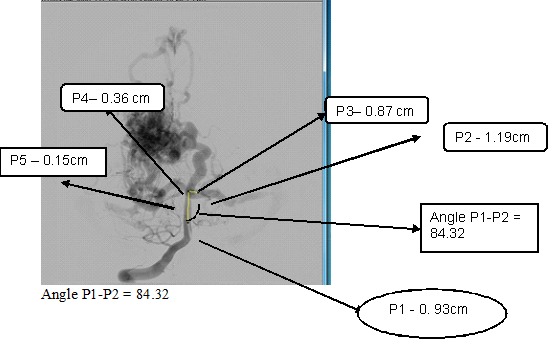
Cerebral Arteriovenous Malformation (CAVM) hemodynamic is disease condition, results changes in the flow and pressure level in cerebral blood vessels. Measuring flow and pressure without catheter intervention along the vessel is big challenge due to vessel bifurcations/complex bifurcations in Arteriovenous Malformation patients. The vessel geometry in CAVM patients are complex, composed of varying diameters, lengths, and bifurcations of various angles. The variations in the vessel diameter and bifurcation angle complicate the measurement and analysis of blood flow features invasively or non-invasively.
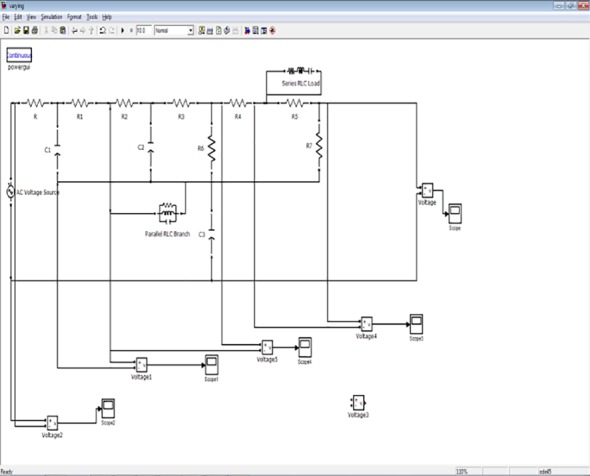
In this paper, we proposed a lumped model for the bifurcation for symmetrical and asymmetrical networks in CAVM patients. The models are created using MATLAB Simulation software for various bifurcation angles. Each bifurcation angle created using electrical network- RLC. The segmentation and pre-processing of bifurcation vessels are implemented using adaptive segmentation. The proposed network address clinicians problem by measuring hemodynamic non-invasively. The method is applicable for any types of bifurcation networks with different bifurcation angles in CAVM patients.
In this work, we constructed a mathematical model, measured hemodynamic for 23 patients (actual and simulated cases) with 60 vessel bifurcation angles variations. The results indicate that comparisons evidenced highly significant correlations between values computed by the lumped model and simulated mechanical model for both networks with p < 0.0001. A P value of less than 0.05 considered statistically significant.
In this paper, we have modelled different bifurcation types and automatically display pressure and flow non-invasively at different node and at different angles of bifurcation in the complex vessel with help of bifurcation parameters, using lumped parameter model. We have simulated for different bifurcation angles and diameters of vessel for various imaging modality and model extend for different organs. This will help clinicians to measure haemodynamic parameters noninvasively at various bifurcations, where even catheter cannot be reached.
脑动静脉畸形(CAVM)的血流动力学是一种疾病状态,会导致脑血管内血流和压力水平的变化。由于动静脉畸形患者血管存在分支/复杂分支,在不进行导管介入的情况下沿血管测量血流和压力是一项巨大挑战。CAVM患者的血管几何结构复杂,由不同直径、长度以及各种角度的分支组成。血管直径和分支角度的变化使得通过有创或无创方式测量和分析血流特征变得复杂。
在本文中,我们针对CAVM患者的对称和不对称网络分支提出了一种集总模型。使用MATLAB仿真软件针对各种分支角度创建模型。每个分支角度通过电阻 - 电感 - 电容(RLC)电路网络创建。使用自适应分割实现分支血管的分割和预处理。所提出的网络通过无创测量血流动力学来解决临床医生面临的问题。该方法适用于CAVM患者中具有不同分支角度的任何类型的分支网络。
在这项工作中,我们构建了一个数学模型,对23例患者(实际病例和模拟病例)的60种血管分支角度变化进行了血流动力学测量。结果表明,对于两个网络,集总模型计算值与模拟力学模型值之间的比较显示出高度显著的相关性,p < 0.0001。p值小于0.05被认为具有统计学意义。
在本文中,我们使用集总参数模型,借助分支参数对不同的分支类型进行建模,并在复杂血管中不同节点和不同分支角度下自动无创显示压力和流量。我们针对各种成像模态对不同的分支角度和血管直径进行了模拟,并且该模型可扩展到不同器官。这将有助于临床医生在各种甚至导管无法到达的分支处无创测量血流动力学参数。